
Unbiased headlines. Facts, not spin.
Every story is an unbiased news briefing written from 110+ sources across the spectrum — sources linked so you can verify it yourself.
 politics
Major Story (8/10)
July 2, 2026 at 07:30 AM
politics
Major Story (8/10)
July 2, 2026 at 07:30 AM
Trump's 2025 Financial Disclosure Shows $2.2 Billion Earned While in Office, Mostly from Crypto
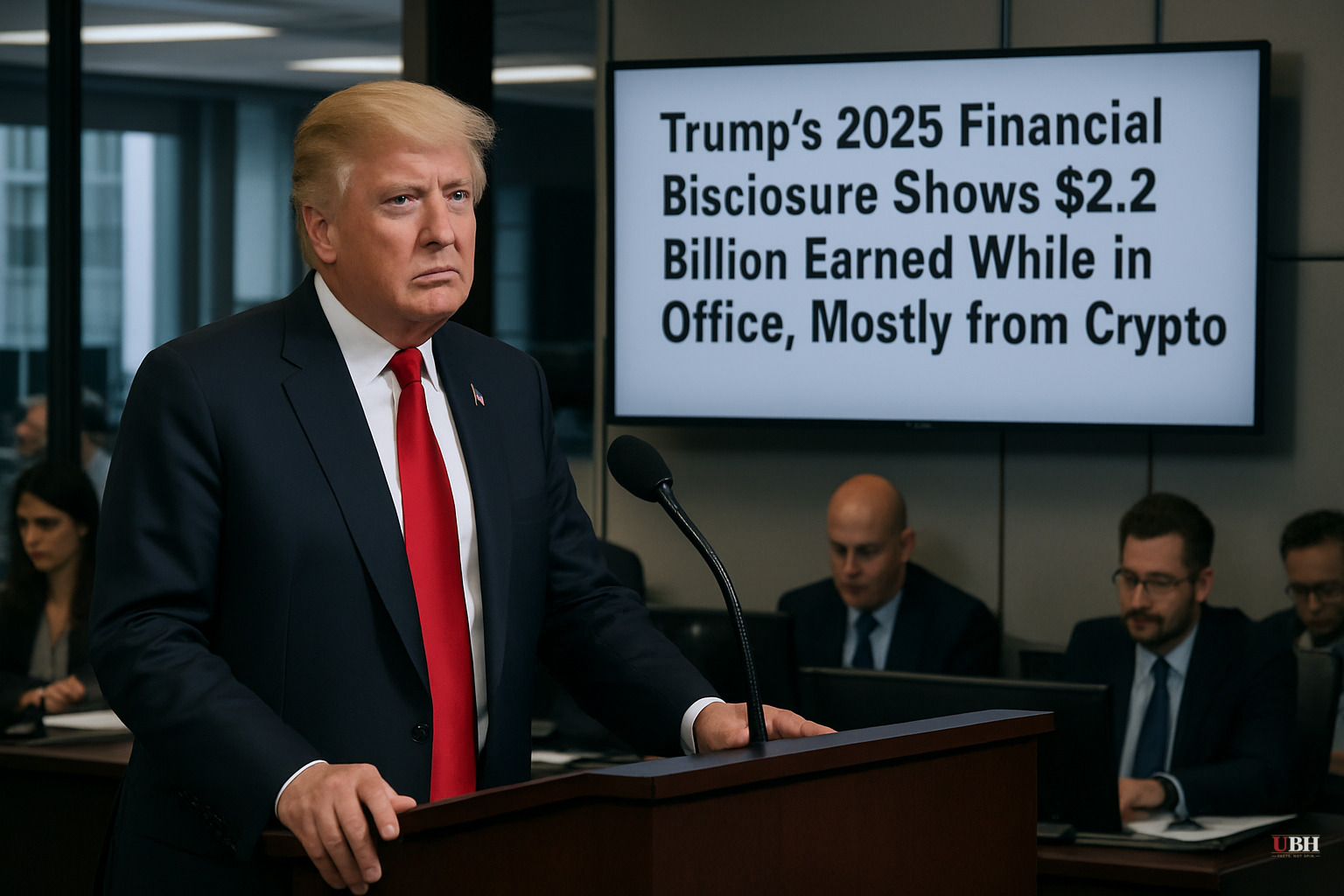
Tuesday's release of Trump's mandatory 2025 financial disclosure has added a concrete dollar figure to what had previously been a broader debate about presidential conflicts of interest. The disclosure shows Trump reported at least $2.2 billion in income during his first year back in the White House, according to BBC News. That is nearly four times the $622 million he reported in 2024, the year before he returned to office.
Where the Money Came From
$1.4 billion of the total came from the cryptocurrency industry alone. That breaks down into two main buckets. Trump reported $635 million in royalties from Celebration Coins, the entity thought to be behind the $TRUMP meme coin he launched just before starting his second term. He reported an additional $500 million-plus from World Liberty Financial, a cryptocurrency firm founded by his sons Donald Trump Jr. and Eric Trump, along with the sons of Steve Witkoff, Trump's special envoy to the Middle East and Ukraine.
The White House Position
The administration is not conceding an inch. White House deputy press secretary Anna Kelly said in a statement: "Neither the President nor his family has ever engaged — or will ever engage — in conflicts of interest. All actions by President Trump and his administration are taken in the best interest of the American people." Kelly added that reporters raising the issue are "recycling the same, tired, false narrative that Democrats and the legacy media have been pushing for a decade."
That is a defensible framing in one respect: Trump's financial interests were publicly known before voters elected him to a second term. He did not conceal his business empire. Before his second term, the Trump Organization said he would not be involved in the company's day-to-day dealings while serving as president, and Eric Trump said the organization would follow "robust ethical standards" during the president's second term.
What Historians Are Saying
The counterweight is historical scale. Barbara Perry, a presidential historian at the University of Virginia's Miller Center, told BBC News: "There's just no precedent for this. It's beyond anything we've ever seen in the presidency."
Past presidents set a different standard by design. Harry Truman left office with no income beyond his Army pension of $113 per month and wrote that it was wrong to "commercialize on the prestige and dignity of the office of the presidency." George W. Bush placed his investments in a blind trust before running and said in his final week in office that he did not know how the 2008 financial crisis had affected his net worth.
The norm those presidents were following was informal. No law required it. Trump has broken the norm, but breaking a norm is not the same as breaking the law. Perry put it plainly: "Making money hand over fist in office, it's not illegal but it is unethical. Most [past] presidents didn't want to do that."
The Conflict-of-Interest Question
The harder concern is structural, not biographical. Trump's $635 million meme coin royalty came from a financial product that launched just before he took office and whose value is directly tied to his political standing. Meanwhile, last July Trump signed legislation supporting stablecoins — a form of cryptocurrency — just four months after World Liberty Financial launched its own digital currency venture, the same firm that made him at least $500 million in 2025.
Critics argue that structure creates an obvious incentive problem: policies that benefit crypto broadly, or that benefit World Liberty Financial's partners specifically, also benefit the president's bank account. That concern does not require proving intent; it is embedded in the architecture of the arrangements.
The White House's answer is that Trump acts in the public interest. What is different here is that the financial disclosure quantifies the scale of the overlap at more than a billion dollars from a single industry in a single year. The open question the disclosure leaves unanswered is whether the existing legal framework is adequate for a situation where a president's personal financial instruments are actively trading in regulated markets while that president's administration sets crypto policy. That question is unresolved, and the disclosure has put real numbers behind it for the first time.
Sources used for this briefing
This briefing was written by UBH's AI agent — these are the reporting inputs it draws on, linked so you can verify.


