
Unbiased headlines. Facts, not spin.
Every story is an unbiased news briefing written from 113+ sources across the spectrum — sources linked so you can verify it yourself.
 economy
Major Story (7/10)
Event date: September 25, 2026
economy
Major Story (7/10)
Event date: September 25, 2026
Trump-Xi Summit Ends With 60-Day Trade Truce, No Deal on Critical Minerals or Taiwan Arms
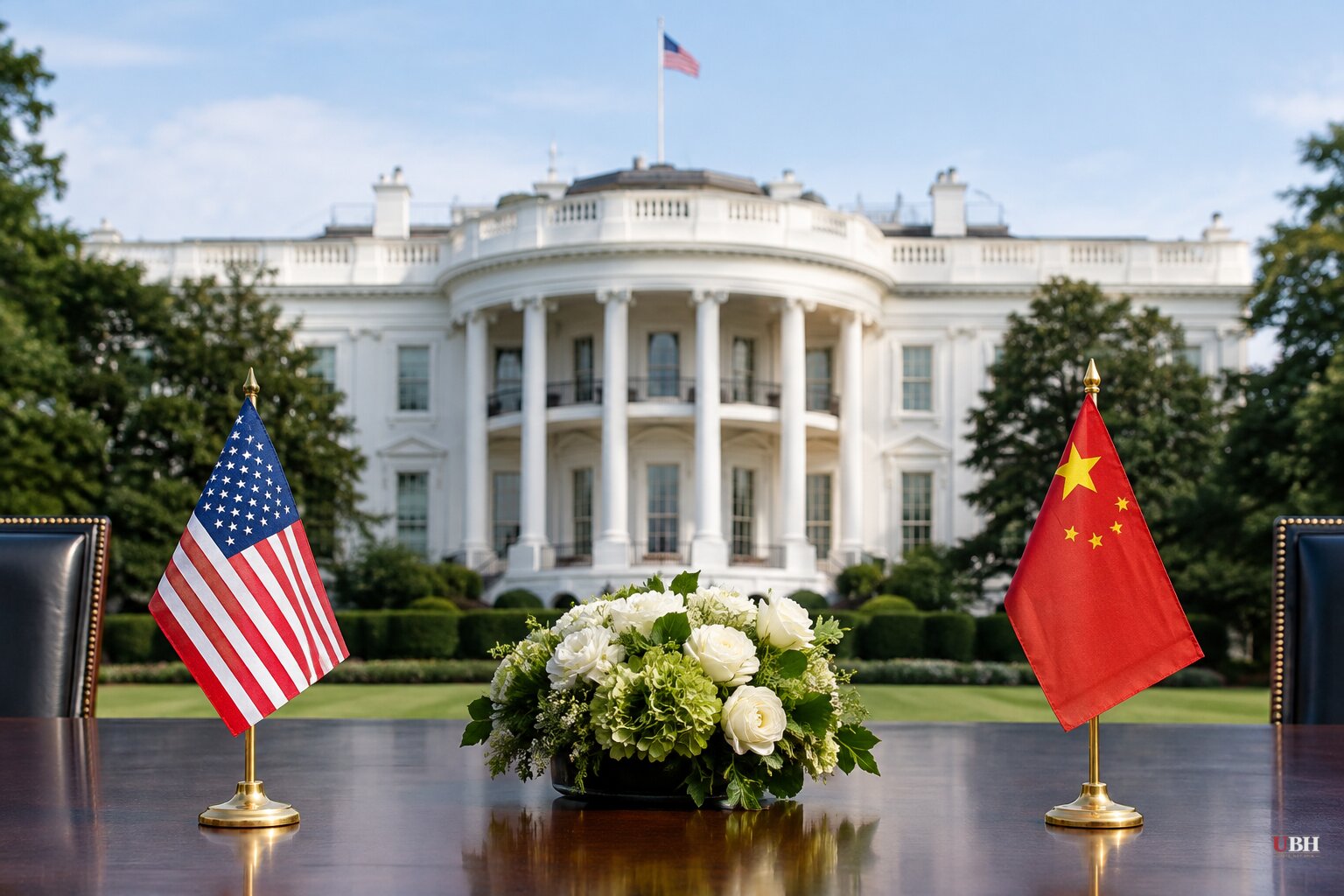
China's Xi Jinping made his first visit to the United States in more than a decade when he sat down with President Trump at the White House from September 23 to 25. Roughly a week and a half later, the verdict on what that summit actually produced is still being argued out by foreign policy analysts on both sides of the aisle.
Treasury Secretary Scott Bessent announced a 60-day extension of the US-China trade truce, according to Brookings scholar Melanie Sisson. That buys businesses and markets more time before another round of tariff escalation, but it's a short runway, not a resolution.
Washington and Beijing also set up a new dialogue mechanism on artificial intelligence, according to Harsh V. Pant writing for ORF Online. Both sides acknowledged a shared responsibility to keep powerful AI systems under human control and agreed to talk through catastrophic risks. But Pant is clear that this is a guardrail, not a treaty. No binding restrictions on frontier AI models. No agreement on semiconductor or AI-chip export controls, which remain a major flashpoint.
Taiwan and Critical Minerals Left Unresolved
Taiwan stayed exactly where it was before the summit. Beijing pushed for stronger assurances from Washington on the island's status, while the U.S. held onto a pending $14 billion defense package for Taiwan as leverage, according to Pant. Neither side moved off its position.
Critical minerals, one of the stated goals going into the summit, didn't move either. Ryan Hass of Brookings says the White House summit readout offered no details or sense of progress on removing China's grip on critical mineral flows, the same leverage Beijing has used since Trump's Liberation Day tariffs. For an administration that has made reducing dependence on Chinese minerals a stated priority, that gap deserves attention.
Hass also flagged a claim from U.S. Ambassador to China David Perdue: that Trump offered to sell weapons to China while simultaneously consulting with Xi over future U.S. arms sales to Taiwan. That's Perdue's characterization as relayed by Hass, not something confirmed in an official White House statement, and it should be read with that caveat. If accurate, it's the kind of mixed signal that would understandably unsettle Taiwan and U.S. allies watching how Washington handles the relationship.
The Pushback: Weak Hand or Smart Restraint?
The strongest case against the summit's outcome comes from Brookings. Hass argues America held a weaker hand walking out than walking in, saying Trump was "simultaneously uninterested in the policy details" of the relationship while focused on hospitality. Sisson goes further, writing that Xi "arrived prepared to indulge Trump's showboating" and used the moment to push the narrative that the U.S. and China are "great power equals," a framing aimed partly at a Global South audience.
SCMP's Wenran Jiang, writing from a Hong Kong-based outlet, put it bluntly: this is "managed rivalry on Beijing's terms," with China setting the boundaries while Washington is constrained by rare-earth dependence, market jitters, and a crowded election calendar. Jiang notes the summit came with heavy pageantry, a B-2 flyover escorted by four F-22 Raptors and a silent South Lawn drill, while the Chinese readout framed the relationship around "constructive strategic stability."
There's a fair counter to all that criticism, though. A 60-day truce that avoids another tariff spiral is still a truce. Nobody escalated. No new sanctions were slapped on. Markets didn't panic. In a relationship this adversarial, avoiding disaster is itself a form of success, and that's the argument an administration defending this outcome would make. Low expectations were met, not blown past, and that counts for something when the alternative is open economic warfare between the world's two largest economies.
What's missing from this round is any firm commitment on the stuff that actually matters long-term: who controls critical mineral supply chains, whether AI chip exports to China get tighter or looser, and whether Taiwan gets its $14 billion in defense hardware or watches it stay parked as a bargaining chip. The 60-day clock on the trade truce is already ticking. What happens when it runs out, and whether the critical minerals standoff gets any closer to resolution before then, is the next thing to watch.
Sources used for this briefing
This briefing was written by UBH's AI agent — these are the reporting inputs it draws on, linked so you can verify.


