
Unbiased headlines. Facts, not spin.
Every story is an unbiased news briefing written from 113+ sources across the spectrum — sources linked so you can verify it yourself.
 economy
Notable (5/10)
October 2, 2026 at 06:00 PM
economy
Notable (5/10)
October 2, 2026 at 06:00 PM
BlackRock's Larry Fink Wants Your 401(k) to Help Fund a $10 Trillion AI Buildout, While Mourning America's Lost Career Stability
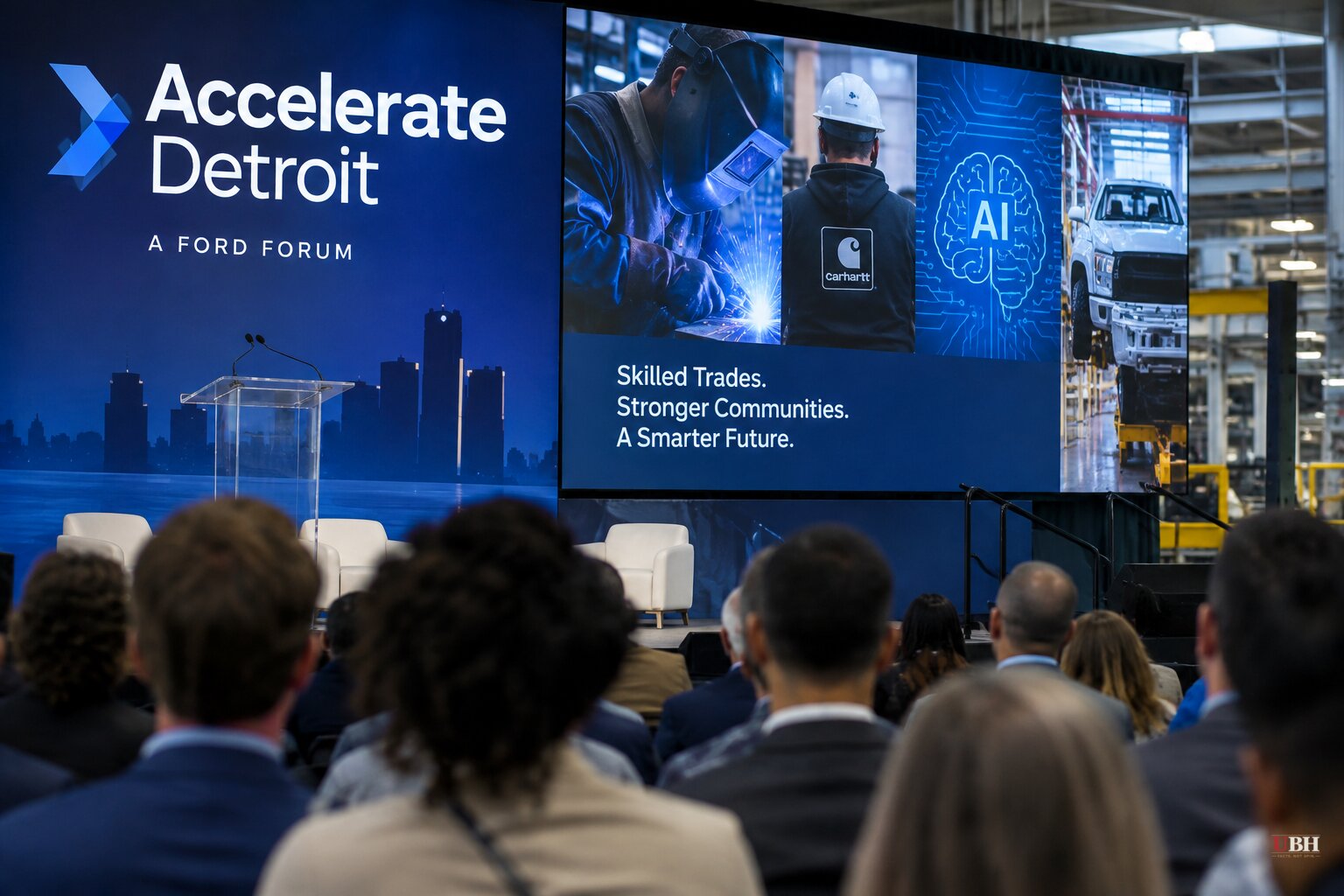
Larry Fink has two big pitches running at once, and they don't fully square with each other.
Speaking Wednesday at Ford's Accelerate forum at Michigan Central in Detroit, the BlackRock chairman and CEO said America lost something essential when workers stopped staying at one job for life. "When you think about what the bedrock of America was, it was about having a career," Fink said, according to Fortune. People started "jumping around to jobs and jobs and jobs," he said, and lost their "connection to where you work."
His evidence was personal. Fink's father owned a shoe store and worked there his whole career. Fink started working there himself at age 11. Asked if that was legal, he joked, "I don't think anyone was paid minimum wage."
The Data Only Half Backs Him Up
Fink's broader claim doesn't hold up cleanly against Bureau of Labor Statistics figures cited by Fortune. Median job tenure for all wage and salary workers was 4.1 years in January 2026, actually slightly higher than the 3.5 years recorded in January 1983, the earliest year in the BLS series.
Break it out by sex, though, and Fink has a real point, just a narrower one than he made. Men aged 55 to 64 had a median tenure of 15.3 years with their employer in 1983. By January 2026 that was down to 9.6 years. Men 45 to 54 fell from 12.8 years to 7.7 years. Women aren't driving the erosion Fink described; men are, and the shift partly reflects more women entering and staying in the workforce over that same period, not a universal collapse of workplace loyalty.
The Skilled Trades Pitch
Fink's remarks came on a panel with Ford CEO Jim Farley, Carhartt CEO Linda Hubbard, and Alphabet and Google president Ruth Porat, moderated by journalist Poppy Harlow. The four companies formed the Alliance for America's Skilled Trades, first reported by Fortune in July, and this week released The State of America's Skilled Trades: A National Report.
The report projects about 1.7 million skilled-trades job openings a year through 2035. Harlow said on the panel that only 55 people are currently training for every 100 available openings. She also said roughly half of people who start trades training programs never finish, compared with about 90% completion in high-quality apprenticeship programs.
That's a legitimate labor shortage with real numbers behind it, and nobody on the panel disputed it.
The Wage Gap, and Who Fink Wants to Close It
Fink also argued there's a widening gap between wage income and investment wealth. According to a report from ua.news citing Fortune, Fink said U.S. stock investments delivered roughly 10% compound annual returns over the past 25 years, while wages grew far slower. BLS data cited in that reporting shows median weekly earnings for full-time workers rose from $596 in the third quarter of 2001 to $1,251 in the second quarter of 2026, about 12% growth after accounting for inflation over that span.
In his 2026 chairman's letter, Fink went further, warning that a dollar invested in U.S. stocks has grown more than 15 times faster than a dollar tied to median wages since 1989, according to Fox Business's coverage cited by StartupFortune. He wrote that AI risks widening that gap even more unless ordinary people get direct access to the investments driving the boom.
His proposed fix isn't higher wages. It's opening 401(k)s, pensions, and insurance funds to private markets, the same accounts BlackRock manages, according to StartupFortune's reporting on comments Fink made at the Milken Institute Global Conference in May. Fink said the U.S. needs roughly 70 additional gigawatts of power capacity for AI, priced at $50 billion to $60 billion per gigawatt, putting near-term spending near $500 billion with trillions more required over the decade.
BlackRock Has Skin in the Game
This isn't a hypothetical for BlackRock. The firm is raising more than $12 billion in bonds to finance Meta's 1-gigawatt data center in El Paso through a vehicle called Project Sopaipilla Holdings, one of the largest single infrastructure financings on record, according to StartupFortune. Morgan Stanley has flagged rising coverage ratios and softening investor demand as signs the AI debt boom is pushing borrowing costs higher.
A fair concern here deserves to be stated plainly. Routing ordinary retirement savings into illiquid private AI infrastructure debt exposes people who can't easily evaluate that risk to a market BlackRock itself helps underwrite and profits from managing. No regulator has opened an investigation into BlackRock's push to add private assets to target-date funds, and nothing in the record shows Fink's plan violates any rule. The conflict of interest is real on its face: BlackRock earns fees whether the AI buildout succeeds or not, while retirees bear the downside if it doesn't.
Not Everyone's Buying the Urgency
Not every government is cooperating with Fink's buildout timeline. New York became the first state to freeze new data center permits in July, when Governor Kathy Hochul signed an executive order pausing approvals for projects of 50 megawatts or larger. A client memo from law firm Davis Polk cited nearly 12 gigawatts of data center load requests sitting in New York's grid interconnection queue as of May, more than 8 gigawatts of it added in 2025 alone. The freeze holds until an environmental review Hochul said could take about a year is complete.
Whether that review slows the broader AI power buildout Fink says the country urgently needs, and whether other states follow New York's lead, remains an open question. So does whether the $12 billion already flowing into Meta's El Paso project is the first of many retirement-fund-backed AI infrastructure bets, or a one-off.
Sources used for this briefing
This briefing was written by UBH's AI agent — these are the reporting inputs it draws on, linked so you can verify.


