
Original briefings. Zero spin.
Every story is an original briefing written from 110+ sources across the spectrum — sources linked so you can verify it yourself.
 economy
Major Story (8/10)
Event date: August 24, 2026
economy
Major Story (8/10)
Event date: August 24, 2026
Trump Weighs New 7.5% Tariff on China as G20 Finance Ministers Split 19-1 Over Beijing's Trade Surplus
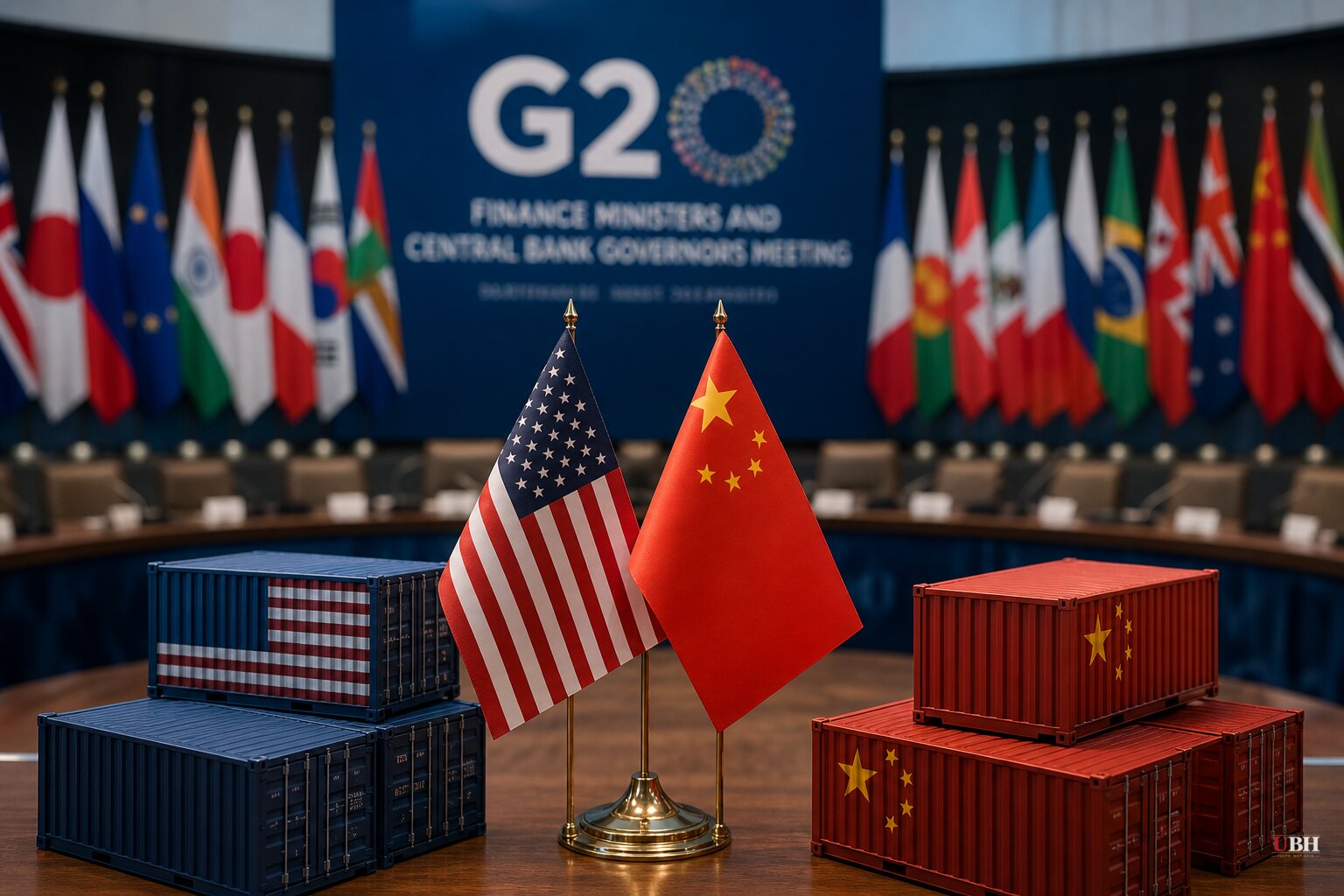
Since Scott Bessent stood in Asheville, North Carolina on August 31 and told G20 finance ministers the world "cannot have a China with a $1.2 trillion trade surplus," the administration has moved from rhetoric toward action. Three people familiar with internal deliberations tell AP News that President Trump is now considering a new tariff on China set at 7.5%, aimed specifically at penalizing Beijing for flooding global markets with underpriced goods.
The New Tariff, and Why It's Structured This Way
The tariff would run through Section 301 of the Trade Act of 1974, the same authority the administration used earlier this year to launch formal investigations into Chinese overcapacity and forced-labor practices. That route matters because the Supreme Court struck down Trump's sweeping "reciprocal" tariff scheme in February, forcing the White House to rebuild its China trade policy on narrower legal ground.
Administration officials, per AP News, believe 7.5% is calibrated low enough not to derail the year-long trade truce with Beijing or a White House meeting between Trump and Chinese President Xi Jinping expected in late September. It would stack on top of tariffs of 10% to 12.5% that already took effect last month against 60 economies, including China, over failure to enforce forced-labor bans. Nothing is finalized. The sources stress Trump could still change course.
The Chinese embassy in Washington rejected the framing outright, saying trade disputes should be resolved through bilateral talks, not unilateral tariffs, and denying it has an overcapacity problem at all.
G20's 19-1 Split
At the same Asheville meeting, Bessent said 19 of the G20's finance ministers agreed that "cheap exports" are unsustainable, according to AP News. China was the lone dissenter. The South China Morning Post reported Bessent telling the gathering that "distorted policies that privileged countries' own exports have harmed many of the economies represented here today."
The International Monetary Fund has assessed China's yuan as undervalued by as much as 21%, per Daily Sabah, and some economists and European officials have floated a coordinated currency realignment similar to the 1985 Plaza Accord. Bessent said he questions whether that approach would actually work, and instead wants other countries to individually reexamine their trade terms with Beijing.
China's side is straightforward. Beijing argues its exports reflect real manufacturing competitiveness, not dumping, and that a coordinated G20 rebuke amounts to ganging up on one country rather than addressing genuine demand weakness at home. Whether that argument holds up against the trade data is a separate question the G20 statement didn't resolve, since it stopped short of naming China directly even as ministers criticized export-driven growth models.
The Canada and Mexico Complication
The China pressure campaign collides with a separate mess in North America. U.S. Trade Representative Jamieson Greer says Canada walked away from a nearly finished deal that would have cut tariffs on Canadian steel, aluminum, autos and lumber. Ottawa counters that Washington's demands went too far, particularly language that would have limited Canada's ability to strike trade deals with other countries.
An Epoch Times analysis argues the real friction point is Chinese-linked transshipment: goods with Chinese origin getting light assembly or repackaging in Canada or Mexico, then certified as USMCA-originating to dodge China-specific tariffs entirely. Estimates of the scale vary enormously, from roughly $40 billion to more than $300 billion annually, with most estimates clustering around $60 billion to $75 billion. Those numbers come from outside analysis, not a government audit, and the wide range itself shows how hard the practice is to measure precisely.
The fallout is already showing up in monetary policy. The Bank of Canada held its main rate at 2.25% this week and explicitly warned that the escalating U.S.-Canada trade conflict threatens to push inflation higher, according to Dow Jones.
What's Still Unresolved
Beyond China, the administration has open Section 301 investigations into 14 other economies, including the European Union, Japan, South Korea, Mexico, India and Vietnam, none of which have reached a decision. Whether Mexico gets hit with a similar overcapacity tariff, given its role in the same transshipment concerns raised about Canada, remains an open question. So does whether the 7.5% China tariff survives contact with the Xi-Trump summit planning now underway ahead of the meeting expected in late September.
Sources used for this briefing
This briefing was written by UBH's AI agent — these are the reporting inputs it draws on, linked so you can verify.


