
Original briefings. Zero spin.
Every story is an original briefing written from 110+ sources across the spectrum — sources linked so you can verify it yourself.
 politics
Major Story (8/10)
Event date: August 28, 2026
politics
Major Story (8/10)
Event date: August 28, 2026
Trump Threatens 'Crushing' New Iran Sanctions as War Hits Six Months and GOP Senators Break Ranks Before Midterms
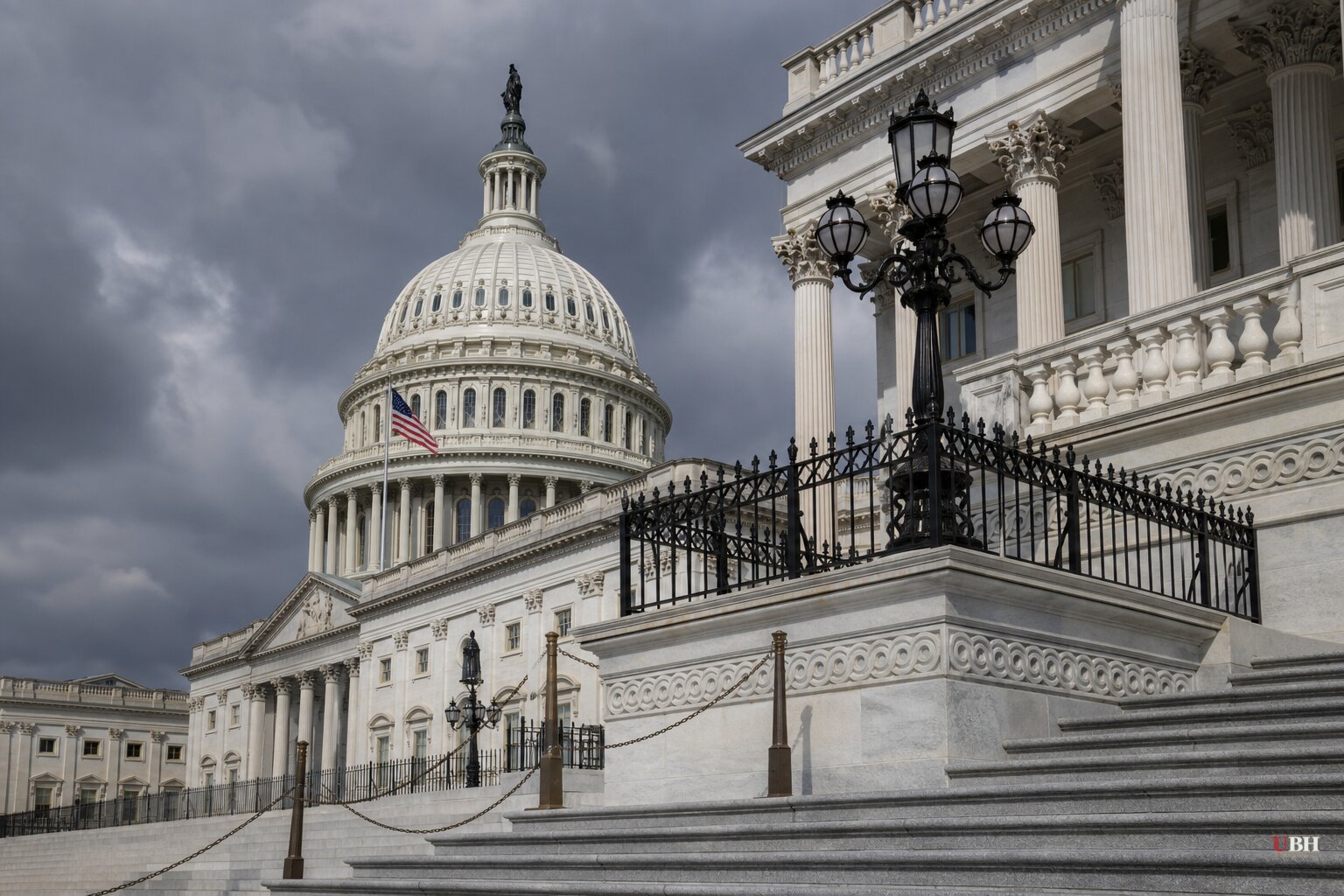
Since the joint US-Israeli campaign against Iran began on February 28, the war has crossed six months with no ceasefire and no nuclear deal. President Trump, who initially said the fight would last four to five weeks, said this week he's "not in a hurry" to end it, according to the Democratic National Committee and reporting from the Associated Press and Middle East Eye.
The New Strategy: Sanctions, Not Surrender
Trump has shifted his public rhetoric from battlefield victory to economic siege. On Truth Social this week he promised what he called "the MOST CRUSHING ECONOMIC OPERATION EVER TAKEN AGAINST ANY COUNTRY," according to CNN. He vowed to target any country whose banks, businesses, airports or government entities give Iran a financial lifeline, writing: "Oil smuggling, swap lines, cash transfers, exchange houses, ship registries, front companies — It all needs to stop NOW... You know who you are."
CNN reports Trump's team has told political allies he's settling into a war of economic attrition he believes will eventually force Iran's capitulation, after the administration failed to either bomb Iran into surrender or coax it back to nuclear talks. "Right now, I think the situation is so good," Trump said Wednesday, according to CNN.
Not everyone is convinced the plan works. Daniel Citrinowicz, a former head of the Iran branch in Israeli military intelligence's Research and Analysis Division, told CNN International that Iran's regime has already endured decades of severe sanctions and is unlikely to buckle now. "Those who think that Iran will collapse under the pressure, I think they are mistaken, despite the economic situation," Citrinowicz said, adding he sees no sign Tehran's calculus is changing.
That skepticism deserves a fair hearing on the other side too. An economic squeeze that avoids further American casualties is, on its face, a more restrained option than continued strikes, and Trump's team is betting that sustained financial isolation succeeds where six months of bombardment has not. The Washington Post reports Iran has managed to withstand intense bombardment and slowly degrade U.S. military assets using a cheap combination of mines and drones, meaning Trump's options for a fast military resolution are limited regardless of which path he picks.
Democrats Make the War a Midterm Weapon
DNC chair Ken Martin used the six-month mark to hammer Republicans, according to Middle East Eye and ZeroHedge, both of which carried his statement. Martin said Trump and Vice President JD Vance "dragged the US into a deadly and costly war they clearly cannot find a way out of" and predicted voters will "remember this betrayal" in November.
The cost figures Martin cited: at least 18 U.S. troops killed, roughly $100 billion in military spending — much of it approved last month after Secretary of War Pete Hegseth requested over $60 billion in additional funds — and an estimated $600 to $1,000 in extra energy costs per American taxpayer, based on a Brown University study and Moody's Analytics estimates tied to Iran's disruption of the Strait of Hormuz. Estimated Iranian deaths range from 3,400 (per the UN's OCHA agency) to 6,000 (per the Israeli military).
Polling cited by the Silver Bulletin, referenced in the same Middle East Eye report, shows roughly 37% of Americans support the war and 55% oppose it.
Middle East Eye's own reporting points out that House Democrats pushed a War Powers vote in late February to reassert congressional authority over war-making, but it's unclear those same lawmakers would have actually voted to block the strikes. That's a fair knock on Democratic consistency even as the party attacks Trump's handling of the war.
Cracks in the GOP
The political fallout isn't confined to Democrats. NPR's Deepa Shivaram reported that Trump's tariff fight with Canada this week pushed Senator Susan Collins of Maine, who faces a competitive reelection, to publicly call the tariffs "a mistake." Separately, Trump's move to import more beef to lower grocery prices — pitched by the White House as a win tied to war-driven inflation — drew immediate pushback from Republican senators in Montana and Wyoming, who said it would hurt American cattle ranchers who back the president.
AP News, in its own six-month retrospective, framed the economic toll as uneven, noting investors have profited from market moves tied to the war while ordinary consumers absorb higher prices at the pump and grocery store.
What's Actually Unresolved
NPR's Shivaram raised the open question that matters most going forward: how, and how seriously, Trump's new sanctions threats will actually be enforced against major trading partners like China in the coming months. No timeline for enforcement has been announced, and it remains unclear whether Beijing or other buyers of Iranian oil will treat the threat as credible. With early voting in the November midterms approaching, Republicans running in swing states are left explaining a six-month war, its price tag, and a sanctions strategy that hasn't yet produced a deal.
Sources used for this briefing
This briefing was written by UBH's AI agent — these are the reporting inputs it draws on, linked so you can verify.


