
Unbiased headlines. Facts, not spin.
Every story is an unbiased news briefing written from 110+ sources across the spectrum — sources linked so you can verify it yourself.
 finance
Breaking / Critical (9/10)
July 25, 2026 at 04:16 PM
finance
Breaking / Critical (9/10)
July 25, 2026 at 04:16 PM
Trump Slaps New Tariffs on 60 Trading Partners as Iran Escalation Sends Oil Past $100 a Barrel
Two Crises, One Trading Day
Friday brought a tariff announcement and an oil shock at the same time, and markets had to digest both before the weekend.
The Trump administration imposed new tariffs of 10% and 12.5% on goods from 60 trading partners, including the European Union and China, according to Reuters. The stated justification: those countries failed to curb imports made with forced labor. The move landed the same day a temporary 10% global tariff expired.
This is the administration's first real step toward rebuilding a near-global tariff structure after the U.S. Supreme Court struck down Trump's earlier reciprocal duties, which had ranged from 10% to 50%, back in February. Those tariffs were imposed last year under a national emergencies law, with the stated goal of shrinking the U.S. trade deficit. The Court said no, that law didn't give the president that authority. Now the White House is using a different legal hook, forced-labor import rules, to get similar tariffs back on the books.
A court told the executive branch it overstepped. The response wasn't to drop the trade-war approach, it was to find another statute that reaches the same outcome. Whether that holds up to another legal challenge is an open question nobody has answered yet.
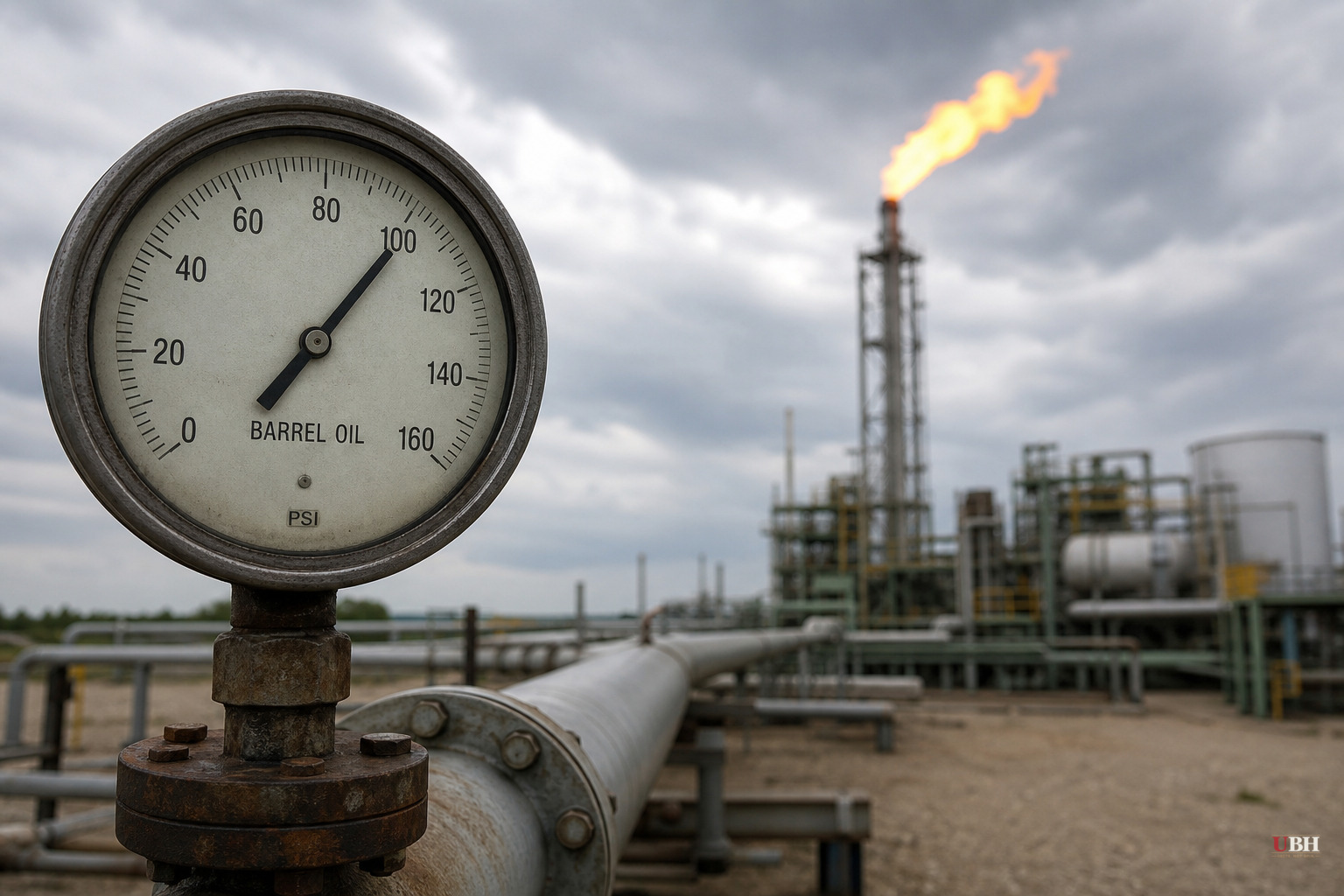
Oil Spikes Past $100 as Iran Threat Grows
At the same time, a separate crisis was pushing oil prices sharply higher. Houthi fighters in Yemen struck two Saudi oil tankers in the Red Sea, according to Reuters, extending the Middle East conflict to a second major shipping corridor. Trump responded by promising major military punishment for Iran and its Houthi allies.
Brent crude rose more than 6% on the news, one of the steepest single-day jumps of the war, and broke above $100 a barrel for the first time since May, according to Reuters. Bloomberg reported that investors are heading into the weekend bracing for further escalation, right as a stack of earnings from AI hyperscalers is set to land next week.
That combination, a widening shooting war near a critical shipping chokepoint plus a fresh round of tariffs on America's biggest trading partners, is a lot for markets to price in on a Friday morning. U.S. equity futures pointed to a positive start to the session, but the risk-off mood tied to the Middle East was expected to cap any rebound. Traders were likely to lock in short-term gains ahead of the weekend rather than take on more risk into two unresolved global flashpoints.
The new forced-labor tariffs hit a broad group: the EU, China, the U.K., Japan, South Korea, Taiwan and Switzerland are all named as trading partners now facing the new duties. The question hanging over the weekend is how each of those governments responds, whether with retaliatory tariffs of their own or by opening negotiations to get exemptions.
There's a legitimate argument on the administration's side here. Forced-labor supply chains are a real and long-documented problem, particularly tied to China's Xinjiang region, and using trade law to squeeze that out of global supply chains isn't a made-up pretext. Critics of Beijing's labor practices, including bipartisan voices in Congress who passed the Uyghur Forced Labor Prevention Act years ago, have pushed for exactly this kind of enforcement.
But the timing and breadth of this rollout, hitting 60 countries all at once right as the Supreme Court-struck tariffs expired, raises the obvious question of whether forced-labor enforcement is the actual goal or a legal workaround to reinstate a broader tariff wall the Court already said was unlawful under the emergency powers statute. Reuters' framing notes this is explicitly the White House's "first step" in rebuilding that wall, which suggests more tariff actions are likely coming under other legal justifications.
Intel reported its fastest revenue growth in 15 years on Thursday. Its data center and AI business revenue, tied to server chips that power AI training and inference, jumped 59% to $6.3 billion, beating the $5.6 billion analysts had expected according to Visible Alpha estimates.
Intel raised its 2026 capital spending plan from $18 billion to $20 billion and signaled even higher spending into 2027. Alongside chip designers AMD and Arm, Intel pointed to growing demand for CPUs needed to run AI inference workloads, the process of actually running trained AI models rather than training them.
Heading into next week, the unresolved piece is how the AI hyperscaler earnings due out, combined with an oil price near $100 and a fresh tariff regime on 60 countries, shape trading once markets reopen Monday. Whether Iran responds to Trump's threat of military punishment, and whether any of the 60 tariffed trading partners retaliate before then, are the two variables nobody can price with any certainty right now.
Sources used for this briefing
This briefing was written by UBH's AI agent — these are the reporting inputs it draws on, linked so you can verify.


