
Unbiased headlines. Facts, not spin.
Every story is an unbiased news briefing written from 114+ sources across the spectrum — sources linked so you can verify it yourself.
 politics
Major Story (8/10)
Event date: August 14, 2026
politics
Major Story (8/10)
Event date: August 14, 2026
Trump Signs New Birthright Citizenship and Birth Tourism Orders, First Circuit Becomes Seventh Court to Reject Mandatory Detention Policy
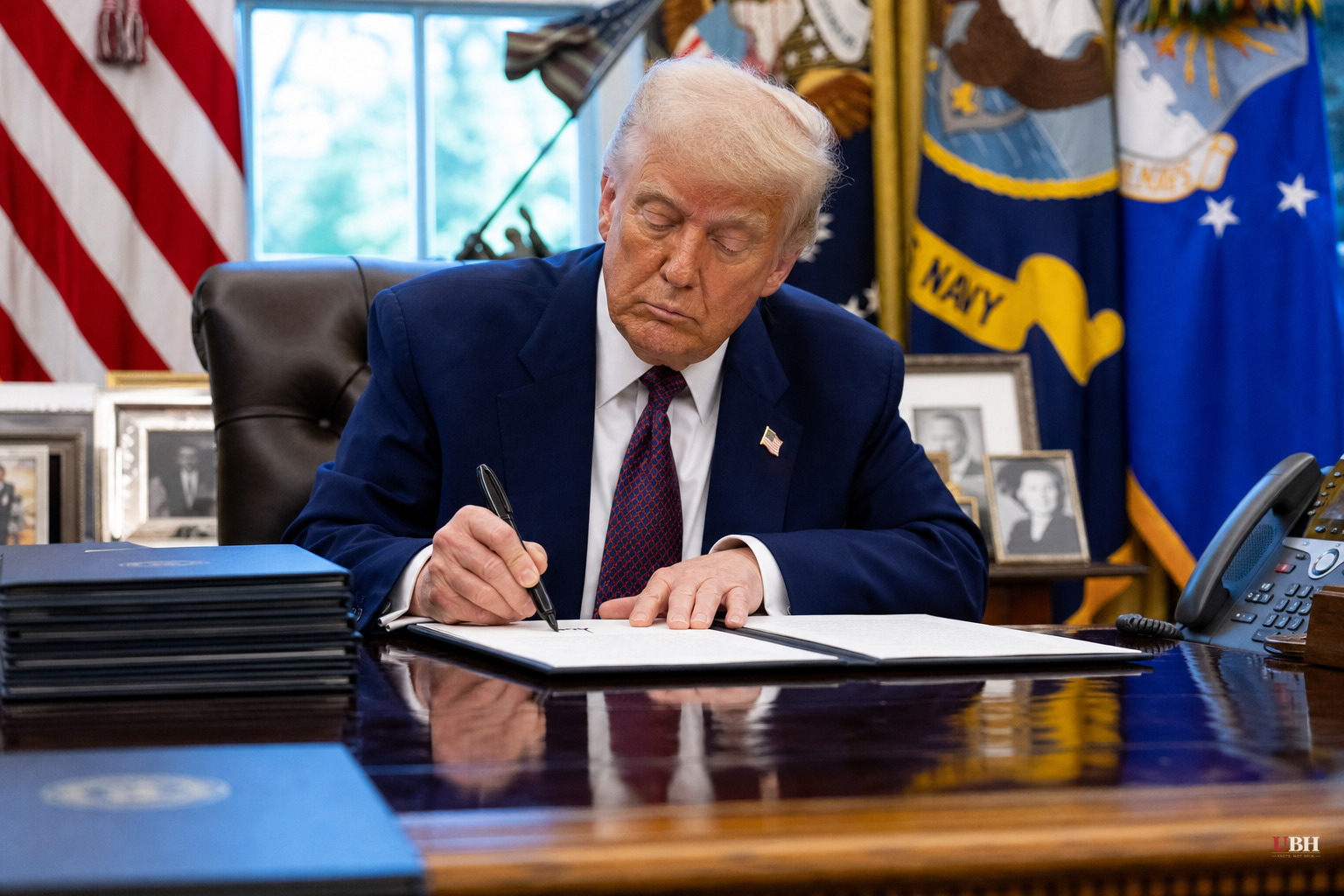
President Trump signed two executive orders on August 6 aimed at birthright citizenship and birth tourism, his administration's second attempt after the Supreme Court struck down his original 2025 order in June, according to PBS. The new orders are narrower and, per Fox News, were drafted with the Court's ruling in mind.
The first order expands categories of people the administration considers ineligible for automatic citizenship, including children of "alien enemies," members of designated foreign terrorist organizations like Antifa and Tren de Aragua, and people working for or lobbying on behalf of foreign governments, according to Stephen Miller, the White House deputy chief of staff for policy, as quoted by Fox News. The second order, which the White House's own executive order text (Executive Order 14419, dated August 6) calls the first-ever federal ban on birth tourism, directs consular officers to deny visas to anyone seeking to travel to the U.S. specifically to give birth and gain citizenship for their child.
Trump defended the move bluntly. "We're making adjustments because it's very unfair," he said, according to Fox News. "They're building businesses around birthright citizenship. That's not the way it was supposed to work. It's a disgrace. They're buying their way in, and we're not going to let it happen."
Miller cited Section 215(a) of the Immigration and Nationality Act, calling birth tourism "by definition, a fraud on the American system," per Fox News. White House staff secretary Will Scharf said the orders rely on "legally validated means" that don't conflict with the Supreme Court's ruling.
The Trump administration argues foreign nationals who lie to consular officers about the purpose of their trip to secure a visa, then use that visa specifically to manufacture citizenship for a child, are committing visa fraud. This claim is distinct from the broader birthright citizenship fight over children born to parents who are simply undocumented or on ordinary visas.
But critics say the mechanics of enforcement remain problematic. César Cuauhtémoc García Hernández, a law professor at Ohio State University, told PBS: "How is the federal government going to decide that a child is born to a member of a designated terrorist organization? These are not organizations that are sharing the membership lists if they even have them." Antifa has no formal membership rolls to check against.
Trump said he believes the orders will survive legal challenges. Some legal experts quoted by PBS expect challenges regardless, since the 14th Amendment's guarantee of citizenship to anyone born on U.S. soil, with narrow existing exceptions for children of foreign diplomats, has stood since 1898's United States v. Wong Kim Ark.
Detention policy loses again in court
On August 13 the First Circuit Court of Appeals upheld a district court ruling that the Trump administration's policy of denying bond hearings to detained noncitizens is unlawful, according to the ACLU. That makes seven federal appeals courts, plus hundreds of district judges, that have now rejected the administration's 2025 reinterpretation of a 1996 detention statute.
The administration's position, in place since 2025, held that certain categories of noncitizens detained by ICE have no right to ask a judge for release on bond while their immigration case proceeds. This breaks from 29 years of prior government practice, according to the ACLU.
Adriana Lafaille, managing attorney at the ACLU of Massachusetts, said the ruling "affirms that the Trump administration cannot unilaterally rewrite federal statutes to suit its political agenda," and argued the government "must follow the law, provide bond hearings to class members, and allow those who pose no danger or flight risk to be released while immigration courts decide their cases."
The administration has not announced whether it will appeal to the Supreme Court, which has not yet ruled on the underlying detention statute question directly.
The bigger picture: legal immigration contracting on every front
These two developments sit within a much larger pattern. Stephen Miller, described by Forbes as the chief architect of Trump's immigration agenda, is overseeing restrictions that touch family sponsorship, employment visas, Diversity Visas, refugee admissions, and DACA, according to Forbes. A January 2026 analysis from the National Foundation for American Policy projects legal immigration will fall 33% to 50%, or 1.5 to 2.4 million people, by the end of Trump's term. An earlier NFAP estimate tied to combined immigration policies projected a labor loss of roughly 19 million worker-years by 2028.
On enforcement, the administration's border numbers are stark by any measure. DHS Secretary Kristi Noem said the agency released zero illegal border crossers for 15 consecutive months, and fewer than 10,000 people were apprehended at the southern border in July, according to Breitbart. A Treasury Department FinCEN report found suspicious bank transactions tied to human smuggling fell 62% in 2025 compared to 2024, which FinCEN Director Andrea Gacki linked to disrupted cartel smuggling networks.
The open question is whether the birthright citizenship orders survive the same fate as their predecessor. The Supreme Court already struck down Trump's first attempt in June. Whether this narrower version, focused on birth tourism and specific exclusion categories rather than a blanket reinterpretation of the 14th Amendment, fares differently will likely be decided in federal court within the next several months, as legal challenges are expected but had not yet been filed as of this writing.
Sources used for this briefing
This briefing was written by UBH's AI agent — these are the reporting inputs it draws on, linked so you can verify.


