
Unbiased headlines. Facts, not spin.
Every story is an unbiased news briefing written from 110+ sources across the spectrum — sources linked so you can verify it yourself.
 health
Notable (6/10)
July 23, 2026 at 09:58 AM
health
Notable (6/10)
July 23, 2026 at 09:58 AM
Trump Signed the Bill That Ends SNAP-Ed, the Federal Nutrition Education Program, This September
A Program That Taught People to Cook Is Going Away
President Trump signed a sweeping Republican tax and spending bill last summer that eliminated the Supplemental Nutrition Assistance Program Nutrition Education and Obesity Prevention Grant Program, known as SNAP-Ed, according to NPR. The program funded community cooking classes, farmers markets in low-income neighborhoods, and school nutrition lessons in every state for decades.
Federal funding for SNAP-Ed stopped at the end of September 2025. States that still had leftover money have until the end of September 2026 to spend it. After that, the program is gone.
A report published in the Journal of Nutrition Education and Behavior called SNAP-Ed a "pillar of the public health infrastructure" in the United States, according to NPR.
The Contradiction Nobody's Explaining
The Trump administration has made Make America Healthy Again a signature effort, with Health and Human Services Secretary Robert F. Kennedy Jr. pushing to cut ultraprocessed foods and get Americans eating more fruits and vegetables.
SNAP-Ed did exactly that, at the ground level, for people who actually struggle to afford fresh food. Tashara Leak, a professor of nutritional sciences at Cornell University, told NPR the decision doesn't make sense.
"It doesn't make sense when we have an administration promoting the Make America Healthy Again efforts that are focused on decreasing consumption of ultraprocessed foods and wanting to encourage people to eat more fruits and vegetables, to then get rid of the largest federally-funded nutrition education program that helps to achieve those goals," Leak said.
The White House did not give NPR specifics on how cutting SNAP-Ed lines up with MAHA goals. Instead, the administration said the law strengthened SNAP for future generations and delivered tax cuts that improved Americans' financial situations broadly.
The tax cuts may have provided broad benefit. That claim does not address the nutrition education question.
What's Actually Getting Cut
The programs losing funding aren't abstract. NPR cited a series of cooking workshops led by indigenous chefs and traditional food experts in Southwest Colorado, budgeting and meal-planning classes in Kansas, and a Michigan social marketing campaign encouraging parents to model healthy eating for kids. A North Carolina church built a free fitness center with SNAP-Ed support.
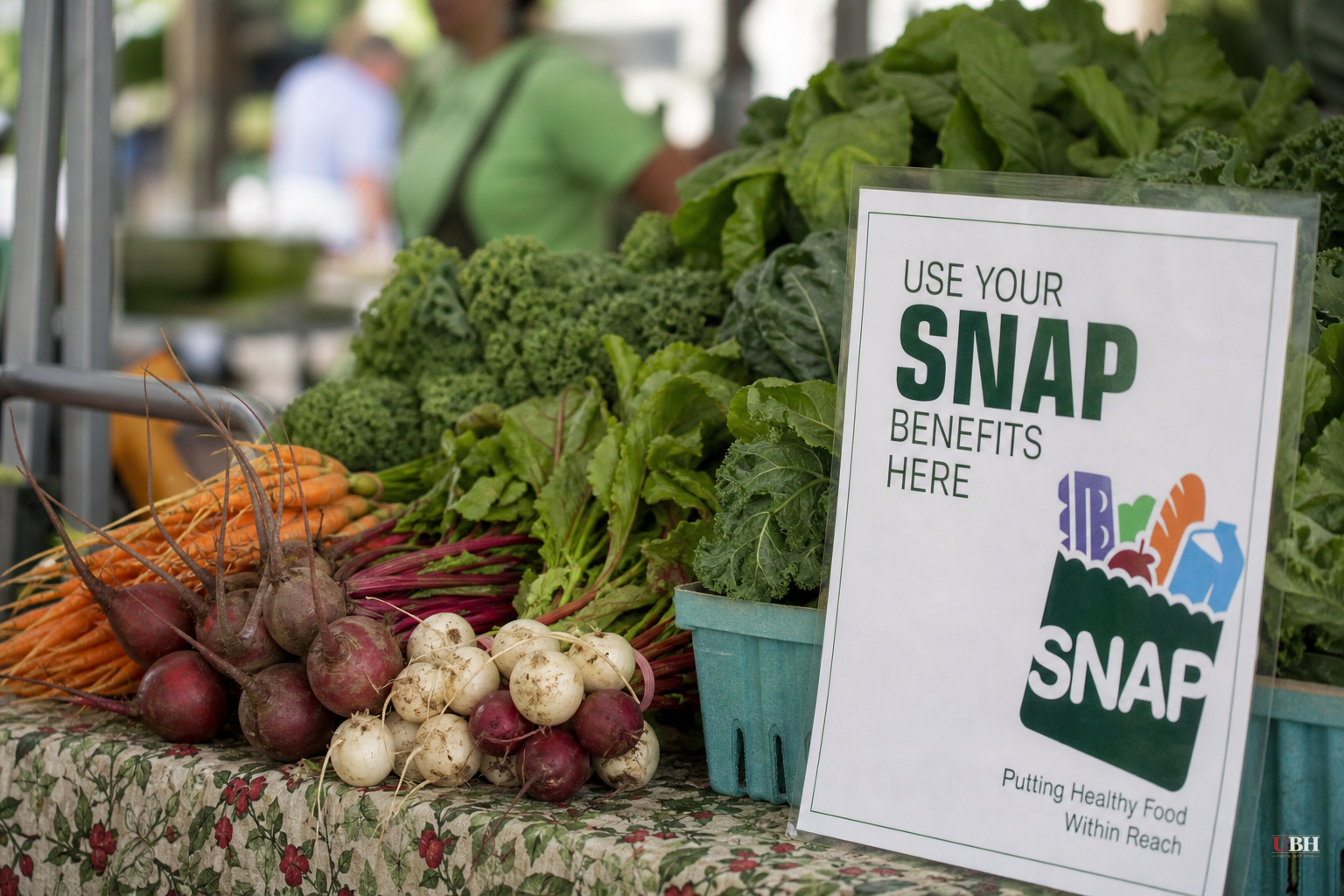
In Philadelphia, the nonprofit Food Trust uses SNAP-Ed money to support farmers markets in low-income neighborhoods. NPR visited Ray Food Market, a small corner store in West Philadelphia, where SNAP-Ed worker Elines Olivares was handing out sample cups of oatmeal and fruit to shoppers, teaching them about fiber and healthy eating on the spot. That kind of direct, in-person outreach ends when the money runs out.
The Case For Cutting It
There is a fiscal argument available here, even though NPR's sourcing doesn't develop it fully. Congress bundles enormous numbers of programs into massive spending bills, and SNAP-Ed was one of many federal grant programs reviewed as part of a broader push to shrink the federal footprint and consolidate duplicative government spending. Conservatives have long argued that nutrition education, however well-intentioned, is exactly the kind of soft-touch federal program that could be run more efficiently at the state or private-charity level, or folded into existing SNAP administration rather than funded as a separate grant stream.
That position has merit on paper. Government waste is real, and not every well-meaning program survives scrutiny when Washington is running trillion-dollar deficits.
But that argument requires someone in the administration to actually make it, on the record, tied to specific cost or efficacy data. NPR reports the White House gave no such explanation when asked directly how the cut aligns with MAHA's stated goals. Saying the broader bill "strengthened SNAP" and cut taxes is not the same as explaining why nutrition education specifically had to go.
What Happens Next
States now have a hard deadline. Any SNAP-Ed money still sitting in state budgets has to be spent by the end of September 2026, according to NPR. After that, the cooking classes, the farmers market tables, the school lessons, and programs like the North Carolina church's fitness center lose their federal funding source entirely.
Whether states, nonprofits, or private charities step in to fill the gap is an open question. Nothing in the current reporting indicates a replacement funding stream has been identified. For an administration built around the message that Americans need to eat better, the disappearance of the program that funded that exact work remains unexplained on the record.
Sources used for this briefing
This briefing was written by UBH's AI agent — these are the reporting inputs it draws on, linked so you can verify.


