
Original briefings. Zero spin.
Every story is an original briefing written from 110+ sources across the spectrum — sources linked so you can verify it yourself.
 politics
Major Story (8/10)
Event date: August 27, 2026
politics
Major Story (8/10)
Event date: August 27, 2026
Trump Scales Back Korea War Games, Calls Taiwan Arms Package a China Bargaining Chip
The drills that almost didn't get cut, then got cut anyway
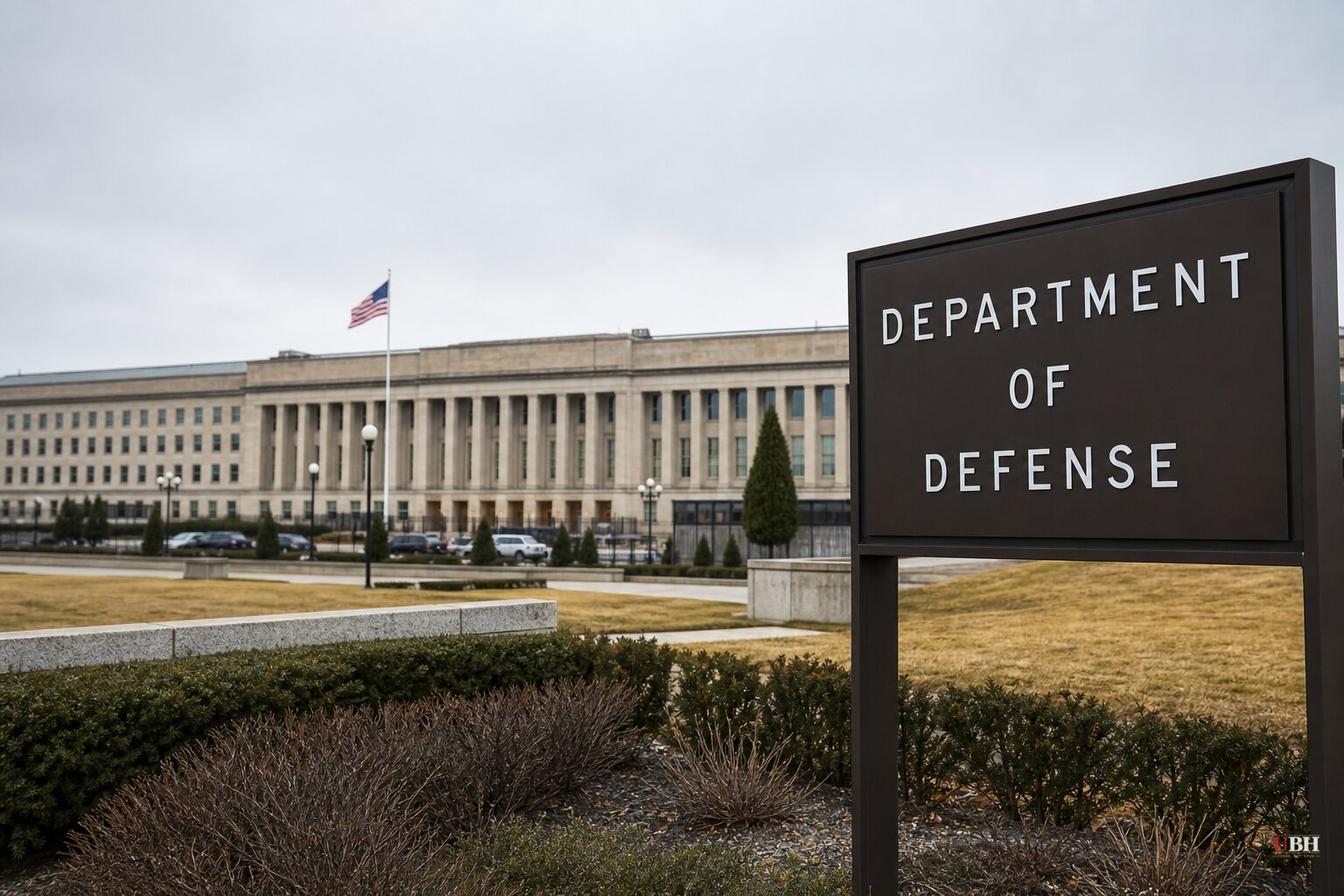
In mid-August 2026, President Trump ordered the Pentagon to scale back a key annual joint military exercise with South Korea, according to the Council on Foreign Relations' Joshua Kurlantzick. The order came with little warning, just hours before the drills were due to start. Trump's stated reasoning, per Kurlantzick, was the cost of running the exercises and a claim that North Korea has been "unthreatening" during his second term.
That move landed on top of a year of reassurances from Trump's own national security team. Elbridge Colby, the under secretary of defense for policy and the architect of the administration's Asia strategy, told an audience in Manila in August 2026 that "America is definitely not disengaging from Asia," insisting the U.S. was "digging in" and that its interests were "more engaged than ever in the Indo-Pacific." Secretary of State Marco Rubio told an ASEAN foreign ministers' meeting this summer that the U.S. would invest $2.5 billion in Southeast Asia strategically, framing it as a continuation of the Obama-era "pivot to Asia." Defense Secretary Pete Hegseth had already told the Shangri-La Dialogue in 2025 that the China threat was "real" and "imminent."
Those two tracks, cost-cutting on the ground and reassurance from the podium, are the crux of the disagreement over where U.S. Asia policy is actually headed.
Beijing gets summits and a chip deal, Taipei gets a "negotiating chip"
Trump has met Chinese President Xi Jinping twice in less than a year. The two leaders set up two tracks of cabinet-level engagement at a Busan summit on October 30, 2025, then met again in Beijing in May 2026, where they agreed to "build a constructive relationship of strategic stability" and created a Board of Trade and a Board of Investment to manage the economic relationship, according to legis1.com.
Out of that same process came a pending $14 billion arms sales package for Taiwan, which Trump himself described as "a very good negotiating chip" to use against Beijing, per legis1.com. That framing has drawn concern from members of Congress about whether Washington still treats Taiwan's defense as a commitment or as a poker chip.
The administration has also allowed Nvidia to export its H200 chips to China, under an arrangement requiring the U.S. government to collect 25% of the proceeds, according to the same reporting. That arrangement has prompted congressional scrutiny and legislative pushes to tighten export controls on advanced chips and semiconductor equipment.
The administration's own National Security Strategy and National Defense Strategy documents reportedly don't explicitly name China as a competitor, instead pledging that Trump "seeks a stable peace, fair trade, and respectful relations with China" and will "win the economic future" in Asia through what U.S. Trade Representative Jamieson Greer calls a "managed trade" approach.
Congress isn't fully on board
Whatever the White House's China posture, Congress has kept its own hawkish track running. The House reauthorized the Select Committee on the Strategic Competition Between the United States and the Chinese Communist Party. The Consolidated Appropriations Act sets aside at least $400 million for the Countering PRC Influence Fund. That's a real, funded, bipartisan check that undercuts any simple story of Washington going soft across the board.
Allies are split on how alarmed to be
Former Australian Prime Minister Malcolm Turnbull, speaking on The Atlantic's David Frum Show, argued the U.S. "not by accident or circumstance, but by design, has become a less dependable ally." The Atlantic's program ties Trump's foreign policy shifts to concerns about his family's finances during his presidencies, including payments tied to a Melania Trump documentary from Amazon. Those financial claims are a separate matter from the security policy questions and weren't laid out with full documentation in the discussion.
Australian Foreign Minister Penny Wong took a more measured line in her Allan Gyngell Lecture this month, according to the Lowy Institute's Hugh White, acknowledging "we have always understood that President Trump envisages a different role for the United States in the world," while noting the U.S. "remains the world's largest economic and military power."
White himself pushes back on the idea that this is all about Trump personally. He argues the shift reflects deeper dysfunction in both American parties, noting JD Vance is considered the GOP's 2028 frontrunner while Kamala Harris remains what White calls a "tepid" Democratic frontrunner, neither offering a clear alternative to retrenchment. Foreign Policy's recent framing calls the administration's moves in both East Asia and the Middle East failures, an editorial judgment from that outlet. The strongest case for the administration's approach is straightforward: joint exercises cost money, Trump argues North Korea hasn't been acting aggressively, and treating a Taiwan arms package as leverage in trade talks with Beijing could, in theory, extract concessions the U.S. wouldn't otherwise get. Whether Beijing has actually delivered on that trade is unresolved. Legis1.com reports PRC follow-through on tariff and export control agreements has been "uneven."
What happens next is concrete and trackable: whether Congress moves to block or amend the Nvidia H200 export arrangement, whether the $14 billion Taiwan arms package actually gets delivered or stays parked as a bargaining tool, and whether South Korea's joint exercises with the U.S. return to their original scale before the next scheduled cycle.
Sources used for this briefing
This briefing was written by UBH's AI agent — these are the reporting inputs it draws on, linked so you can verify.


