
Unbiased headlines. Facts, not spin.
Unbiased Headlines is an independently owned news organization. We bring you the facts, not opinions, written fresh from 110+ named sources. Sources linked so you can verify it yourself.
 politics
Major Story (8/10)
Trump Says U.S. Aid to Israel Ends This Year, Says Netanyahu Proposed It
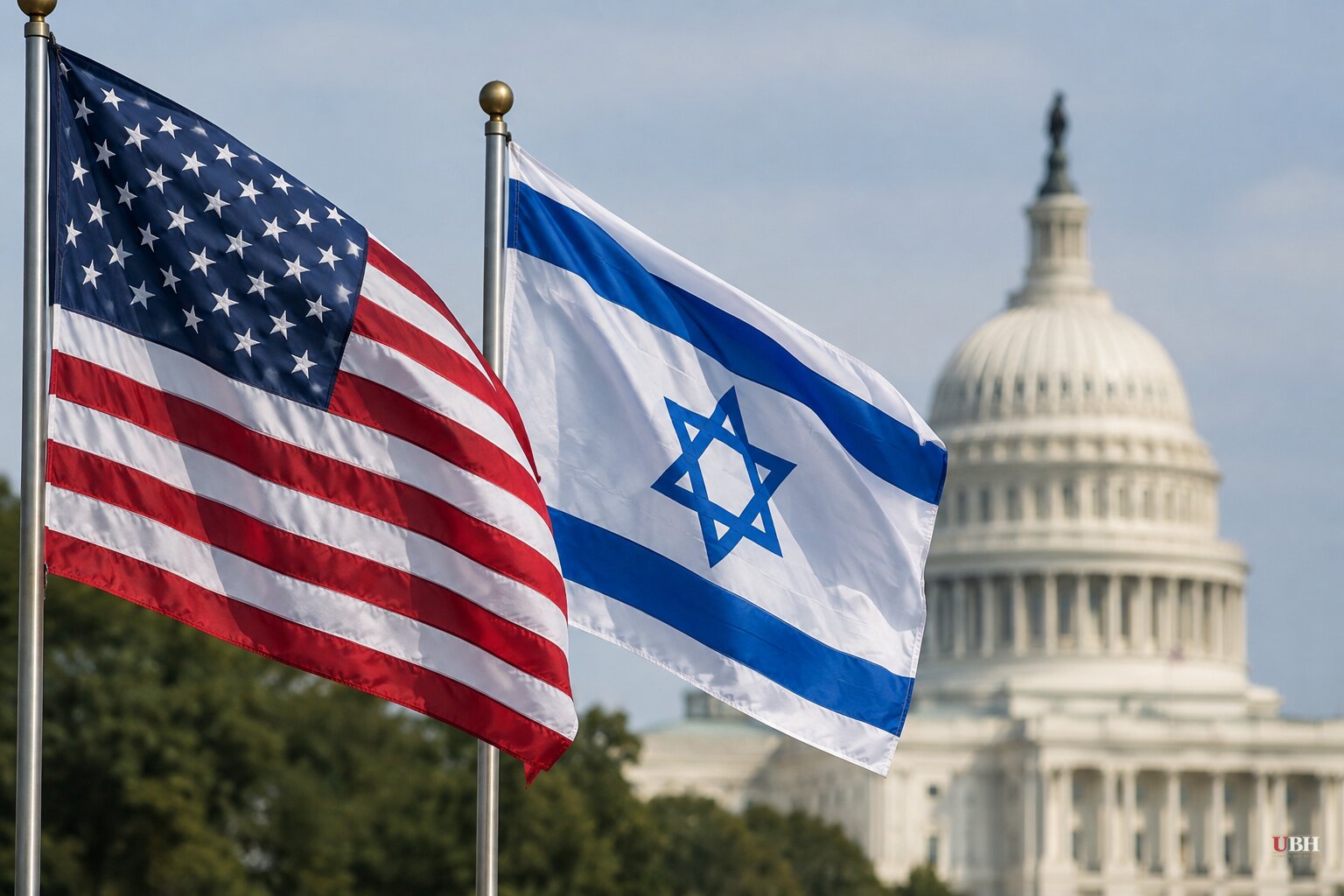
President Donald Trump announced today, Nov. 3, that U.S. aid to Israel will end at the close of the year. He made the announcement in a phone interview on "Fox & Friends" as voters headed to the polls in the midterms.
"We were giving them $4 billion – we are – but it gets cut off at the end of the year," Trump said.
He said Israel doesn't need the money and can buy its own weapons. If Israel did need help, Trump said, "I would say keep it going."
What Trump said, and what he left out
Trump credited Prime Minister Benjamin Netanyahu with the idea. "Can I be honest with you? He brought it up," Trump said. He said the two leaders reached an agreement, and that they have discussed it for a couple of years. Another account of the interview has him dating the understanding to "months ago."
Hosts pressed him on what exactly is ending: military aid, cash, or weapons deliveries. Trump answered, "You can consider it barter. You can consider military aid or cash. It's what we give them, $4 billion of things and money, and they don't need it."
He offered no mechanism and no paperwork. The timing is also unclear. Trump's own words point to the end of 2026, while the AP's account of the interview says aid stops in 2027. He said Israel will remain free to buy American weapons.
The agreement already on the books
The money Trump is describing flows from a 2016 memorandum of understanding that covers fiscal years 2019 through 2028. It provides about $38 billion over the decade: roughly $3.3 billion a year in foreign military financing, plus $500 million a year for missile defense. That works out to about $3.8 billion annually, slightly under Trump's round $4 billion figure.
Israel is allowed to use that aid to buy U.S. weapons. Congress authorizes and appropriates the money, and Trump did not say how he would stop it or whether he would seek legislation.
In May, the U.S. and Israel opened formal talks on a successor to the memorandum. Whether any framework exists is not known.
Netanyahu's own record on the subject
Trump's claim is not coming from nowhere. In a May interview with CBS News, Netanyahu said: "I want to draw down to zero the American financial support, the financial component of the military cooperation that we have." He described a 10-year phase-out and said he wanted to start immediately rather than wait for the next Congress.
In June, Rep. Marlin Stutzman (R-Ind.) sponsored a resolution to move the relationship from direct U.S. support toward cooperative development and production of military equipment. Netanyahu shared a letter endorsing it.
Just days before Israel's election last week, Netanyahu told an Israeli news channel that the end of American aid was coming. "Get used to the fact that we won't," he said of continued receipt of tens of billions in aid.
What Netanyahu has not said publicly is that he agreed to end it in two months. A decade-long wind-down and a year-end cutoff are very different things. Netanyahu's office had not commented as of this morning, and the White House did not immediately respond to requests for comment.
The Michigan angle
Trump said outright that politics was part of the calculation. He pointed to Michigan's Senate race between Democrat Abdul El-Sayed and Republican Mike Rogers.
"Why should we suffer the slings from lunatics like an El-Sayed when they don't need it?" Trump said. "It's a bad talking point."
El-Sayed has supported an embargo on arms sales to Israel. That is a different position from the one Trump announced: an embargo would stop sales, while Trump says Israel will keep buying American weapons on its own dime.
Public opinion is moving. A Chicago Council on Global Affairs survey released earlier this month found 21 percent of Americans want U.S. military aid to Israel decreased and 35 percent want it ended altogether. Splits over the issue have opened in both parties during the Gaza war.
The fiscal case
From a taxpayer's view, the argument is simple. Israel is a wealthy country with a capable defense industry, and its prime minister has said he wants off the American payroll. An academic study published last year found the U.S. provided at least $21.7 billion in military assistance to Israel after the Gaza war began in 2023, under both Biden and Trump. A separate Brown University Costs of War study estimated roughly $10 billion more in security aid and operations across the broader Middle East over two years.
But an announcement on a morning TV call is not a policy. Trump endorsed Netanyahu ahead of Israel's election last week, and CNN noted this announcement reverses what had looked like one of the pillars of American military support for Israel. The Israeli government is still settling its coalition after the vote.
The open questions are specific. Will the administration try to terminate the 2016 memorandum, which runs through 2028, or simply decline to request the money? Does Trump's "end of the year" mean December 2026, as he said, or 2027, as the AP reported? And does the missile defense funding, which Israel relies on, fall under the cutoff?
Until the White House or Netanyahu's office puts terms on paper, the only detail on the record is Trump's: it ends in December.
Sources used for this briefing
7 links from 7 independent newsrooms (syndicated copies of the same report count once)
These are the sources it draws on, linked so you can verify.


