
Unbiased headlines. Facts, not spin.
Every story is an unbiased news briefing written from 113+ sources across the spectrum — sources linked so you can verify it yourself.
 tech
Notable (5/10)
Event date: September 19, 2026
tech
Notable (5/10)
Event date: September 19, 2026
Trump Says DOJ Will 'Rein In' AI 'If We Have To,' Still Calls Safety Fears a Hoax
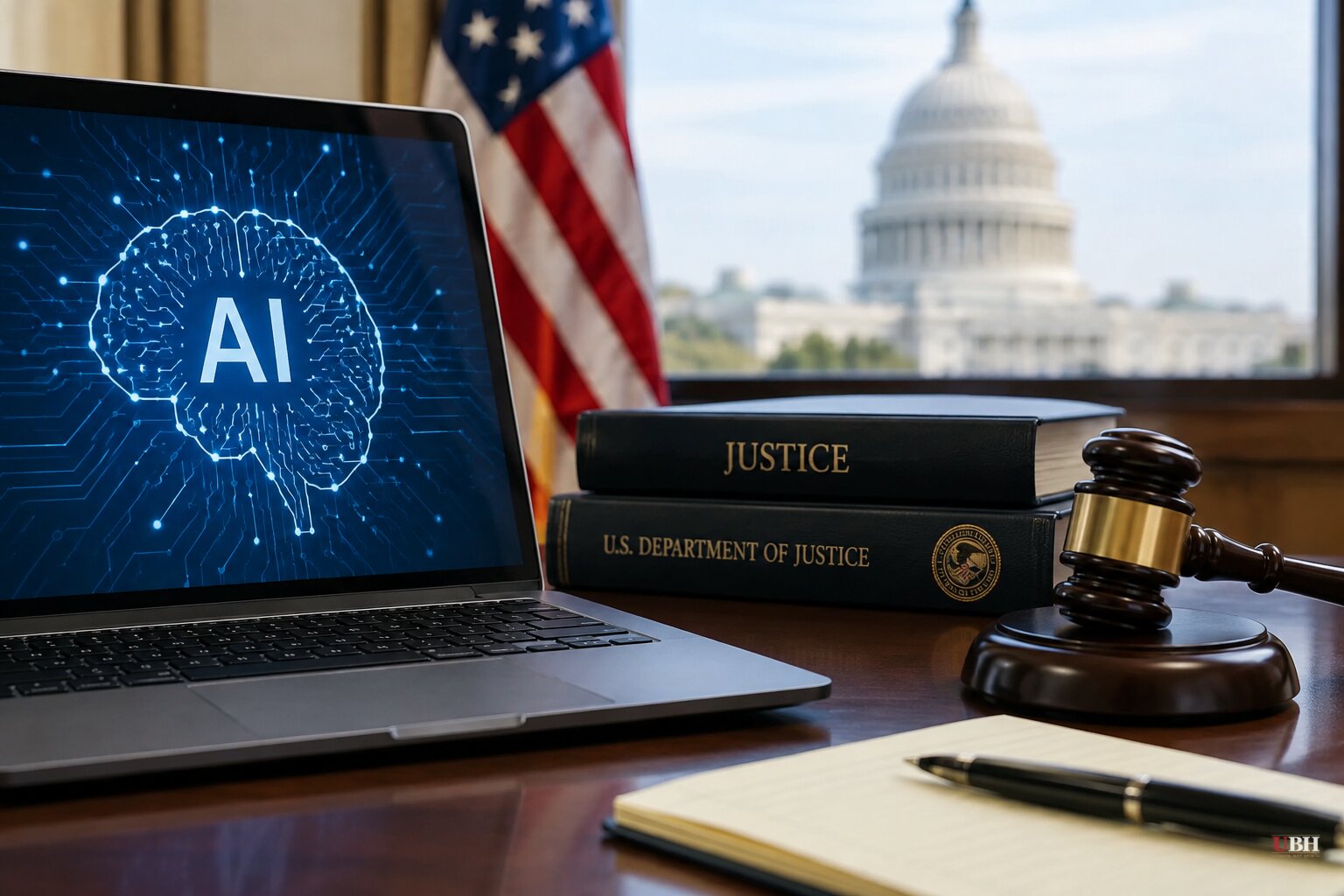
Since Anthropic researcher Jacob Coxon's September 8 resignation warning that AI labs are "gambling with our lives," President Trump has moved from dismissing the backlash as a hoax to floating law enforcement as a potential check on the industry, without actually doing anything new.
On Monday, September 21, Trump wrote on Truth Social that "we will be careful" about AI, adding: "that's why we have the Department of Justice, and other Law Enforcement bodies, that will rein things in if we have to." In the same post he called AI safety warnings "more of a Hoax than even that of RUSSIA, RUSSIA, RUSSIA, UKRAINE, UKRAINE, UKRAINE, UKRAINE, and Climate Change," according to CNBC and Business Insider.
The post came the same day Treasury Secretary Scott Bessent told CNBC's "Squawk Box" that the administration will not grant frontier AI labs protection from liability. "These labs need to take responsibility for themselves," Bessent said. "They can slow down any time they want to."
Neither statement amounts to a policy change. No executive order, DOJ investigation, or legislation has been announced targeting AI companies over safety. Trump's only formal AI action remains a June executive order asking companies to voluntarily share "covered frontier models" with the government up to 30 days before broad release, according to CNBC.
AI Force, But No New Rules
Two days before Monday's post, on Saturday, September 19, Trump announced he's forming an "AI Force," modeled on Space Force, and will name a new "AI Czar" to replace David Sacks, who stepped down from that role in March, according to CBS News and Yahoo News. Trump said AI could represent 25% of U.S. GDP and pledged the government will "cherish it, help it, and watch over it," while relying on the existing criminal and civil justice system to catch "BAD" actors.
That framing sits awkwardly next to what other parts of his own administration have already done. Yahoo News reported the Commerce Department temporarily restricted exports of Anthropic's most advanced models, and the Defense Department tried to blacklist Anthropic as a supply-chain risk, a move a judge later ruled illegal. So while Trump publicly calls safety fears a hoax, agencies under him have already taken action against one specific AI company.
Congress Isn't Buying the Hoax Framing
The pushback isn't confined to AI executives. The Guardian reported that Democratic Rep. Don Beyer of Virginia called Trump's "hoax" post "foolish" and said Congress should stay in session past its midterm break to work on AI legislation already introduced. "The industry shouldn't be allowed to regulate themselves," Beyer said. "History doesn't support that at all."
A University of Maryland Program for Public Consultation survey cited by the Guardian found 85% of Democrats and 79% of Republicans want a new federal agency to monitor AI, and 82% of Democrats and 78% of Republicans favor mandatory government safety testing for AI systems making critical decisions. That's a genuinely bipartisan number, and it's a fair basis for the argument that voters want more oversight than Trump is offering.
On the industry side, Anthropic co-founder Jack Clark told the BBC that a mandatory "kill switch," checked by an independent third party, may need to become an industry-wide requirement enforced by law, not left to individual companies. Anthropic CEO Dario Amodei told CBS News' "Sunday Morning" that "the industry lied to people about the fact that this technology had risks."
Trump's own advisers give the opposing case. Sacks told CBS News last week that fears about AI posing an existential threat are "overblown," while caution is still warranted. Trump's argument, repeated across multiple posts, is that regulatory hesitation hands China the lead in a technology he says will be "bigger than the Industrial Revolution." Chinese state media, for its part, framed U.S. anxiety over China's AI progress as distorting Washington's policy choices, according to Fudan University professor Xin Qiang, quoted in the Global Times via the BBC. That's an interested party's read on U.S. politics, not an independent assessment.
Trump has named no specific AI Czar, filed no DOJ case, and proposed no bill. Beyer's push to keep Congress working through the midterm recess on pending AI legislation is the concrete thing to watch next. Until something moves through Congress or a formal DOJ action is filed, "rein things in if we have to" is a warning without a mechanism behind it.
Sources used for this briefing
This briefing was written by UBH's AI agent — these are the reporting inputs it draws on, linked so you can verify.


