
Unbiased headlines. Facts, not spin.
Every story is an unbiased news briefing written from 110+ sources across the spectrum — sources linked so you can verify it yourself.
 tech
Notable (6/10)
September 21, 2026 at 01:40 PM
tech
Notable (6/10)
September 21, 2026 at 01:40 PM
Google Opens Pre-Orders for Googlebook Laptops, Starting at $899, Betting Android Owners Want Mac-Style Integration
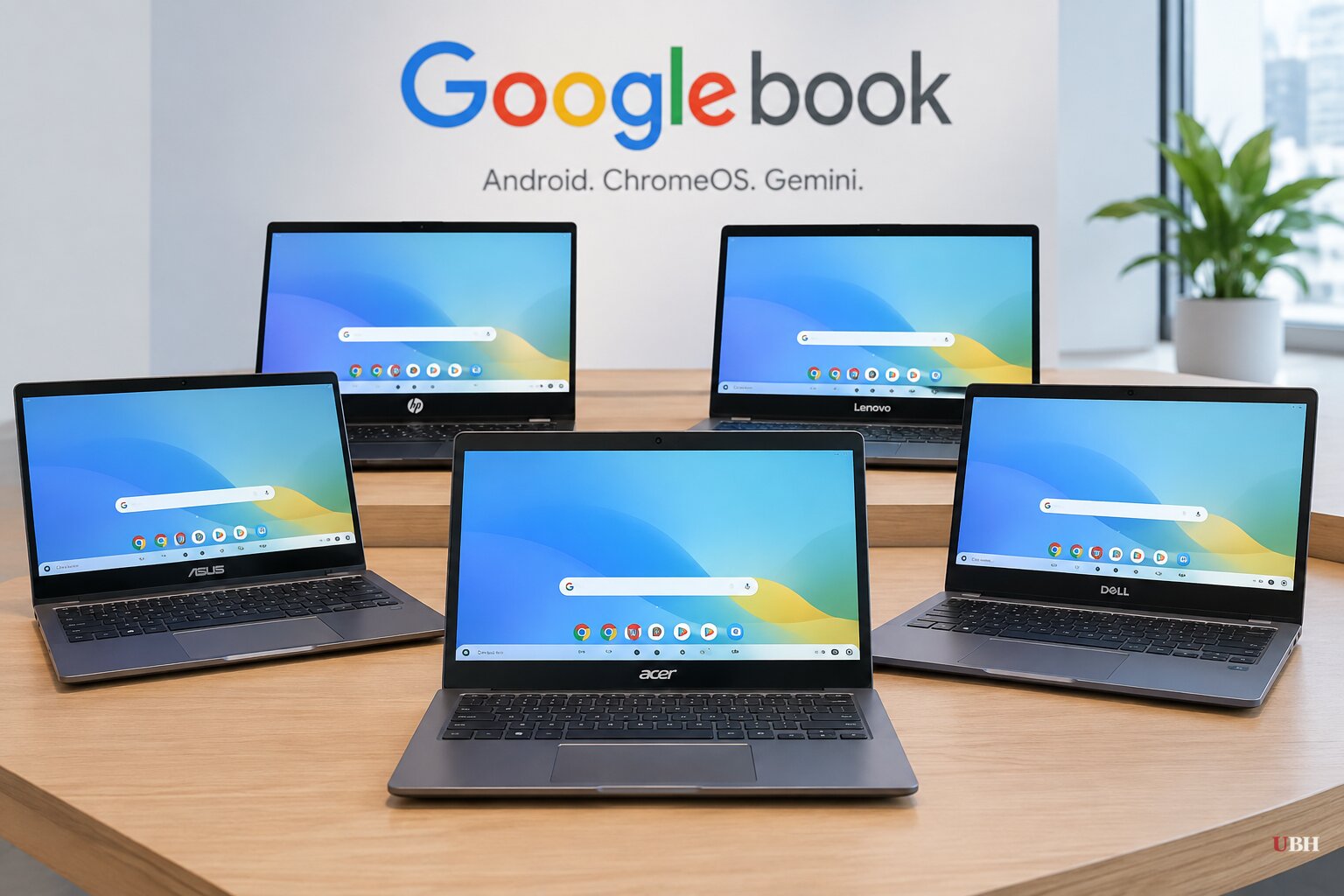
Google opened pre-orders Monday, September 21, for its new Googlebook laptop line, five machines built by Acer, Asus, Dell, HP, and Lenovo that run a brand-new operating system merging Android and ChromeOS. They land in U.S. stores October 4, and internationally in Canada, the U.K., Ireland, France, Germany, and Australia on October 5, according to Tom's Hardware.
Prices start at $899 for the Acer Googlebook 14, a 2-in-1 convertible, and climb to $1,299 for the HP Googlebook 14, Lenovo Googlebook 15, and Asus Googlebook 14. Dell's XPS Googlebook starts at $1,199. Every model runs either Qualcomm's Snapdragon X Elite or Intel's Core Ultra Series 3 (Panther Lake) chip, per Wired and Tom's Hardware, though Google says MediaTek's Dimensity CX C10 Max also supports the platform. No launch device actually uses a MediaTek chip, a gap XDA Developers flagged as odd given how much Google talked about the partnership.
The pitch is not subtle. Sameer Samat, Google's president of the Android ecosystem, told reporters at a New York media event, according to Engadget, that "today, there isn't a laptop platform built to work seamlessly with your Android phone." Google is chasing the same trick Apple has run for years between the Mac and iPhone.
The operating system is built on the Android tech stack with ChromeOS desktop foundations layered on top, according to XDA Developers and Unite.ai. Google hasn't confirmed a retail name for the OS. Crypto Briefing reported the internal codename is "Aluminium OS," though that's unconfirmed for the shipping product.
What you actually get
Google's hardware baseline, per Wired and Unite.ai, requires "premium materials" like aluminum, magnesium, or carbon fiber, at least 16GB of RAM, more than 45 TOPS of on-device AI processing, a touchscreen, backlit keyboard, haptic trackpad, Dolby Atmos speakers, and at least 14 hours of battery life. All five launch machines carry the signature Glowbar, an LED strip on the lid that Google first used on the 2013 Chromebook Pixel, which now lights up during Gemini interactions and shows battery status, according to TechRadar and Tom's Hardware.
Every purchase includes a year of Google AI Pro with 5TB of storage, three months of YouTube Premium, Adobe Photoshop, and a year of GeForce NOW, according to a blog post from John Solomon, Google's vice president and general manager for Laptops, Tablets & Android Enterprise, cited by Unite.ai. Google says it will support the OS with updates for up to 10 years.
The integration features are the real sales pitch. According to details from Alexander Kuscher, Google's senior director for Laptops & Tablets, cited by Unite.ai, signing in transfers an Android phone's Wi-Fi passwords, saved credentials, and messages to the laptop, described as end-to-end encrypted. A Continue On feature resumes phone tasks from the taskbar, and Cast My Apps streams phone apps into a desktop window. A new AI cursor called Magic Pointer summons Gemini with a flick of the mouse.
The skeptic's case
The Verge's David Pierce laid out the obvious objection: Googlebook "feels like classic Google in a bad way: yet another operating system, yet another brand, yet another thing destined for the Google graveyard." Google has a real track record of launching platforms with fanfare and quietly burying them a few years later. Anyone who remembers Google+, Stadia, or Inbox would be right to worry.
Rick Osterloh, Google's head of hardware and devices, pushed back on that framing directly to Pierce, calling Googlebook "the ultimate focusing move" because Google has run two separate operating systems, ChromeOS and Android, for over a decade and is now consolidating them into one. Whether that consolidation sticks around longer than Google's past big swings is something only time will answer, not a press event.
Google has committed to ChromeOS updates through at least 2034 for existing Chromebooks, according to Crypto Briefing, with ChromeOS staying in the budget and education market while Googlebook targets premium buyers. That's a reasonable hedge if Googlebook flops, but it also means Google is now running three overlapping platforms at once: ChromeOS, Android, and Googlebook. A company not exactly known for platform discipline.
Google hasn't said whether it will build its own Googlebook under the Pixel brand, something XDA Developers noted with disappointment given the cult following of the 2017 Pixelbook. For now, the entire lineup depends on five outside manufacturers actually selling machines that convince Android owners to pay MacBook Air money for a laptop running an operating system that didn't exist five months ago.
Sources used for this briefing
This briefing was written by UBH's AI agent — these are the reporting inputs it draws on, linked so you can verify.


