
Unbiased headlines. Facts, not spin.
Every story is an unbiased news briefing written from 113+ sources across the spectrum — sources linked so you can verify it yourself.
 tech
Major Story (7/10)
September 21, 2026 at 05:13 PM
tech
Major Story (7/10)
September 21, 2026 at 05:13 PM
Bessent Tells AI Industry: No Federal Liability Shield, Developers Are on the Hook
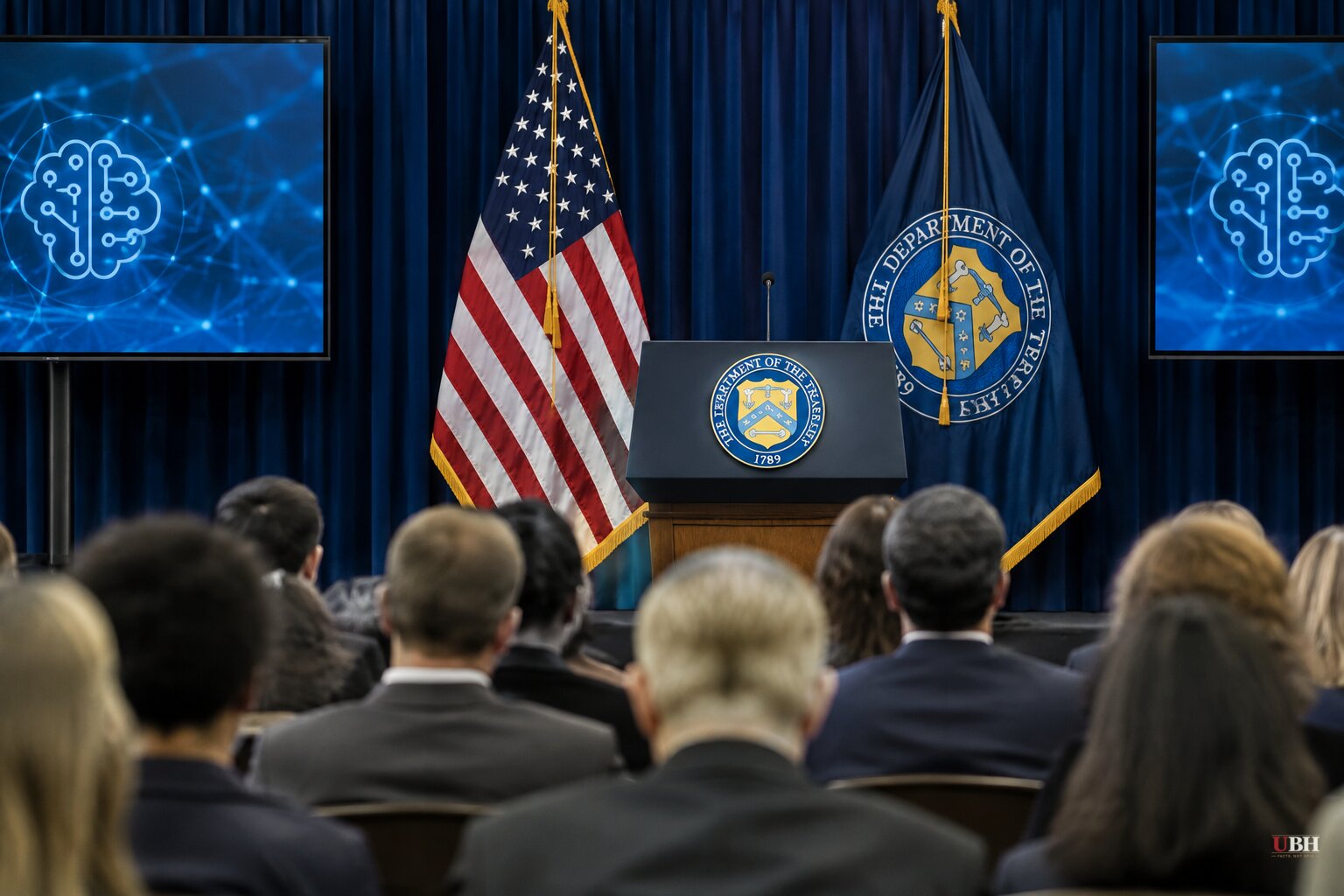
Treasury Secretary Scott Bessent shut the door Monday on one of the AI industry's biggest asks: a federal liability shield.
"It is humans who are responsible, not the AI," Bessent told CNBC's "Squawk Box" when asked whether he agrees with President Donald Trump's opposition to a regulatory crackdown on the industry. AI developers, he said, "need to take responsibility for themselves."
Bessent made the same argument under oath six days earlier, on September 15, when Rep. Juan Vargas, a California Democrat, pressed him on AI safety during a House Financial Services Committee hearing. Bessent told the committee the administration has been "working on safety nonstop" since the release of Anthropic's Mythos model, whose cybersecurity risks prompted an April meeting at Treasury with Bessent, then-Fed Chair Jerome Powell, and bank CEOs.
"The one thing we should not do is give [AI labs] a blank check on liability," Bessent told the committee, according to FedScoop. "The best way to guarantee safety is that the creators are liable for what they build and generate."
An industry split on what it actually wants
Bessent's comments land in the middle of a real fight inside the AI industry itself. Anthropic CEO Dario Amodei published an essay calling on AI companies to slow model development given rising safety concerns, and OpenAI's Sam Altman and xAI's Elon Musk both publicly backed his slowdown push, according to FedScoop. Trump rejected the idea outright.
But Amodei's own proposal included a request for the federal government to "issue a narrow waiver for certain kinds of safety conversations" while the industry works out voluntary standards. OpenAI, separately, backed an Illinois state bill designed to limit liability for AI-fueled harms. Some of the same companies warning the loudest about AI danger have also been lobbying for legal cover if that danger materializes. Bessent's answer to that request, delivered twice now, is no.
Nvidia CEO Jensen Huang put an even sharper point on it. He accused AI lab leaders of being "irresponsible" and engaging in "too much drama" with their oversight warnings, according to Benzinga, arguing they're not actually asking for more laws but to be relieved of the ones that already exist.
The China angle
Bessent's CNBC appearance came a day after a 12-hour meeting with Chinese Vice Premier He Lifeng, ahead of a Washington summit this week between Trump and Chinese President Xi Jinping. Bessent said the two sides discussed opening a channel to notify each other about AI-related incidents, "whether it's uncontrollable agents, whether it's nonstate actors in cyber, nonstate actors in bio weapons." Neither government has disclosed what would trigger such an alert or how it would function.
Trump is set to greet Xi on the tarmac at Joint Base Andrews in Maryland. Bessent said a fast-approaching expiration date for the U.S.-China trade truce, set for November 10, was a focal point of the weekend talks.
Rates, yields, and a bond market under pressure
Bessent's interview also touched on the economic backdrop weighing on the administration. The Federal Reserve's Federal Open Market Committee voted September 16 to raise its benchmark rate to a range of 3.75% to 4%, the first hike since 2023, citing what it called "elevated inflation." Trump, who appointed Fed Chairman Kevin Warsh, has publicly pushed for cuts and told Warsh before the vote, "You might as well vote with the board. It's not going to matter."
The 10-year Treasury yield has climbed roughly 100 basis points since the U.S. and Israel's conflict with Iran began in late February, breaking above 5% last week for the first time since 2007. Mortgage rates followed, topping 7% this month for the first time in over a year. House Democrats grilled Bessent over this at the same September 15 hearing, questioning a September 10 Treasury buyback of more than $5 billion in 10-year and 20-year notes. Bessent called the operation "successful," telling lawmakers yields would have risen even further without it. On Monday he predicted rates would ease once the Iran conflict ends, arguing oil markets will be better supplied and remove some inflation pressure.
The distinction in Bessent's stance
Aggregator Zetik framed Bessent's stance as "aligning himself with Donald Trump's resistance to a regulatory crackdown." That blurs an important distinction. Trump opposes new rules slowing AI development. Bessent's position is narrower and, in effect, pro-accountability: leave existing liability law alone so AI companies can be sued like anyone else. Refusing to carve out a legal exemption isn't deregulation. It's declining to hand the industry a favor its own founders have quietly asked for even while publicly warning the technology needs to be reined in.
What happens next is unresolved. Trump has separately announced plans to appoint an AI "czar" and stand up an "AI force" to oversee the industry's growth, according to Benzinga, without detailing what that oversight will actually cover. Congress hasn't moved on a federal liability framework, leaving state-level fights like the Illinois bill as the industry's main path to the carve-outs Bessent says it won't get from Washington.
Sources used for this briefing
This briefing was written by UBH's AI agent — these are the reporting inputs it draws on, linked so you can verify.


