
Unbiased headlines. Facts, not spin.
Unbiased Headlines is an independently owned news organization. We bring you the facts, not opinions, written fresh from 110+ named sources. Sources linked so you can verify it yourself.
 defense
Breaking / Critical (9/10)
Event date: October 15, 2026 ·
defense
Breaking / Critical (9/10)
Event date: October 15, 2026 ·
Trump Rules Out Nuclear Strike and Ground Troops in Iran While MOAB Plans Are Ready, Sources Say
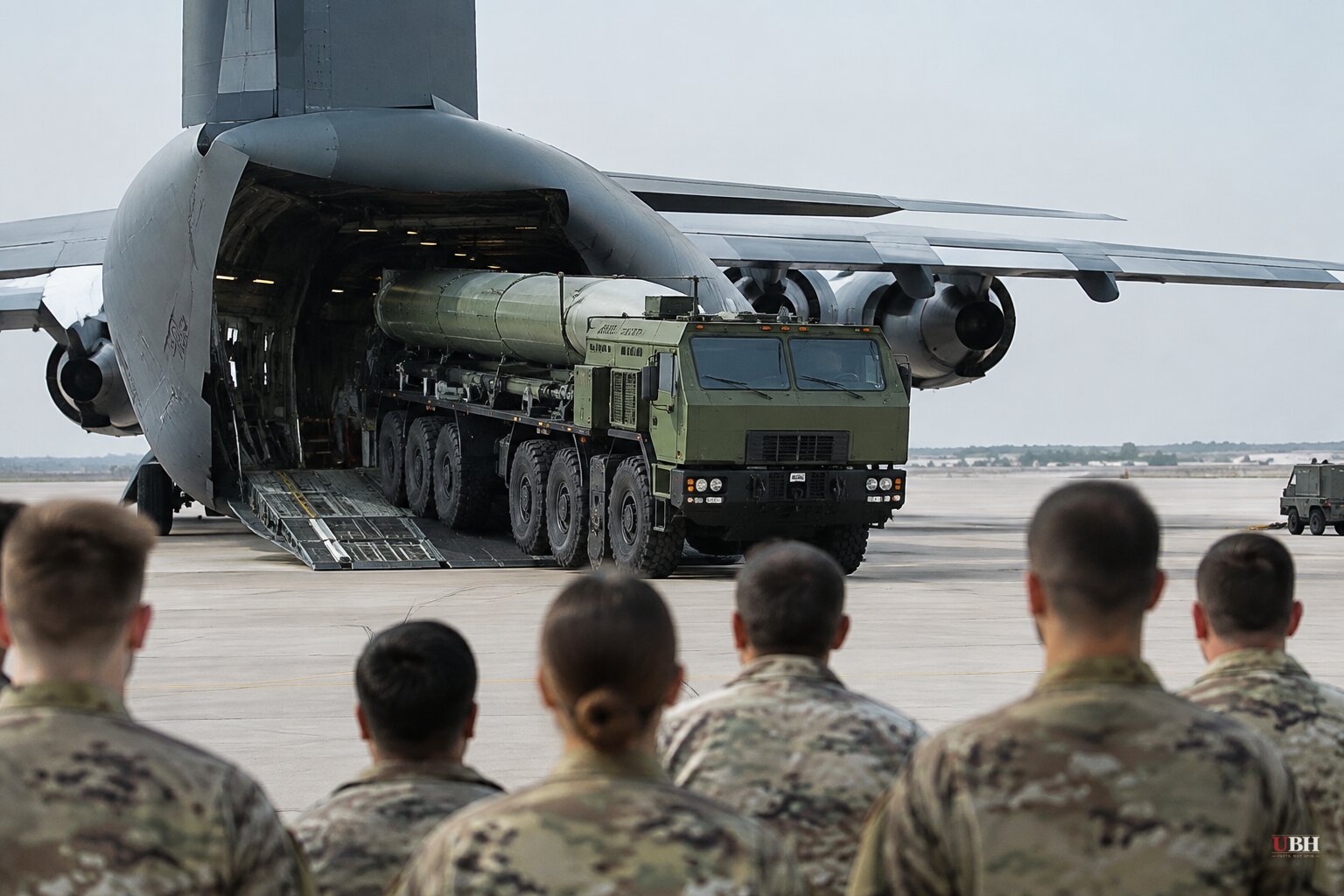
Since Houthi missiles and drones began hitting Riyadh's airport and Saudi Aramco's Dhahran headquarters, the Iran war has pulled Washington in two directions at once: public restraint from the president, and contingency planning behind it.
Trump draws two lines
In an interview with Newsmax, President Trump said he would not use a nuclear bomb in Iran and does not see the United States deploying ground troops there. He added that he has spoken with Russia and China about nuclear disarmament.
Last week Trump said the U.S. would not attack Iran before the midterm elections. He also pointed to "productive conversations" with Iran but gave no specifics.
The restraint has limits. Sources familiar with the matter told CBS News that the White House and Pentagon have prepared plans to use a Massive Ordnance Air Blast bomb, the MOAB, against military sites in Iran if Trump orders it. CNN was first to report the plans.
A Pentagon official told CBS the department "plans for a wide range of operational scenarios." A White House spokesperson said: "We do not comment on sensitive military plans that may or may not exist. President Trump keeps all options on the table to ensure that Iran can never have a nuclear weapon."
The MOAB is the largest U.S. non-nuclear bomb, weighing upwards of 30,000 pounds at about $170,000 a unit. It was last used in 2017 against an Islamic State cave complex in Afghanistan.
The leak Trump says cost him a raid
At a rally in Arizona on Wednesday, Oct. 14, Trump went after an unnamed leaker he accused of exposing the departure and arrival times of B-2 bombers ahead of planned strikes on Iran.
Trump said the bombers left from Missouri at 12:07 and that Iran was "waiting for them." He said he called off the raid, consulted Gen. Dan Caine, and that the strikes went ahead two days later at the same time. "Leakers should be shot," he said, adding that leakers "ought to go to jail."
Trump said the timing appeared in the New York Times and on CNN. No leaker has been named, and no charges have been announced.
Munitions: a warning and a denial
CBS News, citing multiple U.S. officials, reported Thursday that Army Chief of Staff Gen. Randy George warned in late December, two months before the war, that the Army was critically short of missile defense munitions. His assessment, part of the Pentagon's Global Force Management Allocation Plan for fiscal 2027, said THAAD and Patriot stocks would stay strategically low through 2030.
Those officials blamed Patriot transfers to Ukraine, munitions spent defending Israel, and limits on the defense industrial base. Defense Secretary Pete Hegseth removed George in April, after the war began.
A Center for Strategic and International Studies estimate cited by CBS puts the U.S. at roughly 2,300 Patriot interceptors entering 2026. It says between 1,050 and 1,430 were used in the war, potentially up to 61% of the prewar inventory. For THAAD, the estimate is about 355 prewar interceptors and 190 to 290 used, up to 82%.
The Pentagon rejects the premise. Chief spokesman Sean Parnell said the U.S. has "everything required to strike at the time and place of the President's choosing" and a "deep, ready arsenal."
Saudi front stays hot
The Saudi-led coalition said its air defenses intercepted and destroyed a drone aimed at the Eastern Province on Thursday. That followed a Houthi vow on Wednesday to keep attacking airports and oil facilities in Saudi Arabia, and a missile strike that sources told Reuters damaged a building at Aramco's Dhahran headquarters.
Colonel Turki Al-Maliki, spokesman for the coalition, called the Riyadh airport assault a "war crime" and said the coalition's Joint Forces Command "will respond decisively." Egypt, Saudi Arabia, Turkey and Pakistan issued a joint statement calling it a "dangerous escalation that cannot be justified or accepted under any pretext."
Asked outside the White House whether U.S. forces would join Saudi operations against the Houthis, Trump said: "We may. We're going to look at it." He added that Saudi diplomats have asked for urgent defense support.
Brent crude rose 37 cents, or 0.35%, to $106.06 a barrel on Wednesday, according to Reuters. Oil edged lower early Friday as traders weighed Middle East risks against possible U.S. moves to ease restrictions on tankers carrying oil from Iran, Russia and Venezuela.
Lebanon, Iraq and Congress
Secretary of State Marco Rubio called Lebanese President Joseph Aoun on Thursday and urged him not to return several hundred kilograms of explosives Lebanese authorities seized last week from Hezbollah, a State Department official told CBS. A Hezbollah lawmaker acknowledged the seizure Thursday. Rubio said returning the explosives "should be out of the question" and criticized Lebanon's 1955 Boycott Law as a tool for politicized prosecutions.
In Baghdad, parliament approved a leader of the Iran-backed Asaib Ahl al-Haq movement as deputy prime minister, completing Prime Minister Ali al-Zaidi's government.
In Washington, Reps. Claudia Tenney and Yassamin Ansari introduced the bipartisan Internet Reach and Access Now (IRAN) Act. It would require regular reviews of U.S. strategy for helping Iranians get around censorship and internet shutdowns, including VPNs, peer-to-peer networks and direct-to-cell satellite service.
Neither the White House nor the Pentagon has said whether Trump's decision on joining the Saudi fight against the Houthis comes before or after the midterm pause he announced on strikes against Iran itself.
Sources used for this briefing
6 links from 6 independent newsrooms (syndicated copies of the same report count once)
These are the sources it draws on, linked so you can verify.


