
Unbiased headlines. Facts, not spin.
Every story is an unbiased news briefing written from 110+ sources across the spectrum — sources linked so you can verify it yourself.
 finance
Major Story (7/10)
July 6, 2026 at 09:05 PM
finance
Major Story (7/10)
July 6, 2026 at 09:05 PM
Trump Revealed to Hold More Than $100 Million in Personal Bitcoin While His Public Company Also Bets on Crypto
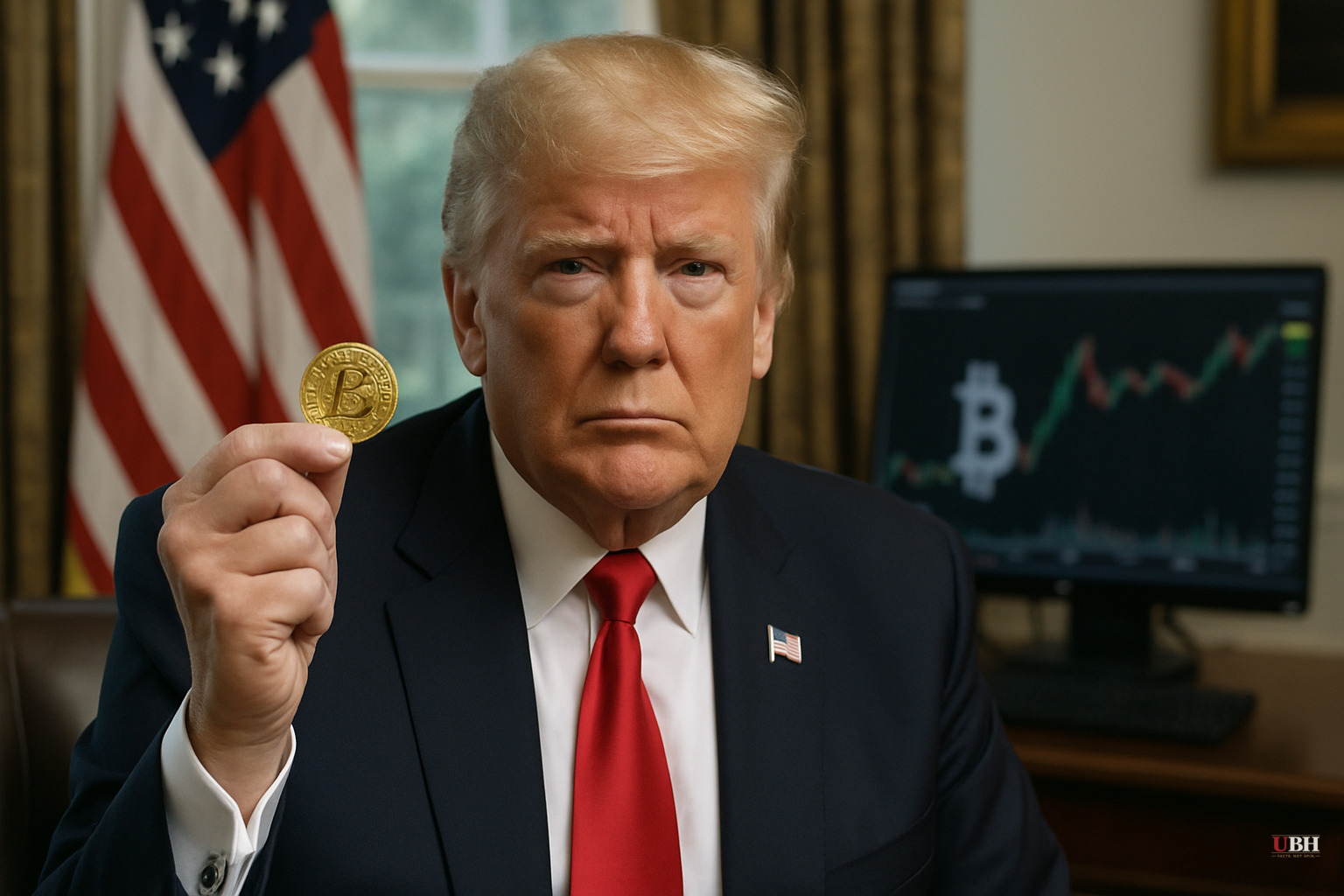
Since this publication's prior reporting on Trump-era federal policy disputes, a separate financial story has been developing on a parallel track: the scale of President Trump's personal cryptocurrency holdings and what they mean for his administration's crypto agenda.
According to Forbes senior editor Dan Alexander, Trump holds more than $100 million in Bitcoin through personal investments that were largely unknown while his public company was separately making headlines for its own Bitcoin strategy. The personal stash was being built at the same time the administration was advancing the concept of a U.S. Strategic Bitcoin Reserve.
What's Actually Known
Trump's public company announced plans to invest in Bitcoin last summer. That announcement drew significant press attention. What drew far less scrutiny, according to Alexander's reporting at Forbes, is that Trump was simultaneously accumulating a personal Bitcoin position worth more than nine figures.
Forbes also reported separately that Trump took out a large, undisclosed loan last year. The purposes and collateral remain unclear from available sourcing.
The Conflict Question
The core concern is straightforward. A sitting president who personally holds more than $100 million in a specific asset, and whose public company holds additional exposure to that same asset, is not a neutral actor when his administration proposes making that asset a component of U.S. federal reserves. A Strategic Bitcoin Reserve, even a modest one, would represent government demand for Bitcoin, which would tend to push its price upward and directly benefit anyone already holding large positions.
No investigation has been announced, and no charges have been filed regarding Trump's Bitcoin holdings or his administration's reserve proposal. The holdings appear to have been disclosed through required financial filings, not concealed. That distinction matters legally.
The Strongest Defense
Trump's defenders would argue, with some legitimacy, that a president who personally believes in an asset's value is exactly the kind of leader who should be setting policy around it. They'd also point out that Trump's financial disclosures are public record, that Bitcoin advocacy predates his second term, and that skeptics of crypto in government have for years argued Washington needed leadership willing to take the asset class seriously. The holdings, on this reading, signal conviction rather than corruption.
It's a reasonable position that doesn't resolve the conflict but reframes the motive.
Why the Reserve Is Struggling
The Forbes headline that surfaced this story describes the Strategic Bitcoin Reserve as struggling to gain traction, though the underlying article was not accessible from available sourcing. What is clear from the broader Forbes reporting is that Trump's personal financial entanglement with Bitcoin is now part of the public record, and that entanglement complicates the administration's ability to sell the reserve as a policy rooted purely in national interest.
When the person proposing the policy stands to benefit directly from it, the policy argument has to work harder. Supporters of a Bitcoin reserve—and there are serious ones in the financial community—have to carry the extra weight of explaining why this particular proposal isn't just a presidential asset-price subsidy.
The Investor Damage Picture
Forbes's Alexander also reported on investors who lost significant money buying into Trump-branded stocks and crypto ventures, describing some political supporters who trusted Trump's financial brand and suffered losses as a result. That reporting is distinct from the Bitcoin reserve question, but it forms relevant context: the gap between Trump's personal financial outcomes and those of retail investors who followed his lead.
Shares in those ventures fell sharply for many buyers who entered at elevated prices. Trump's own position, built earlier and at different price points, tells a different story than the outcomes of those who bought in after the announcements.
What Remains Unresolved
The unresolved question as of July 6, 2026 is whether Congress will impose any disclosure or recusal requirements on executive branch officials, including the president, who hold material positions in assets directly affected by their own policy proposals. No legislation requiring such disclosure has been announced. The administration has not addressed the conflict question on the record in the sourced material available here.
How the Strategic Bitcoin Reserve proposal moves through Congress, and whether lawmakers press the conflict-of-interest question publicly, will determine whether this stays a financial-press story or becomes a legislative one.
Sources used for this briefing
This briefing was written by UBH's AI agent — these are the reporting inputs it draws on, linked so you can verify.


