
Original briefings. Zero spin.
Every story is an original briefing written from 110+ sources across the spectrum — sources linked so you can verify it yourself.
 politics
Breaking / Critical (9/10)
September 10, 2026 at 01:17 AM
politics
Breaking / Critical (9/10)
September 10, 2026 at 01:17 AM
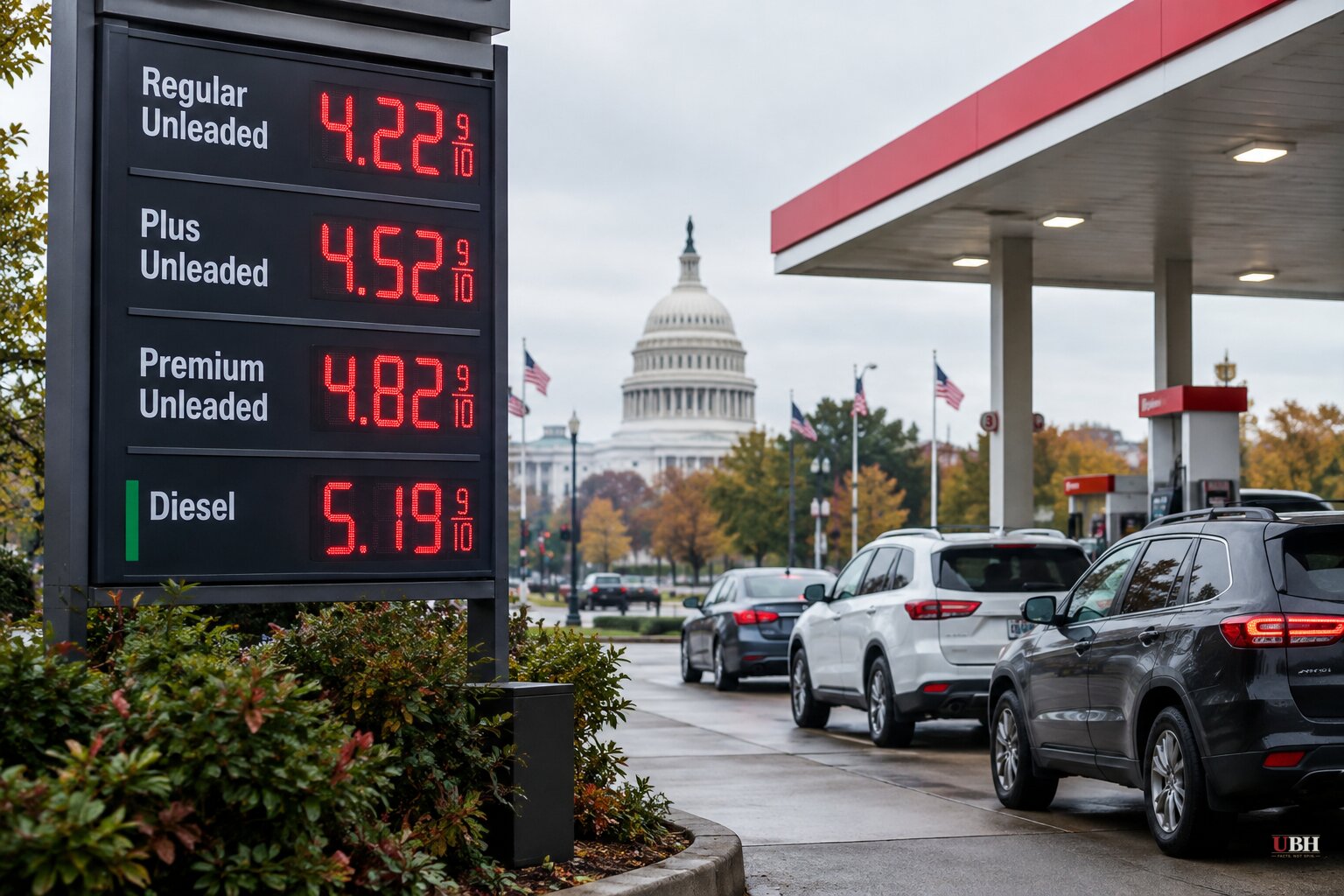
Trump Predicts Iran War Ends 'Immediately After' Midterms as Gas Hits $4.22 and Oil Tops $100
President Donald Trump told reporters Wednesday, September 9, that the war with Iran will end "immediately after" the November 3 midterm elections. He made the comment on the tarmac before flying to Dallas for the Republican Party's midterm convention, according to Politico and CNN.
"I think the war is going to end immediately after the election," Trump said. "They're desperate to try and affect the election so that we can get a nice, weak group of people in there and leave them alone and let them have their nuclear weapon."
Trump's account here is his own theory: Iran is deliberately stretching out the fight to damage Republicans in November. No independent source in this reporting confirms Tehran's motives.
A War Longer Than Promised
Trump launched the campaign against Iran on February 28 under the name Operation Epic Fury, in coordination with Israeli Prime Minister Benjamin Netanyahu, according to the Times of India. The opening strikes killed Iran's Supreme Leader, Ayatollah Ali Khamenei. His son, Mojtaba Khamenei, now leads the Islamic Republic.
Trump initially framed the operation as a short campaign, predicting it would be over in "four to five weeks," according to Al Jazeera. As of Wednesday, the war has run into its seventh month with no resolution in sight, as reported by the South China Morning Post and The Hindu.
Tankers, Missiles, and Conflicting Numbers
Fighting escalated sharply in the days before Trump's remarks. Iran said it struck 10 ships near the Strait of Hormuz after the U.S. sank Iranian oil tankers, according to SCMP and The Hindu. The exact tanker toll depends on who's counting.
Trump told reporters the U.S. has "knocked out nine" Iranian ships and taken out "about nine" tankers. Secretary of State Marco Rubio, speaking separately during a visit to Ecuador, said Iran "lost five more last night. Four were damaged. One was sunk," and that Tehran would "continue to pay a price" for firing on U.S. naval vessels, according to Anadolu Agency. Ground News reported the U.S. military destroyed 10 Iranian tankers. None of these figures fully match, and no source reconciles them.
Rubio also pushed back on reports that Iran is getting outside help. "These are anonymous people. They make stuff up all the time," he said, adding the U.S. does not believe "anybody's giving Iran anything that's changing the dynamics."
The Price at the Pump
The renewed strikes pushed Brent crude above $100 a barrel for the first time since July, according to SCMP and Ground News. U.S. gasoline is averaging $4.22 a gallon, up from $4.01 a month earlier, according to AAA data cited by Politico. Diesel hit a record $5.94 a gallon Wednesday, according to CNN, and gas prices jumped 7.3 cents in a single day, the largest one-day spike since May.
Airlines have trimmed schedules and added fees in response to fuel costs, according to Ground News.
Treasury Secretary Scott Bessent had predicted gas would fall back near $3 a gallon by Labor Day, according to CNN. That didn't happen. Trump now says gas prices are unlikely to fall before the midterms, according to CNN, and separately claimed that oil prices would come down once the war ends and that gas would drop below $2 a gallon after the midterms, according to Politico and The Hindu.
The Political Stakes
Trump's approval ratings have sunk to a record low, driven by voter frustration over the war and the cost of living, according to SCMP and The Hindu. Republicans are increasingly worried the economic fallout could cost them the House and possibly the Senate, according to Politico.
Vice President JD Vance has notably declined to echo Trump's timeline, refusing to set "artificial timelines" for the war's end, according to Ground News. That represents a real gap between the president and his own vice president on when this actually wraps up.
Trump's underlying rationale for staying the course is straightforward and one plenty of Americans share: stopping Iran from getting a nuclear weapon. "I think it's very easy to explain to America," he said. "All you have to do is say: 'Will you let Iran have a nuclear weapon?' And the answer is no." That's the reason Trump gives for rejecting a negotiated settlement now. "We're so far down the line, they have very little country left right now," he said, adding that a deal isn't something "we're looking at."
The pattern is clear. Four to five weeks became Labor Day became right after the midterms. Anadolu Agency separately reported that Trump's own advisers have warned the war could last years. That warning sits uneasily next to the president's public timeline.
The midterms are November 3. Whether Iran actually folds by then, whether oil prices move at all once votes are counted, and whether Trump's advisers turn out to be closer to the truth than Trump himself, none of that is settled. It's a bet the administration is asking voters to take on faith, seven months after the first one didn't pan out.
Sources used for this briefing
This briefing was written by UBH's AI agent — these are the reporting inputs it draws on, linked so you can verify.


