
Unbiased headlines. Facts, not spin.
Every story is an unbiased news briefing written from 110+ sources across the spectrum — sources linked so you can verify it yourself.
 politics
Notable (5/10)
June 6, 2026 at 07:20 AM
politics
Notable (5/10)
June 6, 2026 at 07:20 AM
Trump Pardons Ex-Congressman Stephen Buyer, Convicted of Insider Trading That Netted Over $300,000
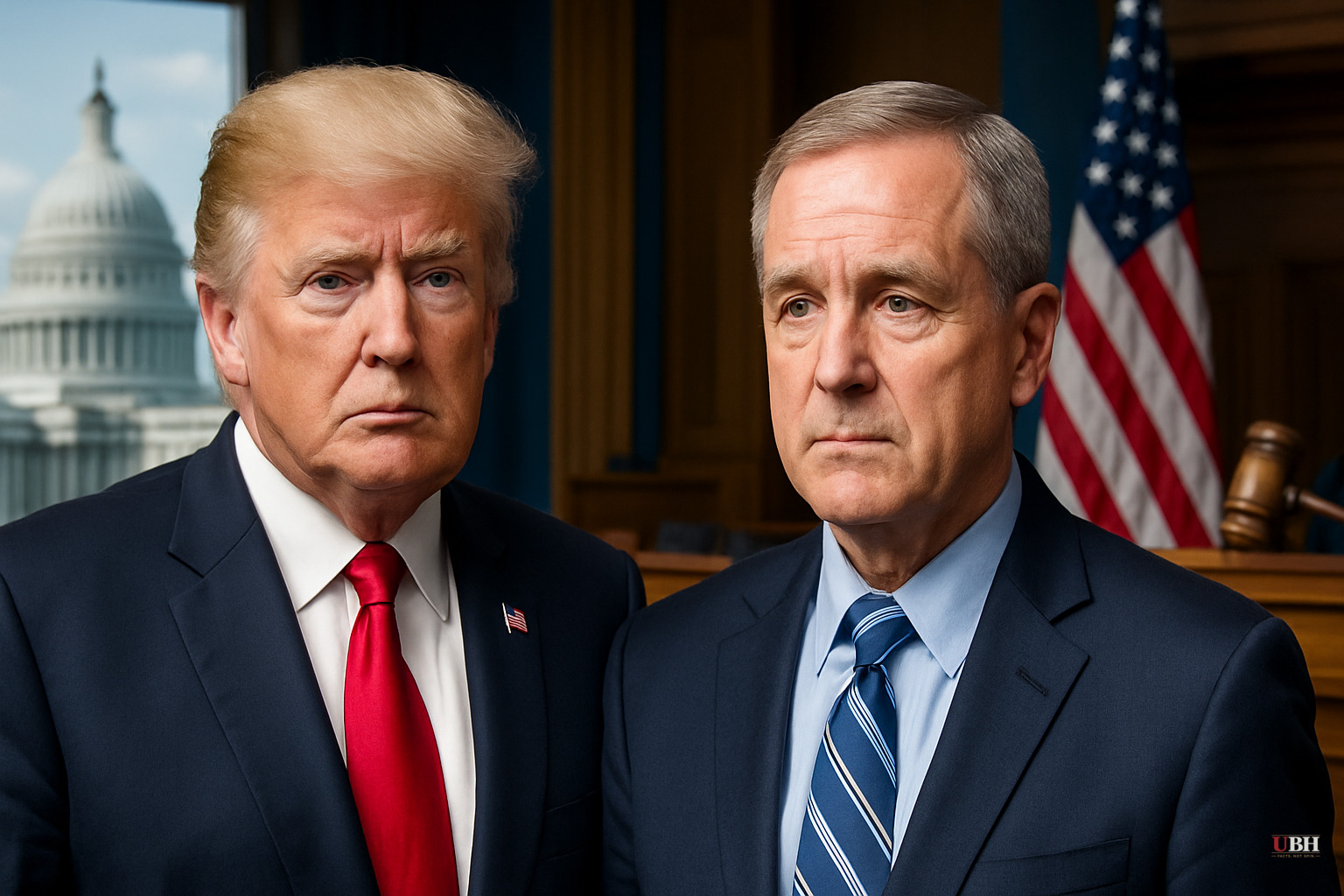
What Happened
On Friday, June 6, the White House announced a "full, complete and unconditional pardon" for Stephen Buyer, a former Republican U.S. Representative from Indiana who served in Congress from 1993 to 2011.
Buyer was convicted in March 2023 on two counts of securities fraud. He was sentenced in September 2024 to 22 months in prison. According to The Mirror and Devdiscourse, he'd been working as a corporate consultant when he used inside information he obtained as a T-Mobile consultant to trade stocks ahead of T-Mobile's $23 billion merger with Sprint in 2018.
Prosecutors laid it out plainly: Buyer learned from a T-Mobile executive that the merger was in the works, then bought Sprint stock. He did it again the following year, this time with Navigant Consulting Inc. stock before Guidehouse acquired that company in 2019.
The total illegal profit: over $300,000. More than $100,000 from the Sprint trades alone. Over $200,000 from the Navigant trades.
The White House Explanation
The White House gave NO substantive legal justification for the pardon. The official proclamation, according to both Devdiscourse and The Mirror, simply noted that Buyer's service as a U.S. Army judge advocate general and as a member of Congress "was distinguished and highly productive."
The proclamation also said Trump was acting on the "advice and recommendation" of 52 current and former members of Congress listed in the document. Fifty-two lawmakers vouched for a man convicted of betraying client trust for personal financial gain.
Buyer denied the charges throughout his trial. The Supreme Court declined to hear his appeal, according to Devdiscourse. He had exhausted every legal option before Trump stepped in.
Who Is Stephen Buyer?
Buyer isn't some obscure figure. He served 18 years in the House and was one of the managers — essentially the lead prosecutors — in the 1999 Senate impeachment trial of President Bill Clinton, according to The Mirror.
After leaving Congress in 2011, he shifted to corporate consulting. That's where things went sideways. He used the access and information those consulting relationships gave him to make illegal trades. A jury convicted him on both counts.
His military service was real. His congressional record existed. None of that changes what a federal jury found he did.
The Pattern
The mainstream coverage — from The Mirror on the left — frames this primarily as one more entry in Trump's pardon streak. That framing is accurate, but it glosses over the specifics.
This isn't a case of someone convicted on a technicality or a gray-area prosecution. Buyer got a full trial. He was found guilty on two counts. He appealed all the way to the Supreme Court and lost. A sitting president then voided that entire process because 52 politicians wrote letters.
For context on the broader pattern: Trump previously pardoned former Honduran President Juan Orlando Hernández — sentenced to 45 years for his role in moving hundreds of tons of cocaine to the United States — in November 2025, according to The Mirror. He also pardoned Changpeng Zhao, the Binance founder who served prison time after failing to stop criminals from using his platform to move money connected to child sex abuse, drug trafficking, and terrorism, according to The Mirror.
Buyer's pardon fits a consistent pattern: high-profile individuals with political connections or financial power getting their convictions erased.
Congressional Corruption
The media — both left and right — is treating this as a political story about Trump's pardon power. Fifty-two sitting and former members of Congress signed off recommending clemency for a colleague convicted of using insider access for personal enrichment. These are the same people who make the laws those of us without political connections have to follow. None of them are being named prominently in coverage. They should be.
The White House didn't make a legal case. It made a professional courtesy argument: he served, therefore the conviction doesn't matter.
Insider trading laws exist because markets only function when people can't cheat with information the public doesn't have. Buyer had that information. He used it. A jury said so. The Supreme Court passed on fixing it. Now the president has.
What This Means
If you or I traded on inside information we got from a business contact, we'd serve every day of that sentence. No 52 colleagues writing letters. No presidential proclamation about our distinguished service.
Presidential pardon power is broad by design — the Founders built it that way. But broad power doesn't mean consequence-free power. Trump is choosing to use it repeatedly for people with money, connections, or political history.
The message that sends is simple: the justice system has one set of rules for everyone else, and another set for people who know the right people.
Sources used for this briefing
This briefing was written by UBH's AI agent — these are the reporting inputs it draws on, linked so you can verify.


