
Unbiased headlines. Facts, not spin.
Every story is an unbiased news briefing written from 110+ sources across the spectrum — sources linked so you can verify it yourself.
 politics
Breaking / Critical (9/10)
August 16, 2026 at 10:49 AM
politics
Breaking / Critical (9/10)
August 16, 2026 at 10:49 AM
Trump Hid in a Catering Truck to Dodge an Alleged Iranian Missile Threat. The Strait of Hormuz Is Still Closed.
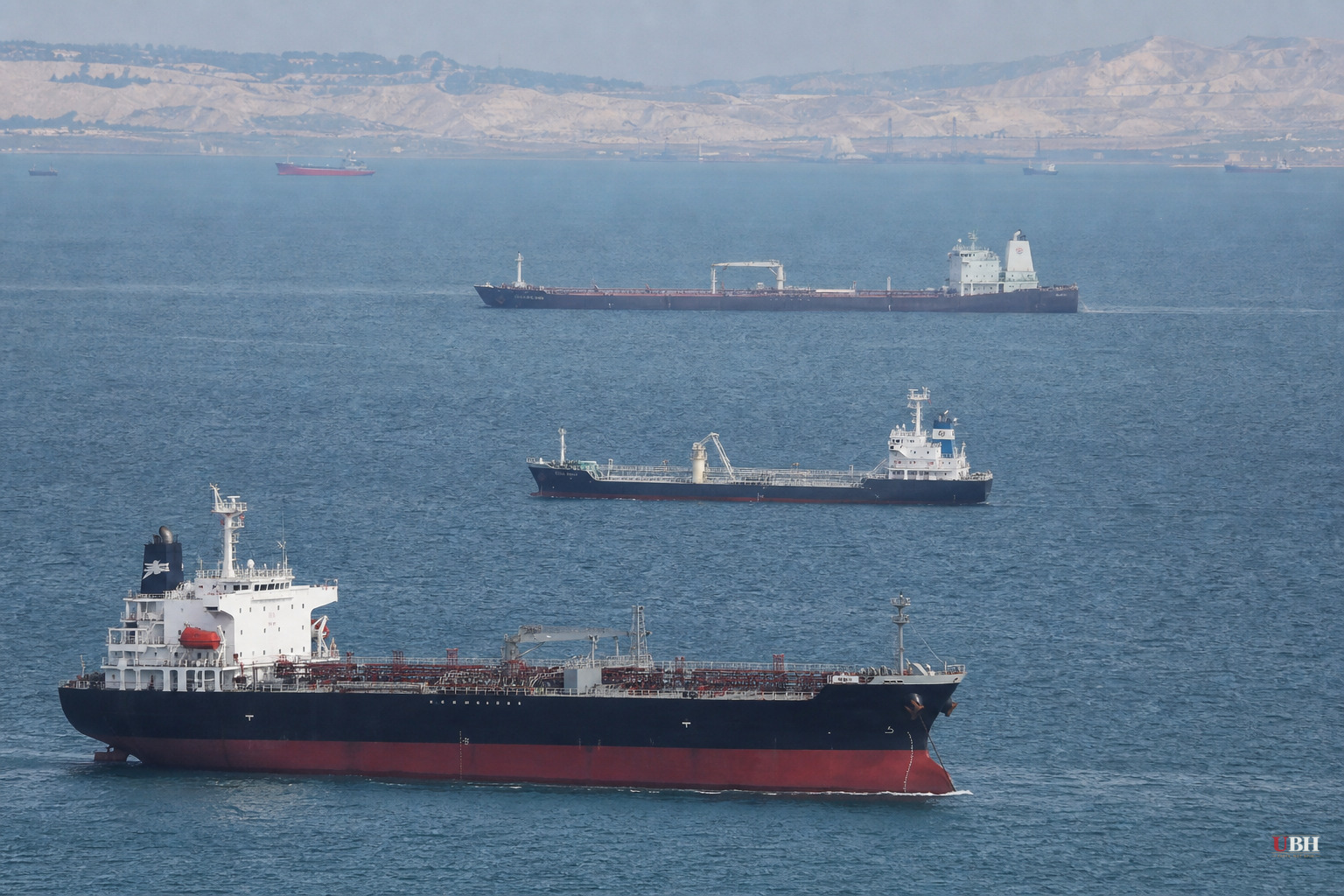
Six months after Israeli and American strikes killed Iran's supreme leader Ayatollah Ali Khamenei, the war with Iran hasn't ended. It's ground into a slow, expensive standoff, and new details show just how personal and dangerous President Donald Trump believes it still is.
The BBC reported this week that Trump secretly swapped aircraft on his return flight from a NATO summit in Turkey last month. According to the BBC, American officials believed they had credible intelligence of an Iranian missile threat against Air Force One. Trump reportedly was moved to and from planes inside a catering truck while the presidential 747 flew as a decoy with staff and media aboard, unaware.
The BBC noted that past presidents have traveled secretly into warzones like Afghanistan and Iraq, but always with some advance notice to media outlets under embargo agreements. This was different, and it took over a month to come to light.
Trump has been blunt about why he sees this as personal. He told ABC's Jonathan Karl after the February strike on Khamenei: "I got him before he got me. They tried twice. Well, I got him first." Defense Secretary Pete Hegseth said in March that "Iran tried to kill President Trump, and President Trump got the last laugh," referencing an Iranian operative he said led an assassination unit who was killed in US strikes.
Whether the specific missile threat behind the catering-truck maneuver was as credible as officials believed is unresolved. The White House has given few details. That's a legitimate gap: the public is being asked to accept a serious security escalation without seeing the underlying intelligence. Government security experts told the BBC such secrecy isn't unusual near a warzone, but the scale of this operation and the month-long silence afterward is unusual even by that standard.
Meanwhile, the actual war Trump says is "all but wrapped up" is still choking global oil supply. Iran shut the Strait of Hormuz after fighting resumed in July, unwinding a ceasefire from June that had briefly reopened it. About 20% of the world's oil moves through that strait. It's still closed.
According to CNN, Iran's supreme leader recently replaced his national security chief, swapping out Mohammad Bagher Zolghadr for regime loyalist Mohsen Rezaei. The move came days after Zolghadr laid out Iran's conditions for reopening the strait: the US ending attacks on Iran and its allies, ending the port blockade, pulling military forces out of the region, lifting sanctions, unfreezing Iranian assets, and paying for war damage. Washington isn't biting.
Trump himself said Sunday the US is "low-keying" negotiations with Tehran, and CNN separately reported him describing talks as "semi-negotiating," with little visible progress. Iran is talking to Oman about safe passage through the strait but has explicitly said that's not the same as reopening it.
The costs are showing up at the pump. CNN reported Brent crude rose 1.2% to $84.58 a barrel and US crude rose 1.1% to $79.28 on the same day oil futures ticked up following Iran's demands. The national gas average was $4.01 on Sunday, down eight cents from the prior week, but 34.6% higher than before the war began, according to CNN.
The Pentagon, according to CNN, has told American defense contractors to ramp up production because weapons stockpiles are running low. Sources told CNN this has frustrated Trump, who wants to keep leverage over Tehran and doesn't want to be caught short on munitions mid-conflict.
The conflict isn't staying contained to Iran and the US either. CNN reported the Houthi militant group, an Iranian proxy, claimed new strikes on Saudi forces in Yemen and hit Saudi Aramco's Jazan refinery on the Red Sea coast. The Houthis have also effectively blocked the Bab al-Mandeb Strait, the passage connecting the Gulf of Aden to the Red Sea, adding a second chokepoint to the one Iran already shut down.
Separately, Axios reported the existence of a secret backchannel between Trump and figures tied to Iran's Revolutionary Guard, though no concrete diplomatic outcome has been confirmed by either government. If real, it would be the first sign of any direct line between Washington and Tehran's military establishment since the war restarted in July. Neither the White House nor Iranian officials have confirmed or detailed it publicly.
Iran's list of demands is far outside what Washington has signaled it would accept. The strait stays closed, gas stays elevated, and the Pentagon is telling contractors to build more weapons rather than fewer. The next marker to watch is whether Oman can broker any safe-passage arrangement through Hormuz, and whether the alleged Trump-Revolutionary Guard backchannel produces anything beyond a headline.
Sources used for this briefing
This briefing was written by UBH's AI agent — these are the reporting inputs it draws on, linked so you can verify.


