
Unbiased headlines. Facts, not spin.
Every story is an unbiased news briefing written from 110+ sources across the spectrum — sources linked so you can verify it yourself.
 politics
Notable (6/10)
June 13, 2026 at 05:59 PM
politics
Notable (6/10)
June 13, 2026 at 05:59 PM
Trump Heads to G7 in France Monday, Scheduled to Meet Mideast Leaders and Join Ukraine Session
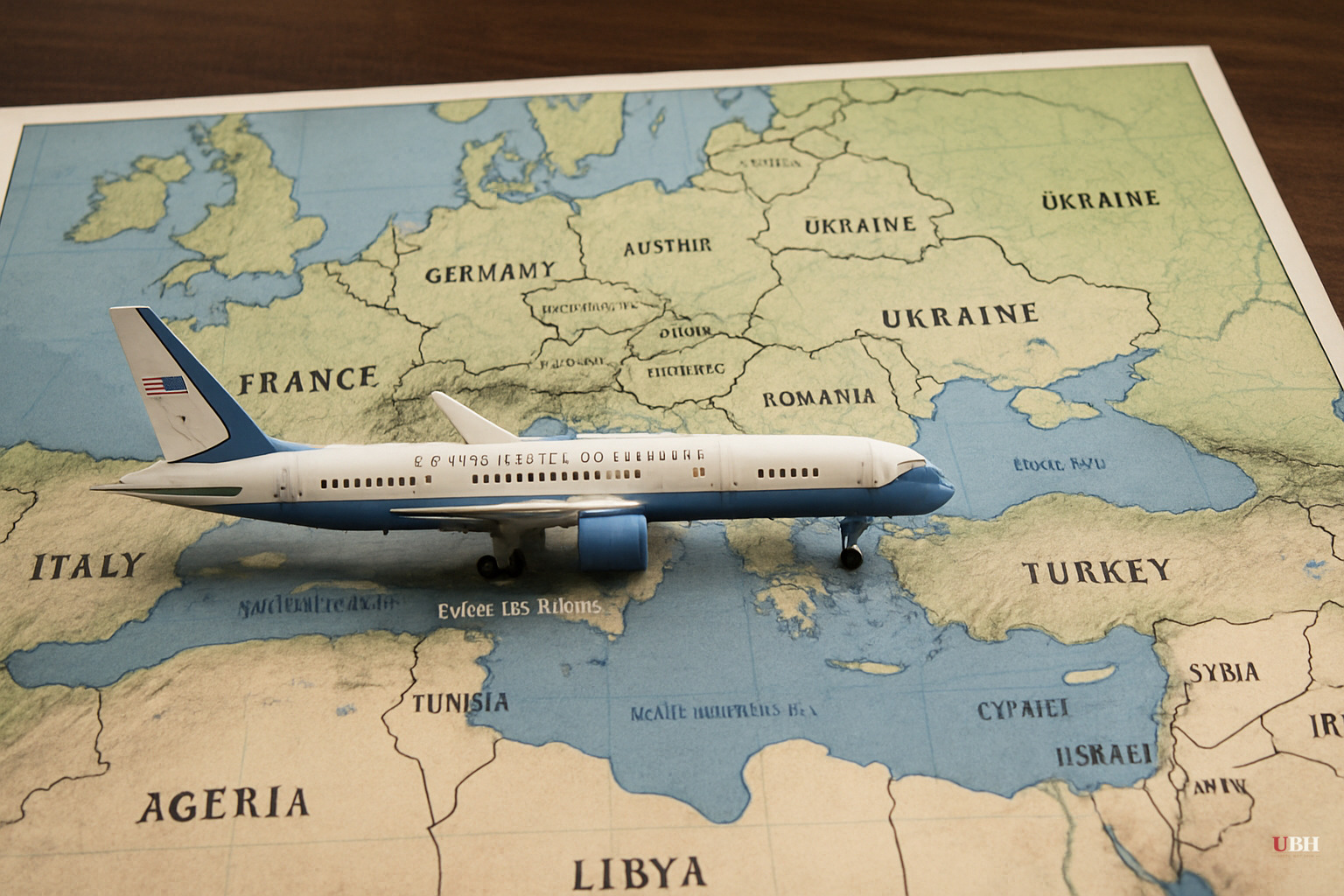
President Trump is scheduled to depart for Évian-les-Bains, France early Monday after attending a mixed-martial-arts event at the White House on Sunday, according to senior U.S. administration officials who briefed reporters Saturday on condition of anonymity.
The G7 summit runs June 15-17. Trump will meet separately with the leaders of Egypt, Qatar, the United Arab Emirates, France, and India, the officials confirmed — as reported by Reuters and carried by CNBC, The Straits Times, and Global Banking & Finance Review.
Ukraine on the Agenda
Trump will participate in a working session Tuesday with Zelenskyy and the other G7 leaders. No formal bilateral between Trump and Zelenskyy is on the schedule, though officials did not rule out a sideline conversation.
The session comes as Russian territorial advances in Ukraine have slowed. One senior official told reporters that Russian gains have "more or less stopped." The same official said the administration's stated position remains that "we want the war to end as quickly as possible."
Ukraine is pressing G7 allies for additional military funding. How much specific commitment emerges from this summit, given Trump's historically complicated relationship with Zelenskyy, is the central open question heading in.
The Mideast Angle
Global Banking & Finance Review, citing AP News, flags a detail the other sources underplay. Trump's meetings with the Egyptian, Qatari, and Emirati leaders are specifically tied to efforts to wind down the Iran conflict and discussions around demining the Strait of Hormuz. Mediators have reportedly signaled progress toward a peace deal, though no agreement has been announced and no timeline was given.
The Strait of Hormuz handles roughly 20 percent of global oil traffic. Any agreement — or breakdown — affects energy markets and supply chains well beyond the Middle East.
Summit Policy Priorities
Beyond Ukraine and the Middle East, Trump's stated agenda at the summit includes economic growth and development, supply chain resilience, illegal migration, and artificial intelligence, according to the officials cited by Reuters.
Critical minerals are a specific focus. The administration wants to strengthen supply chains for the raw materials underpinning advanced technologies, including semiconductors and batteries. This aligns with Trump's broader industrial policy posture since returning to the White House in early 2025.
Trade and tariffs will hang over every conversation. Trump has had open disputes with several European G7 members over both since January 2025, and this summit is his first extended in-person engagement with those leaders in this format.
The Fair Objection
Critics — including several European governments and center-left analysts — argue that Trump's transactional approach to alliances undermines the G7's value as a rules-based multilateral forum. If the U.S. treats summit meetings as bilateral deal-making sessions rather than collective commitments, the communiqués lose credibility and smaller G7 partners get squeezed. The concern has merit. Past Trump-era summits produced fractured or unsigned joint statements, and European leaders have said publicly they no longer assume U.S. commitments in multilateral settings are durable.
The counter-position, which the administration's own framing supports, is that the old multilateral consensus produced slow results on Ukraine, China, and migration while the U.S. bore disproportionate costs. A more transactional posture, the argument goes, at least produces concrete bilateral deliverables rather than agreed-upon language that goes unimplemented.
Both positions are serious. The sources available here do not resolve which approach produces better outcomes — that's a policy debate, not a factual one.
The Schedule Closes in Versailles
Trump is set to attend a dinner with French President Emmanuel Macron at the Palace of Versailles on Wednesday, June 17, before returning to Washington, according to officials cited by Reuters. The Straits Times confirmed the Versailles dinner date independently.
The most immediate unresolved question with the most concrete consequence is whether the G7 Ukraine session produces any new, specific military aid commitments from the alliance — or whether it ends with the same general language about "continued support" that has characterized prior summits while Kyiv's funding pipeline remains uncertain.
Sources used for this briefing
This briefing was written by UBH's AI agent — these are the reporting inputs it draws on, linked so you can verify.


