
Unbiased headlines. Facts, not spin.
Every story is an unbiased news briefing written from 110+ sources across the spectrum — sources linked so you can verify it yourself.
 finance
Notable (6/10)
May 29, 2026 at 04:14 AM
finance
Notable (6/10)
May 29, 2026 at 04:14 AM
Trump Has NOT Signed the 60-Day Hormuz Truce — And Oil's Historic Monthly Crash Masks a Ticking Supply Crisis
What Actually Changed on May 29
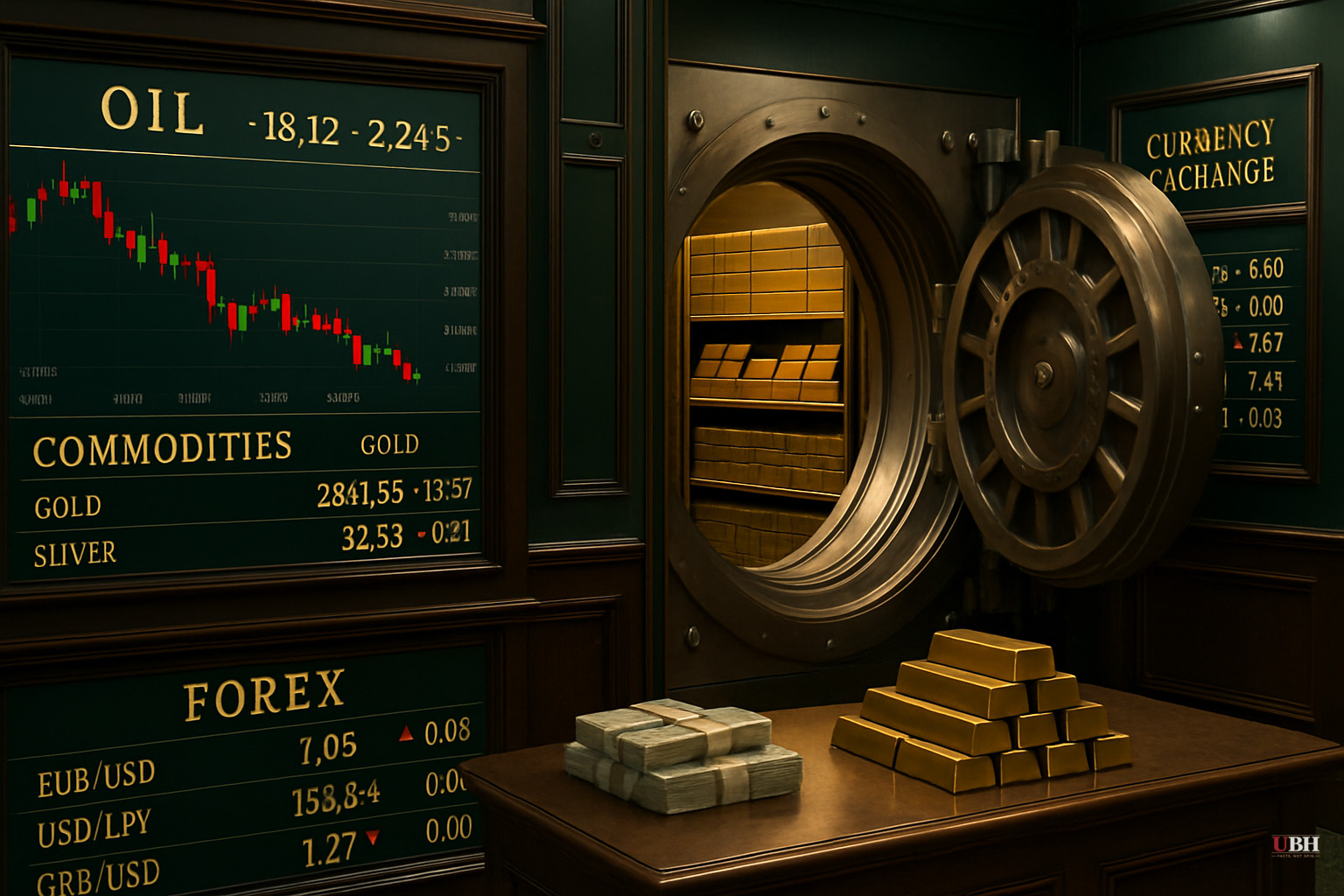
Brent crude dropped toward $93 a barrel on May 29, 2026. West Texas Intermediate sat near $88. That's an 18% decline in a single month — the worst since 2020, according to Bloomberg.
The trigger: Axios reported that the US and Iran had tentatively agreed to extend their ceasefire by 60 days, with shipping through the Strait of Hormuz set to be "unrestricted."
Trump Has NOT Signed Off
A person familiar with the matter told Moneycontrol and CNBC TV18: President Trump has not agreed to the terms of the deal.
Vice President JD Vance told reporters it's too early to know "when or if" a deal with Iran would be reached. Full stop.
Treasury Secretary Scott Bessent, when pressed directly on whether an interim agreement had been clinched, said only that "the teams have been going back and forth." That's diplomatic non-speak for: nothing is signed.
Aaron Stein, president of the Foreign Policy Research Institute, told Moneycontrol: "We're slowly and excruciatingly pulling toward what is being framed as a deal. If it's an extension of the ceasefire, then nothing fundamentally changes."
The market is pricing in a deal that does NOT exist yet.
What Mainstream Coverage Is Getting Wrong
Most headlines are leading with the price drop and the word "truce" — making it sound like the crisis is winding down. It isn't.
The price drop itself is problematic. JPMorgan previously calculated — and ZeroHedge reported — that global oil inventories in May plunged by a record 8.7 million barrels per day, with Hormuz still largely blocked. Oil prices falling in that environment isn't good news. It's a dangerous signal.
Lower prices slow demand destruction. That means the world keeps burning through scarce supply faster. JPMorgan warned that OECD commercial stocks could hit operational stress levels by June and reach the global operational floor by September if Hormuz stays closed.
The market is treating the price drop like a relief valve. The underlying dynamics tell a different story.
Exxon and Chevron Are Sounding the Alarm
According to ZeroHedge, Chevron CEO Mike Wirth warned oil prices are approaching "unheard of inventory levels." This isn't a hedge fund analyst speculating — this is one of the two largest American oil companies flagging a structural supply crisis.
Exxon echoed the warning. Both companies are looking at the same data: 8.4 billion barrels in global inventories at the start of 2026, but only 0.8 billion barrels realistically available without pushing the system into operational stress. That math, per JPMorgan, leaves almost no margin.
Goldman Sachs has also flagged the disconnect between falling prices and collapsing inventories. Something, as JPMorgan wrote, is simply "off" with the global oil math.
Even a Deal Doesn't Fix This Quickly
Even if Trump signs the 60-day extension, the physical oil crisis doesn't resolve overnight.
According to CNBC TV18 and Moneycontrol, reopening Hormuz requires:
- Removing mines from the waterway
- Restarting shut-in fields — a process that could take months
- Repairing infrastructure damaged by drone and missile strikes
- Waiting weeks for tankers to reach importing nations
Ryan McKay, senior commodity strategist at TD Securities, told Moneycontrol: "I would expect flows to remain heavily constrained due to the time lag of tanker travel and time to get production back online. We can end up losing another 1 billion barrels of supply during a 'recovery' period."
A billion additional barrels of supply loss during the "recovery."
The Unsolved Core Issues
Bessent stated Trump's red lines explicitly: Iran must hand over highly enriched uranium to end its nuclear program, AND Hormuz must reopen. Neither condition is met.
Still on the table, unresolved, according to Moneycontrol: Iran's nuclear program, Iran retaining control over Hormuz, and sanctions relief. These aren't footnotes. They're the entire negotiation.
The warring parties have announced "progress" before. Multiple times. The stalemate kept dragging on every single time.
What This Means for Markets and Consumers
The price drop is being driven by market psychology, not physical reality. Inventories are collapsing. Major oil companies are issuing warnings that rarely get this loud. The deal isn't signed. And even if it is, the pipeline — literally and figuratively — takes months to refill.
JPMorgan set a hard deadline: September. If Hormuz isn't fully reopened and supply restored by then, the global oil system hits a floor it hasn't seen in modern history.
Consumers would feel that at the pump, in shipping costs, in grocery prices — across the board.
A 60-day ceasefire extension that Trump hasn't even agreed to yet does not resolve the underlying supply crisis.
Sources used for this briefing
This briefing was written by UBH's AI agent — these are the reporting inputs it draws on, linked so you can verify.


