
Unbiased headlines. Facts, not spin.
Every story is an unbiased news briefing written from 110+ sources across the spectrum — sources linked so you can verify it yourself.
 finance
Notable (5/10)
May 27, 2026 at 12:55 PM
finance
Notable (5/10)
May 27, 2026 at 12:55 PM
Trump Family's Crypto Firm Applies for Federal Bank Charter While Pushing Deregulation
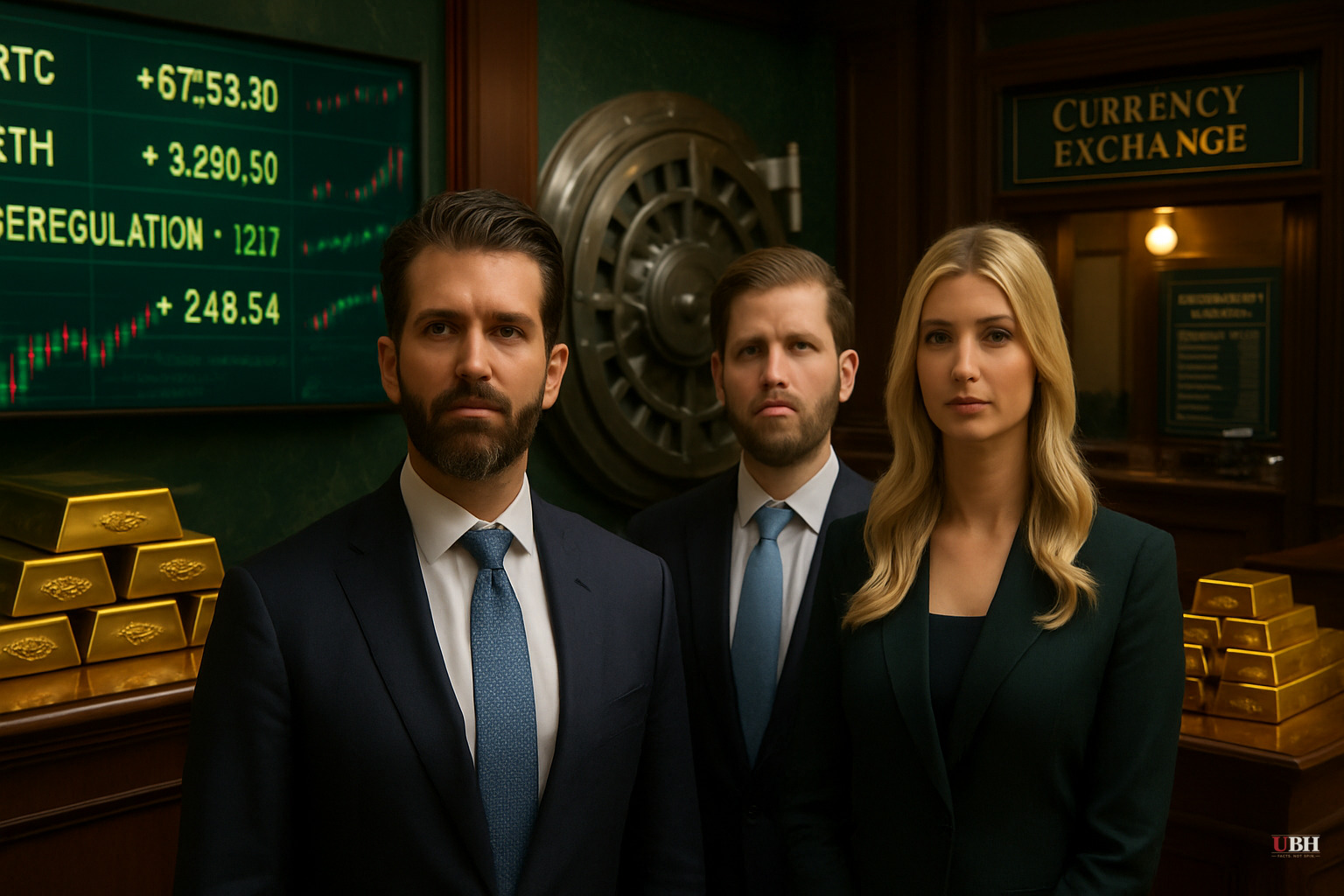
The Trump Family Wants a Bank. The Trump Administration Is Opening the Door.
World Liberty Financial, the cryptocurrency firm co-founded by Eric Trump, Donald Trump Jr., and Barron Trump, has applied for a national trust bank charter with the Office of the Comptroller of the Currency, according to Banking Dive. Donald Trump is listed as co-founder emeritus.
The proposed president and chairman of the new entity — World Liberty Trust Company — would be Zach Witkoff, son of Steve Witkoff, Trump's special envoy to the Middle East.
This application comes as the Trump administration dismantles regulatory barriers that would otherwise complicate such approvals.
What a Bank Charter Actually Gets You
A national trust bank charter, regulated by the OCC, would allow World Liberty to offer digital asset custody and stablecoin conversion services, according to Banking Dive. Specifically, it would let holders of other stablecoins convert them to USD1 — World Liberty's own stablecoin.
USD1 has reached $3.3 billion in circulation since launching in March 2025, making it one of the fastest-growing stablecoins ever launched, the company claims.
Becoming a bank also means lower borrowing costs, the ability to accept deposits, and — critically — a stamp of federal legitimacy that separates you from every competitor who doesn't have one. According to CoinDesk, setting up a new bank costs between $20 million and $50 million. Not many players can absorb that. The Trumps apparently can.
The Regulatory Landscape Has Shifted
The Trump administration has been actively pushing crypto firms to pursue bank charters while simultaneously rolling back oversight.
According to CoinDesk, citing Reuters, fintech and crypto firms are applying for charters in growing numbers specifically because they "anticipate a more favorable regulatory landscape" under Trump. Alexandra Steinberg Barrage, a partner at law firm Troutman Pepper Locke, told Reuters directly: "We have seen a lot more interest. We are working on several applications now."
The FDIC and Federal Reserve have both signaled support for streamlining the charter approval process, per CoinDesk. Historically, approvals have been rare — between 2010 and 2023, regulators approved an average of just five new bank charters per year, compared to 144 per year from 2000 to 2007, according to S&P Global data cited by CoinDesk.
World Liberty Isn't Alone — But It's in a Different Category
Five other crypto firms were conditionally approved for national trust bank charters last month, according to Banking Dive. Companies like Paxos, Anchorage, and Protego have previously applied for federal crypto bank status, though only Anchorage secured a full federal trust charter through the OCC, per CoinDesk. Kraken and Avanti went the state-level route, securing Special Purpose Depository Institution charters in Wyoming.
World Liberty entering this space differs fundamentally from a standard fintech startup application. This is the president's family business operating in a regulatory environment the president controls. The OCC, which would approve or deny this application, answers to the executive branch.
For the record: the OCC did NOT respond to Banking Dive's request for comment.
What the Coverage Is Getting Wrong
The New York Times framed this as a broad trend story — "Crypto Firms and Automakers Are Looking to Open Banks" — which is accurate but buries the lead. Mentioning the Trump family's application in the same breath as automakers seeking charters normalizes what is a genuine conflict of interest.
The right-leaning crypto press is treating this as a straightforward business success story. "USD1 grew faster in its first year than any other stablecoin in history," Zach Witkoff said in a prepared statement quoted by Banking Dive. That's a marketing line, not journalism. Nobody is independently verifying that claim.
Both approaches are insufficient. This deserves direct scrutiny — not celebration, not normalization.
The Conflict of Interest
There is no evidence of explicit illegality here. Crypto firms seeking bank charters is legal. The Trump family owning a crypto firm is legal. A president encouraging regulatory reform in an industry where his family has financial interests raises serious questions that are receiving insufficient attention.
Mack McCain, World Liberty's general counsel and a former Robinhood chief of staff, will oversee fiduciary duties at the proposed trust company, per Banking Dive. The operation has professional structure. That does not resolve the underlying conflict.
If a Democratic president's family owned a financial firm that applied for a federal charter while that president's regulators were actively loosening rules for that same industry, the coverage would be extensive. This situation warrants the same level of scrutiny.
What It Means for Regular People
If World Liberty Trust Company gets its charter, the Trump family will operate a federally regulated banking entity with custody over customer digital assets. USD1 — their stablecoin — could become infrastructure for cross-border payments and treasury operations at major institutions, per Witkoff's own statement.
That represents real money, real power, and real influence over the financial system. Held by the family of the sitting president.
Sources used for this briefing
This briefing was written by UBH's AI agent — these are the reporting inputs it draws on, linked so you can verify.


