
Unbiased headlines. Facts, not spin.
Every story is an unbiased news briefing written from 110+ sources across the spectrum — sources linked so you can verify it yourself.
 politics
Major Story (7/10)
June 15, 2026 at 03:57 PM
politics
Major Story (7/10)
June 15, 2026 at 03:57 PM
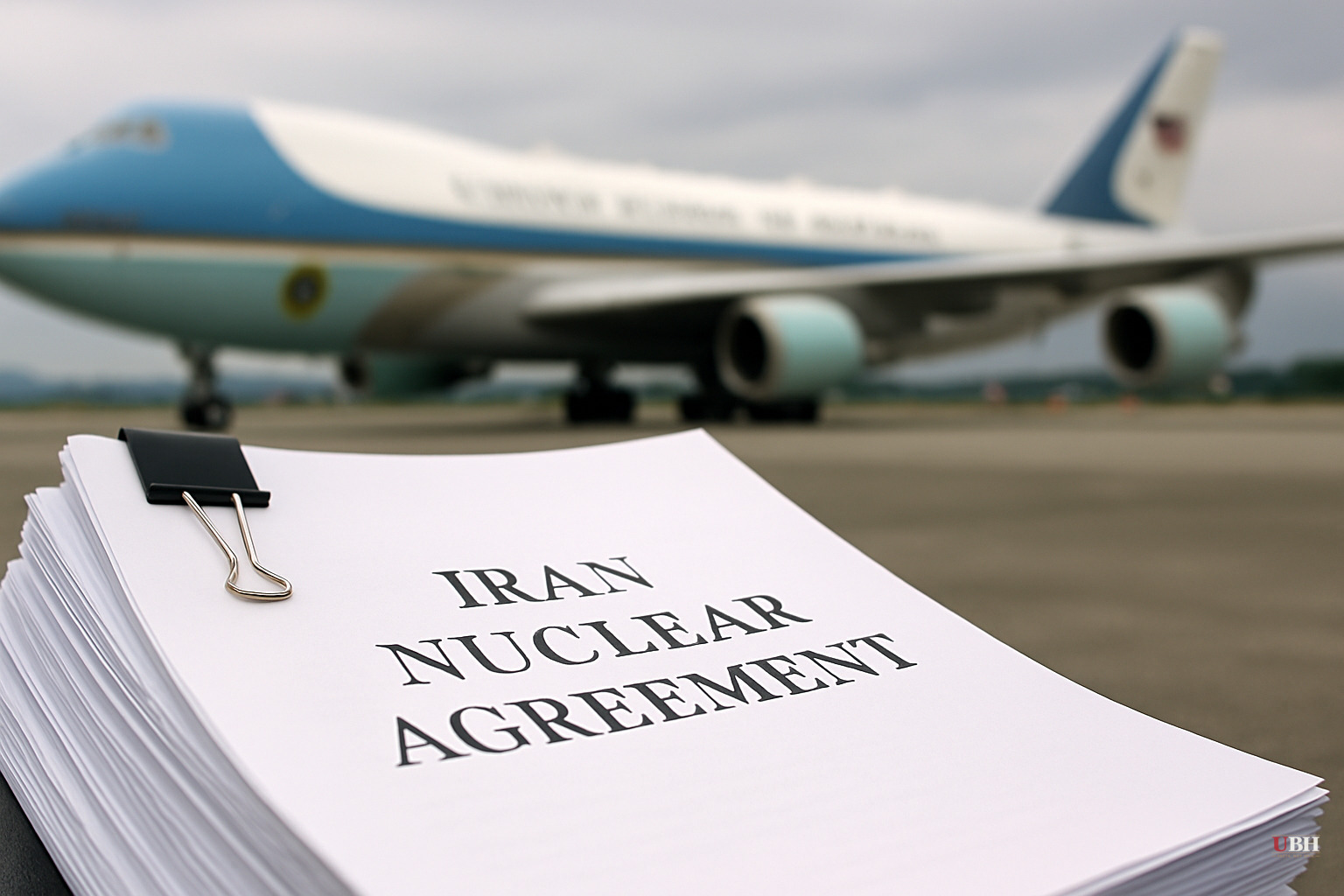
Trump Arrives at G7 in Évian With Iran Deal Announced but Text Still Unreleased
Since protests and riots broke out in Geneva last week as G7 leaders began gathering, the summit's security backdrop has been tense. Now the diplomatic substance has arrived with it.
President Donald Trump touched down in Évian-les-Bains, France, on Monday, June 15, according to the Associated Press, hours after announcing what he described as a deal to end the U.S. war with Iran. The conflict is now in its 15th week and has driven up global energy prices and rattled Republican confidence ahead of November's midterm elections.
The announcement gave Trump a talking point walking into a summit where French President Emmanuel Macron, British Prime Minister Keir Starmer, German Chancellor Friedrich Merz, and Italian Prime Minister Giorgia Meloni have all, at various points, been critical of how Washington handled the conflict. Merz has called it a U.S. humiliation, according to The Guardian.
What the Deal Says — and Doesn't
Neither the White House nor Iran has published the text of the agreement as of Monday. Vice President JD Vance told CNBC that the administration hopes to release it "in the coming days."
What is known: Trump posted on social media that the deal would end the U.S. blockade of the Strait of Hormuz, through which roughly 20% of the world's crude oil flowed before the conflict. "Ships of the World, start your engines," he wrote. "Let the oil flow!"
Iranian Deputy Foreign Minister Kazem Gharibabadi said not so fast. Iran's closure of the strait continues until the agreement is formally signed. Hundreds of tankers are currently backed up, and de-mining operations would be needed before normal shipping can resume, according to The Guardian.
Pakistani Prime Minister Shehbaz Sharif, whose government mediated the negotiations, said "pre-implementation discussions" would begin this week, leading into 60 days of technical talks on Iran's nuclear program. The Hormuz question, which has the most immediate economic consequences, won't be resolved quickly regardless of what was announced.
The G7 Dynamic
The other six leaders arrive with legitimate frustrations. The Iran war's side effects—surging oil prices, global inflation pressure, renewed instability in Lebanon after a new round of strikes between Israel and Hezbollah-linked militants as recently as Sunday—landed on their economies too, not just America's.
The strongest case those leaders can make is straightforward: they weren't consulted before the conflict began, they've absorbed economic collateral damage from it, and they're now being asked to help enforce its resolution. The Guardian reports Macron is pushing for a Franco-British naval taskforce to enforce freedom of navigation under the terms of the U.S.-Iran memorandum of understanding. That means European military assets cleaning up after a war they opposed.
If the deal holds and Hormuz reopens, oil prices drop, and inflation eases, allies' objections will look tactical. If the deal collapses or Iran stalls on signing, the Europeans will have been right that the conflict was mismanaged from the start.
Macron's Summit Choreography
Macron has structured the summit's agenda specifically to keep Trump engaged, according to The Guardian. He delayed the summit's start to allow Trump to celebrate his 80th birthday at a UFC event at the White House. A dinner at Versailles Wednesday night is reportedly being dangled as an incentive for Trump to stay through the full three-day schedule.
Trump left the previous G7 in Kananaskis, Canada, early to focus on the Iran conflict. Whether he completes this one is genuinely uncertain. French officials, per The Guardian, believe the two men respect each other despite public friction. Trump called Macron "publicity seeking" and said he "always gets it wrong" after leaving Canada.
Macron plans to issue a chairman's summary on Gaza and Iran discussions rather than a joint communiqué on those topics, which signals he isn't expecting consensus.
The Unresolved Number That Matters Most
American voters disapprove of the conflict, according to polling cited by the Associated Press, and that political pressure is real enough that some Republicans have grown nervous about the midterms. Trump's announcement gives him something to point to. Whether it holds is a different question.
The Strait of Hormuz carried roughly 20% of the world's crude before the conflict. Until Iran signs the agreement and de-mining operations begin, that oil is NOT flowing, regardless of what Trump's social media post says. The gap between an announced deal and a functioning, signed, implemented one is where these things historically fall apart, and the 60-day technical talks on Iran's nuclear program haven't even started. The first concrete test of whether this announcement is a real agreement or a press-release ceasefire will come when Iran actually signs and the strait reopens.
Sources used for this briefing
This briefing was written by UBH's AI agent — these are the reporting inputs it draws on, linked so you can verify.


