
Unbiased headlines. Facts, not spin.
Every story is an unbiased news briefing written from 110+ sources across the spectrum — sources linked so you can verify it yourself.
 politics
Major Story (7/10)
June 27, 2026 at 04:19 AM
politics
Major Story (7/10)
June 27, 2026 at 04:19 AM
Trump Administration Asks Supreme Court to Permit No-Bond Immigration Detention, Citing 3-2 Circuit Split
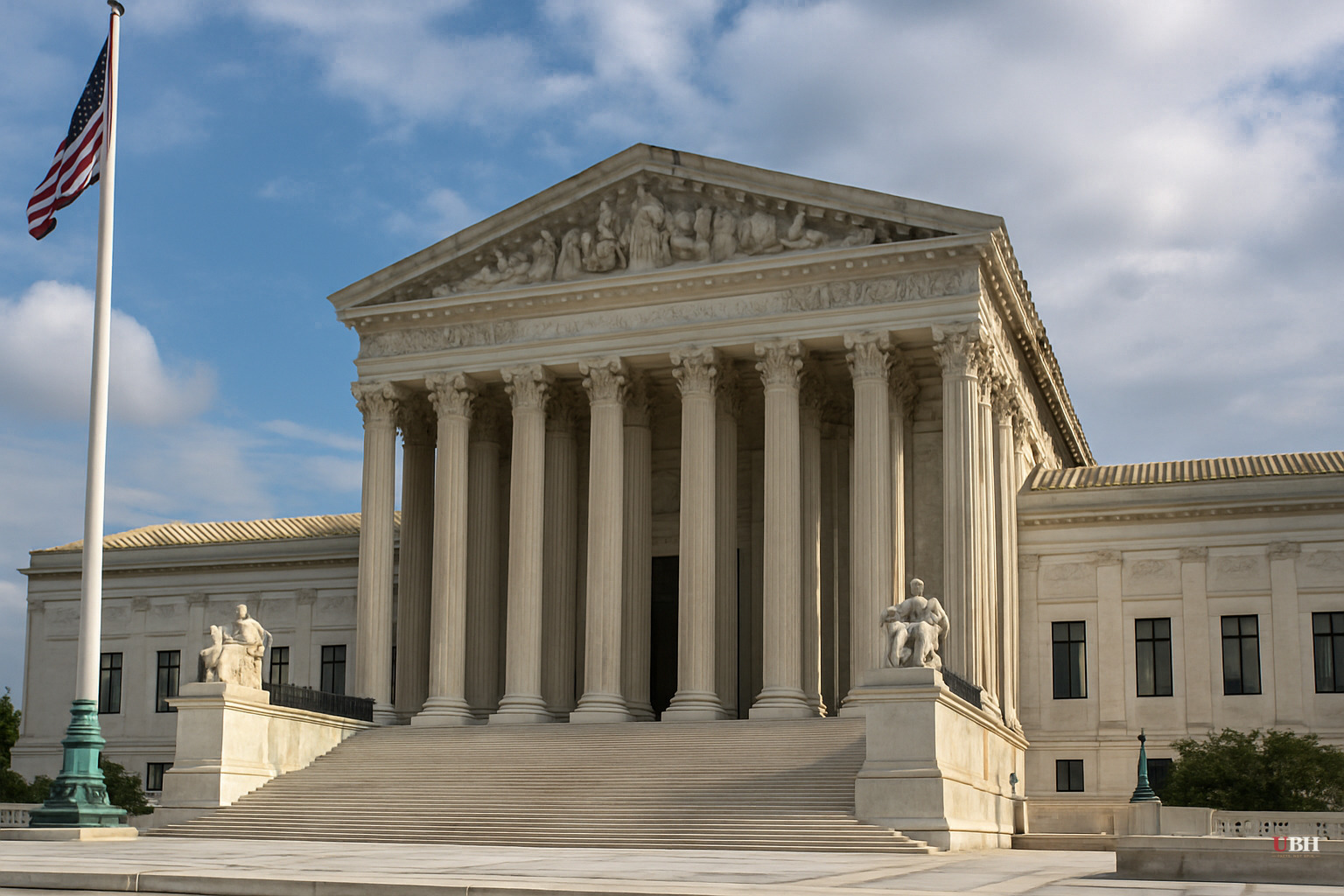
Since the Trump administration rolled out its mandatory-detention policy in July 2025, the legal battle over it has grown into one of the largest simultaneous litigation efforts in immigration history. Friday's Supreme Court petition is the administration's bid to end that sprawl.
What the Administration Is Asking
Solicitor General D. John Sauer filed a petition Friday asking the Supreme Court to review a May ruling by the Sixth Circuit Court of Appeals, which struck down the administration's detention policy in cases involving migrants from Mexico, El Salvador, Venezuela, Nicaragua, and Guatemala, according to The Guardian. Those individuals had lived in the United States for years before being arrested by ICE or CBP.
Sauer's argument is straightforward: under the Illegal Immigration Reform and Immigrant Responsibility Act of 1996, people qualifying as "applicants for admission" are subject to mandatory detention and are ineligible for bond hearings. The administration's position, adopted by the Department of Homeland Security last year and formalized by the Board of Immigration Appeals in September 2025, is that non-citizens who entered illegally and are residing in the U.S. interior — not just people arriving at the border right now — fall into that category.
"Detaining aliens who are living in the country after an illegal entry while their removal proceedings unfold prevents those aliens from evading hearings and helps ensure their removal from the United States," Sauer wrote, as quoted by The Guardian.
The Scale of the Litigation
Federal district judges have issued more than 9,300 rulings against the administration's policy, according to both Politico (cited by Breitbart) and The Guardian. As Sauer himself noted in his petition, that volume alone makes Supreme Court intervention necessary: "Especially given the volume of cases involved, this Court should grant review and resolve this case as swiftly as practicable."
At the appellate level, the split is 3-2 against the administration. Five circuits have ruled; three rejected the policy, two endorsed it. A circuit split of that kind is among the strongest grounds for Supreme Court review, and both conservative and liberal legal analysts generally agree the Court will take the case.
The Core Legal Dispute
The Sixth Circuit's majority held that the administration misread the 1996 statute. The law's mandatory-detention provision was written to apply to people arriving at ports of entry, not to long-term U.S. residents swept up in interior enforcement. Applying it to the latter group, the court ruled, denied due process.
That is a serious constitutional argument, not a fringe one. District judges across the country — including judges appointed by Republican presidents — have called the policy a "draconian violation" of due process rights, per Politico's reporting cited by Breitbart. Bond hearings exist precisely so an immigration judge can assess individual risk: flight risk, community ties, criminal history. Eliminating them categorically for an entire class of people is a significant departure from how the system has operated for decades.
The administration's counter is equally serious: mandatory detention is explicitly written into federal law for a defined category of non-citizens, and if DHS has correctly identified who belongs in that category, no bond hearing is required. Congress, not the courts, set that rule.
The Supreme Court's Recent Immigration Posture
This petition lands in a favorable environment for the administration. According to The Guardian, the 6-3 conservative Supreme Court majority handed the Trump administration two major immigration wins on Thursday, including allowing it to strip Haitian and Venezuelan immigrants of Temporary Protected Status protections. The administration filed this particular petition earlier in the week, before those rulings came down.
Separately, on June 25, the Supreme Court ruled in Mullin v. Al Otro Lado that the Trump administration's practice of physically blocking asylum seekers at ports of entry did not violate federal immigration law, according to the American Immigration Council. Justice Sotomayor, joined by Justices Kagan and Jackson, dissented, writing that the majority "blesses the Executive Branch's decision to slam the door shut on all who are fleeing persecution." That ruling addressed a now-defunct metering policy, but it signals the Court's current willingness to give the executive branch wide latitude on immigration enforcement.
The Strongest Case for the Other Side
Critics of the detention policy are not making a frivolous argument. The people affected by this policy are not recent border crossers; they are individuals who have lived in U.S. communities, in some cases for years, built lives, and in many cases have U.S. citizen family members. Bond hearings take a matter of hours and exist to make individualized determinations. Stripping that process wholesale, critics argue, assumes guilt and flight risk for an entire class of people without any factual finding about the specific individual. The Board of Immigration Appeals' September 2025 decision that triggered all of this was a deliberate reinterpretation of settled law, not a faithful reading of congressional intent. Three appellate courts, including judges across the ideological spectrum, have said so.
That concern deserves a straight answer from the Supreme Court, and the 9,300-ruling pile-up is evidence that the lower courts are not simply being obstructionist. They are applying the law as they understand it and consistently reaching the same conclusion.
What Comes Next
The Supreme Court has not yet agreed to hear the case. The justices will decide whether to grant certiorari, likely during their next conference schedule. If they take it, the case will determine whether tens of thousands of ongoing detention orders are lawful — and whether the 80,000-plus voluntary departure orders issued between January 2025 and March 2026 (reported by the Washington Post) were issued in a legally coherent framework to begin with. No charges or criminal proceedings are at issue here; this is entirely a civil immigration enforcement question about statutory interpretation and due-process scope.
Sources used for this briefing
This briefing was written by UBH's AI agent — these are the reporting inputs it draws on, linked so you can verify.


