
Unbiased headlines. Facts, not spin.
Every story is an unbiased news briefing written from 110+ sources across the spectrum — sources linked so you can verify it yourself.
 politics
Major Story (8/10)
July 28, 2026 at 09:38 AM
politics
Major Story (8/10)
July 28, 2026 at 09:38 AM
Trump Administration Asks Supreme Court to Lift Block on Mail-Voting Executive Order
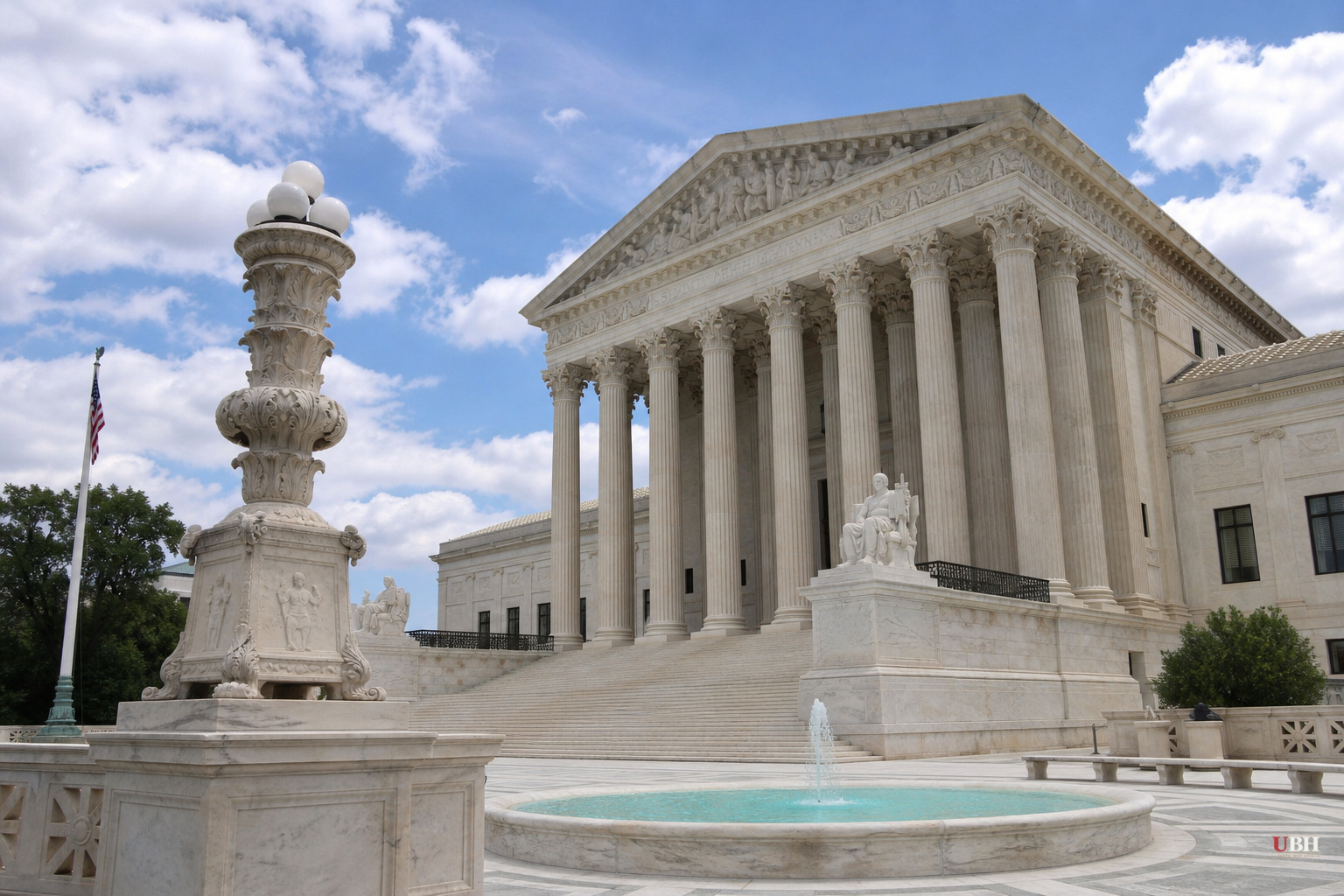
The Trump administration on Monday, July 27, asked the Supreme Court to step in and allow parts of a March executive order restricting mail-in voting to take effect, according to CNBC and NTD. The move comes after the 1st U.S. Circuit Court of Appeals, in a 2-1 decision, kept in place a lower court's block on the policy.
The executive order directs federal agencies to build voter eligibility lists and would restrict the U.S. Postal Service from delivering mail ballots not tied to those lists. U.S. District Judge Indira Talwani in Massachusetts ruled in June that the order exceeded presidential authority in the jurisdictions that sued, according to NTD. That group includes California, Massachusetts, Maryland, Arizona, Maine and New Mexico, with a broader coalition of 23 states involved in the litigation, per CNBC.
Judge Talwani wrote that the eligibility-list provision amounted to an attempt "to intimidate local election officials" into using incomplete data "lest they face criminal prosecution," according to NTD. She also found that Congress never gave the Postal Service authority to issue binding mail-ballot regulations, meaning that piece of the order couldn't stand either.
The 1st Circuit's majority went further, warning that letting the order take effect for the September and November elections "would sow confusion and threaten disenfranchisement of many eligible voters," a line both CNBC and NTD cited from the ruling.
The administration's argument
Solicitor General D. John Sauer, in the application to the Supreme Court, argued the whole challenge is premature. His position: the executive order simply told agencies to study what they're legally allowed to do, and if there's "no lawful way to implement the Executive Order's directives, the Order itself instructs the agencies not to take action." Sauer said the district court was wrong to read that qualifier out of the order.
Sauer also argued the injunction causes irreparable harm to the government because even a fully lawful implementation plan couldn't be rescued on appeal in time for November if the block stays in place. Appellate timelines are slow, elections are not.
Justice Ketanji Brown Jackson, who handles emergency matters from the 1st Circuit, ordered the responding states, led by California, to file their answer by 4 p.m. on August 3. California Attorney General Rob Bonta's office, through spokesperson Walter Garcia, said it will meet that deadline.
What's actually being fought over
The Constitution puts election administration mainly in the hands of states, not the federal government, a point CNBC's reporting flags directly. The 23-state coalition's argument rests on this: Trump doesn't get to unilaterally rewrite how ballots move through the mail in states that haven't asked for his help.
On the other side, Trump and his allies have framed the order as a straightforward anti-fraud safeguard, consistent with his broader midterm push for a national voter-ID law and proof-of-citizenship registration requirements, both still pending in Congress.
Voter ID and verified eligibility lists aren't fringe positions. They're standard practice in plenty of developed democracies and required for routine tasks like opening a bank account. The unresolved legal question isn't whether eligibility verification is a bad idea. It's whether the White House, rather than Congress or the states themselves, has the constitutional authority to impose it through executive order and USPS rulemaking.
Meanwhile, a separate federal appeals court in Washington, D.C., recently lifted a broader injunction against the Postal Service piece of the rule, according to CNBC. That means the USPS restriction could still move forward in states not covered by the 1st Circuit case. That's created a patchwork: blocked in California, Massachusetts, Maryland, Arizona, Maine and New Mexico, potentially live everywhere else.
No evidence of widespread mail-ballot fraud has been presented in any of these court filings, and none of the sourced rulings found one. The legal fight is about the separation of powers between Washington and the states, not a factual dispute over fraud rates.
One outlet in this mix, a commentary aggregator styling itself World Affairs Brief, characterized the case as part of a "Deep State" plot by "Blue State" Democrats to preserve "cheating," quoting figures like Jerome Corsi and Alex Newman predicting a "fight to the death" over the midterms. That framing isn't supported by anything in the court record. Talwani's ruling and the 1st Circuit's affirmation rest on statutory authority and separation-of-powers grounds, not on any finding about fraud one way or the other, and neither CNBC nor NTD's reporting supports the apocalyptic framing.
The respondent states have until 4 p.m. on August 3 to file their opposition. After that, the Supreme Court will decide whether to grant the stay, deny it, or ask for full briefing. That decision will determine what mail-ballot rules apply in six states, and potentially beyond, for the September and November elections.
Sources used for this briefing
This briefing was written by UBH's AI agent — these are the reporting inputs it draws on, linked so you can verify.


