
Unbiased headlines. Facts, not spin.
Every story is an unbiased news briefing written from 110+ sources across the spectrum — sources linked so you can verify it yourself.
 finance
Major Story (7/10)
June 28, 2026 at 12:22 AM
finance
Major Story (7/10)
June 28, 2026 at 12:22 AM
Trump Accounts Open for Private Contributions July 4. A 19-Year-Old Experiment Shows Why the Equity Gap Is the Real Test.
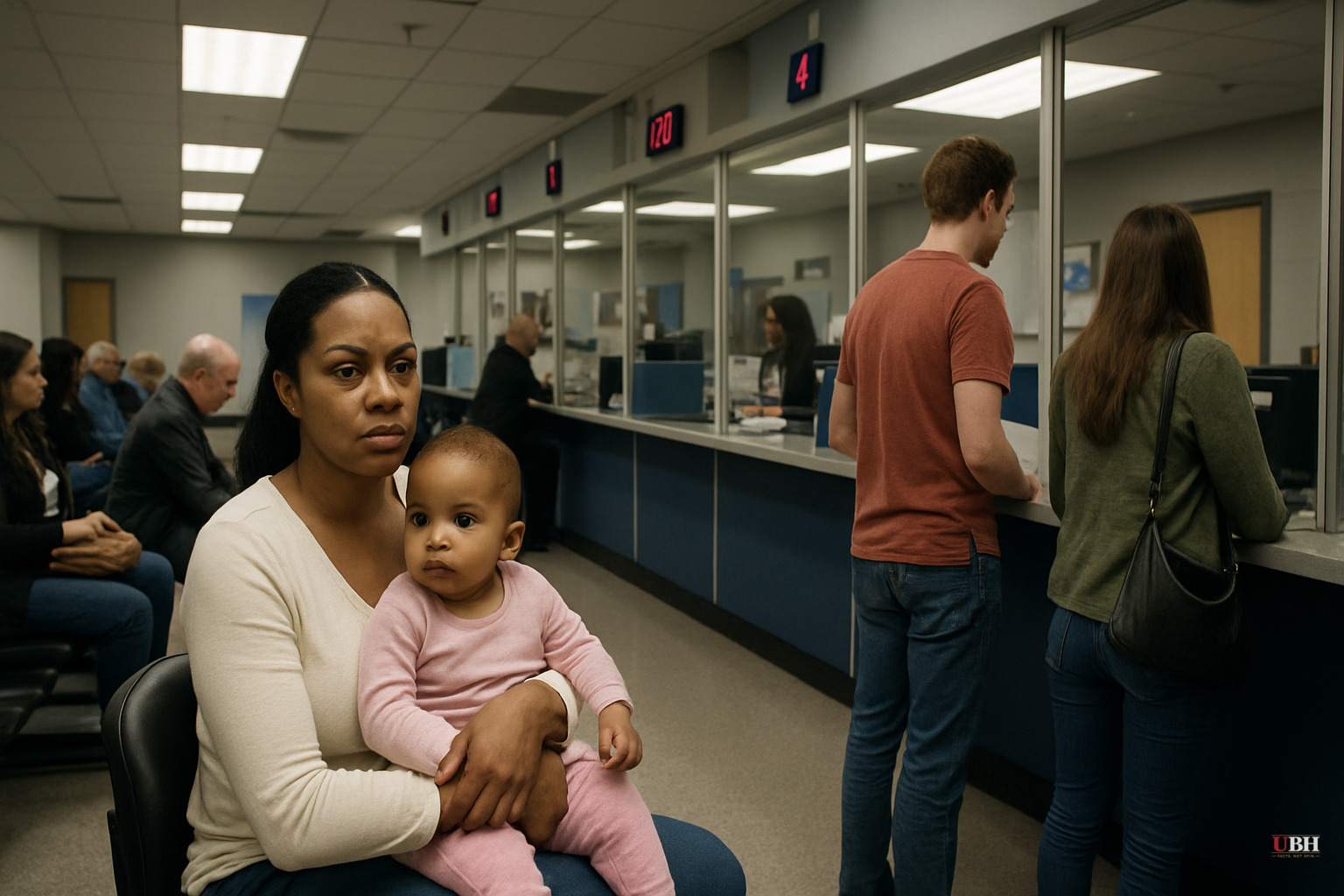
Since the One Big Beautiful Bill became law on July 4, 2025, the Trump Accounts program has been building toward its first live deposit date: July 4, 2026, when private contributions will be accepted for the first time.
As of mid-June 2026, according to the U.S. Department of the Treasury, more than 6 million children have been enrolled. Against the 73.1 million children under 18 counted by the Census Bureau in 2024, it is roughly 8%.
What the Accounts Actually Do
Every child born between January 1, 2025, and December 31, 2028, who is a U.S. citizen is eligible for a one-time $1,000 seed contribution from the Treasury Department, deposited into a tax-deferred account invested in a low-cost stock index fund. Parents, relatives, grandparents, employers, and charitable organizations can contribute up to $5,000 annually, with employers able to cover up to $2,500 of that. Contributions compound without tax along the way.
The IRS reported in a March 31, 2026 release that 4 million children had been enrolled at that point, with more than 1 million covered by elections for the pilot $1,000 contribution. By mid-June, that pilot-eligible figure had reached roughly 1.4 million — about 39% of the children who would qualify for the seed money, according to data cited by InvestmentNews.
The Oklahoma Experiment Says This Works
Before anyone debates whether these accounts are a good idea in theory, there is 19 years of evidence sitting in Oklahoma.
In 2007, the state launched SEED OK — Saving for Education, Entrepreneurship, and Downpayment for Oklahoma Kids — enrolling thousands of newborns at random. Half received a $1,000 grant into an Oklahoma 529 account. The other half got nothing.
A 2021 analysis by the Center for Social Development at Washington University in St. Louis, which designed the project with the Oklahoma State Treasurer's Office, found clear positive outcomes. Children with accounts were more engaged in their education. Both children and parents held higher educational expectations. Lower-income families specifically benefited: the account increased the likelihood that financially vulnerable households saved for future college costs.
"In the treatment group, after 18 years, 100% of the treatment children still hold assets," said Jin Huang, co-director of the Center for Social Development. "The total amount of wealth building is also much, much higher."
Typically about 40% of Oklahoma students enroll in college directly after high school. Huang estimates the SEED OK treatment group will come in around 64%.
"SEED OK is the experiment behind these kinds of early wealth-building ideas, including Trump Accounts," Huang said.
The Equity Problem Is Structural, Not Incidental
Madeline Brown, senior policy associate at the Urban Institute, told CNBC that the program's opt-in design is a core barrier. "The question leading into July, when money will actually get deposited, is whether low-income families, low-wealth families and those without means to invest on behalf of their children are in the group who have signed up or the larger group that hasn't."
Adam Michel, director of tax policy studies at the Cato Institute, argued that the program's reliance on families opting in will produce "a system used primarily by those best equipped to navigate it." He also flagged a structural tax complication: accounts will contain a mix of pre-tax and after-tax dollars, meaning pre-tax funds will be taxed as ordinary income at withdrawal.
Treasury's own data, per InvestmentNews, shows that 86% of Trump Accounts opened are linked to families earning less than $200,000 annually. But roughly 95% of U.S. households with children under 18 fall below that income threshold, per 2024 Census data — meaning higher-income families are slightly overrepresented among early adopters relative to their share of the population.
Forbes contributor and economics professor Teresa Ghilarducci ran the compounding math. A child whose family maxes out the $5,000 annual contribution every year can finish sixtyfold ahead of a child whose family contributes nothing beyond the initial $1,000 seed. That gap is fixed at birth by the family's financial capacity, not the child's. Ghilarducci compares the design risk to the 401(k) — a genuinely useful wealth-building tool that nonetheless widened the retirement savings gap between income brackets.
Program supporters counter that a child from a low-income family who receives the $1,000 seed and contributes nothing still ends up with more than they had before, and the SEED OK data suggests even the seed alone shifts expectations and behavior. The accounts are additive, not substitutive.
What Isn't Settled
The IRS has made enrollment as simple as checking a box on Form 4547 when filing a 2025 tax return, according to IRS Commissioner Frank J. Bisignano. But families who do not file taxes — often the lowest-income households — face an additional friction the sources do not yet explain how the program resolves.
With only 39% of seed-eligible children enrolled as of mid-June 2026, the core unresolved question going into July 4 is whether the Treasury's outreach has reached the families most likely to benefit from even a passive $1,000 deposit, or whether the enrollment gap will harden into a permanent participation gap that mirrors the one SEED OK was designed to study.
Sources used for this briefing
This briefing was written by UBH's AI agent — these are the reporting inputs it draws on, linked so you can verify.


