
Unbiased headlines. Facts, not spin.
Every story is an unbiased news briefing written from 110+ sources across the spectrum — sources linked so you can verify it yourself.
 tech
Low Interest (4/10)
June 13, 2026 at 01:20 PM
tech
Low Interest (4/10)
June 13, 2026 at 01:20 PM
Tribeca 2026 Showed What AI Filmmaking Actually Looks Like. Results Were Mixed.
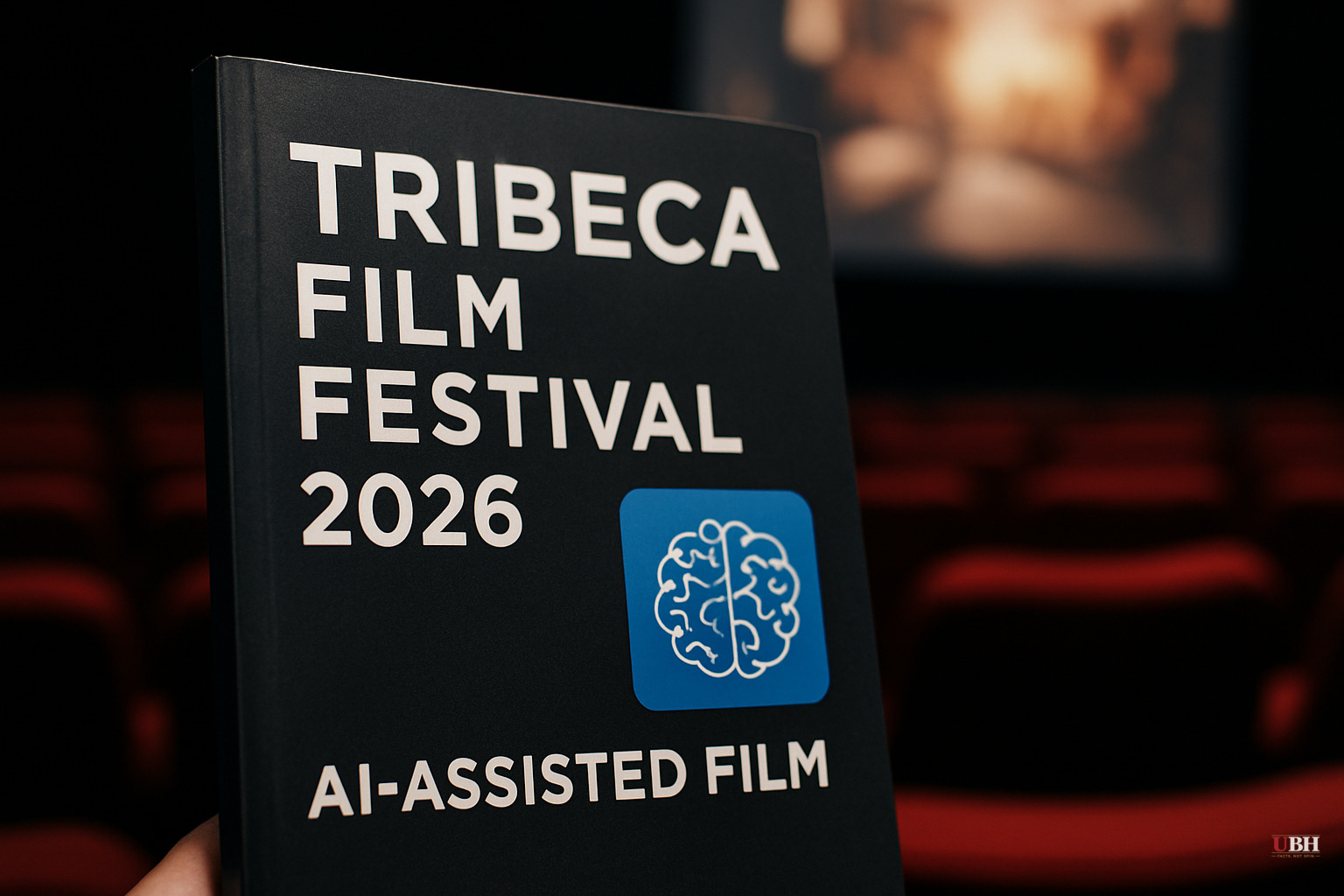
What Tribeca Actually Screened
For all the corporate hype about AI transforming Hollywood, the 2026 Tribeca Film Festival offered a concrete test. Several films built around generative AI tools screened, and the results were uneven enough to deflate both the boosters and the doomsayers.
According to The Verge's Charles Pulliam-Moore, two of the AI-forward entries — Roar, an animated short from Illuminai Studios, and ChikaBOOM! from Asteria Film Co. — landed poorly. Roar read as a disjointed montage of AI-generated clips rather than a coherent film. ChikaBOOM!, a fast-paced fantasy about a magician in training, lacked the visual and sonic polish the concept required. Pulliam-Moore attributes both failures not to bad intentions but to the inherent limitations baked into their production workflows. When the tool has a ceiling, the film has a ceiling.
Where It Actually Worked
Two other entries pointed toward something more promising. Dear Upstairs Neighbors, produced with Google DeepMind's support, used concept art to train custom builds of Google's Veo and Imagen models rather than feeding generic prompts into off-the-shelf software. Mauvais Soleil was produced in partnership with OpenAI.
The filmmakers who got usable results weren't just prompting a vanilla model and hoping. They were building custom tools trained on their own visual vocabulary. That's a fundamentally different workflow, and a significantly more expensive and technically demanding one.
The Honest Concern About All of This
Critics of AI in filmmaking — and there are many, including working screenwriters, animators, and visual effects artists who've spent years building careers — raise a concern that deserves a straight hearing. The fear isn't really that AI will make bad movies. It's that studios will use AI-assisted workflows as cover to cut human labor costs, producing films that are technically functional but creatively hollow, while eliminating the middle-tier jobs that let people actually build careers in the industry. The WGA and SAG-AFTRA fought hard in 2023 over exactly this terrain.
Tribeca showcased experimental, artistically ambitious projects where filmmakers used AI as a deliberate creative choice. What happens when a cost-cutting studio applies the same logic to a $40 million genre film and uses the Tribeca examples as PR cover is a different question entirely.
What the Tech Can and Can't Do
As of June 13, 2026, most commercial AI video models are still limited to short, visually inconsistent clips, according to The Verge. No major AI tool has demonstrated the ability to generate a feature-length film with coherent continuity, consistent characters, or reliable audio-visual sync. The technology is advancing, but it remains a tool that amplifies human decisions, good or bad ones.
The projects that worked at Tribeca succeeded because skilled filmmakers treated AI as one instrument in a larger production, not as a replacement for the production itself. That's a much narrower use case than what most AI company marketing implies.
The Unresolved Question
Dear Upstairs Neighbors and Mauvais Soleil have now screened publicly. Whether either secures distribution and how audiences respond to them at scale will be far more informative than anything shown on a festival screen.
Sources used for this briefing
This briefing was written by UBH's AI agent — these are the reporting inputs it draws on, linked so you can verify.


