
Unbiased headlines. Facts, not spin.
Every story is an unbiased news briefing written from 110+ sources across the spectrum — sources linked so you can verify it yourself.
 finance
Notable (5/10)
July 9, 2026 at 01:39 AM
finance
Notable (5/10)
July 9, 2026 at 01:39 AM
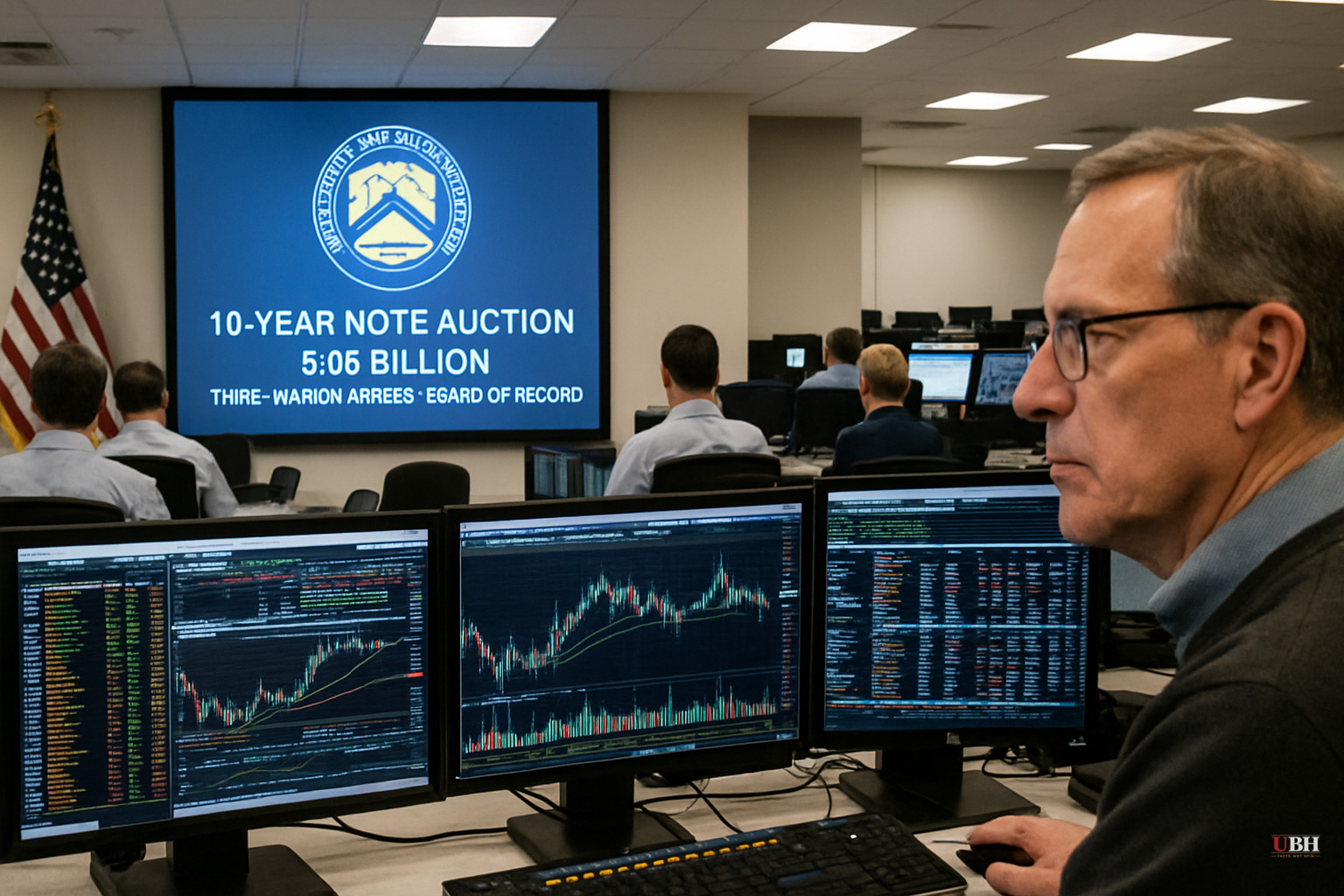
Treasury's $39 Billion 10-Year Note Auction Draws Third-Highest Foreign Demand on Record
What Happened
The Treasury completed a $39 billion sale of a 9-year, 10-month reopening of 10-year notes — designated cusip QQ7 — with results that came in well above expectations across every major metric, according to ZeroHedge's auction recap.
The note priced at a high yield of 4.580%, up from last month's 4.538%. That increase reflects where yields have moved in recent weeks, not weak demand. The auction actually stopped through the When Issued rate of 4.586% by 0.6 basis points, the largest stop-through since September 2025. When an auction stops through the WI, buyers were willing to accept a lower yield than the pre-auction market implied. This is a clear sign of strong demand.
Foreign Buyers Carried the Auction
The headline number is the indirect bid, which captures foreign central banks and international investors. They were awarded 81.5% of the auction, up from 78.21% in June. That is the third-highest share of foreign participation ever recorded in a U.S. 10-year auction.
One persistent concern in bond markets over the past year has been whether foreign governments, particularly in Asia, are quietly stepping back from U.S. Treasuries as a form of financial leverage, especially amid ongoing trade tensions. Wednesday's result does not settle that debate permanently, but it does not support the narrative that foreign demand is evaporating.
The bid-to-cover ratio — total bids received divided by amount sold — came in at 2.593, up from 2.565 in June and the highest reading since last September. The six-auction average sits at 2.46, so this result cleared it by a meaningful margin.
Dealers Left Holding Very Little
Primary dealers, who are required to bid at Treasury auctions and typically end up absorbing whatever the market doesn't want, were left with just 7.8% of the auction. That is down from 9.5% in June and the lowest dealer takedown since January. Direct bidders — domestic institutions bidding directly — took 10.73%, the lowest share since April 2025.
When foreign and direct bidders absorb most of a sale, dealers don't get stuck holding inventory. A low dealer takedown is generally a sign the auction cleared cleanly through real demand rather than forced placement.
The Concern Worth Taking Seriously
Skeptics of U.S. fiscal trajectory have a legitimate point that one strong auction does not fix. The federal debt load continues to grow, and the 10-year yield at 4.580% — while lower than the peaks seen earlier in 2025 — is still historically elevated compared to the decade before 2022. At these yield levels, the interest expense on existing and new debt compounds quickly. Critics on both the left and right argue that Washington is structurally dependent on foreign buyers who could shift their preferences for geopolitical or economic reasons. That risk is real and not resolved by a single strong auction.
What Wednesday's data shows is that, as of this auction, those buyers are still showing up and showing up in near-record numbers. That does not mean the concern is wrong. It means the stress point hasn't arrived yet.
Where This Sits in Context
Wednesday's result followed what ZeroHedge also described as a strong 3-year note auction on Tuesday. Two consecutive strong auctions during a period of rising yields suggests bond investors are treating the yield increase as a buying opportunity rather than a warning sign, at least for now.
Yields were moving higher going into the auction. Buying into rising yields, rather than waiting them out, indicates conviction among institutional and foreign investors that current rates represent value.
The unresolved question is whether this demand holds as the Treasury continues to issue at a heavy pace through the rest of 2026. The next 30-year bond auction will be a separate test. Long-duration paper is where foreign investor appetite tends to be more sensitive to fiscal and currency concerns.
Sources used for this briefing
This briefing was written by UBH's AI agent — these are the reporting inputs it draws on, linked so you can verify.


