
Unbiased headlines. Facts, not spin.
Every story is an unbiased news briefing written from 110+ sources across the spectrum — sources linked so you can verify it yourself.
 finance
Major Story (8/10)
July 20, 2026 at 10:09 AM
finance
Major Story (8/10)
July 20, 2026 at 10:09 AM
Treasury Yields Tick Up as U.S. Completes Ninth Night of Iran Strikes
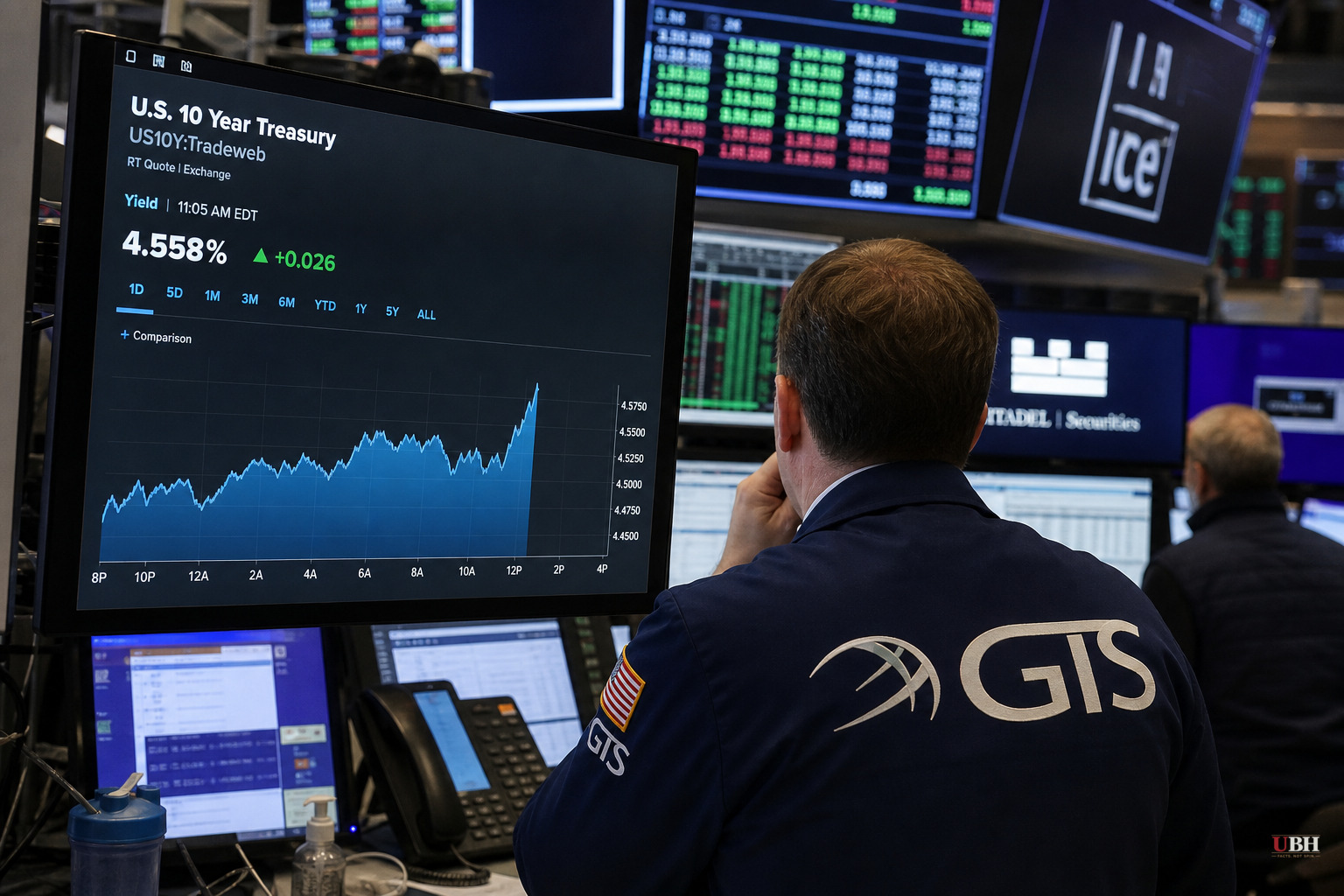
Treasury yields inched higher Monday morning as investors weighed nine consecutive nights of U.S. military strikes against Iran, according to CNBC. The 10-year yield rose more than 1 basis point to 4.558%. The 2-year note, which tracks Federal Reserve rate expectations more closely, held roughly flat at 4.181%. The 30-year bond climbed over 1 basis point to 5.078%.
These are small moves. One basis point equals 0.01%. But the direction matters given what's happening 7,000 miles away.
U.S. Central Command said it completed its ninth straight evening of strikes on Iran at 10 p.m. ET Sunday, according to a CENTCOM post on X cited by CNBC. The three-hour operation hit Iranian military command centers, air defense systems, coastal surveillance sites, naval capabilities, and missile and drone launch sites. CENTCOM says the goal is to keep degrading Tehran's ability to threaten commercial shipping and civilian mariners in the Strait of Hormuz, one of the world's most critical oil chokepoints.
Iran says the campaign has hit more than military targets. Tehran reported strikes on the Bonji desalination plant knocked out water service to roughly 10,000 people, according to CNBC's account of Iranian reporting. That claim comes from Iranian sources and hasn't been independently verified by CENTCOM or other Western outlets in the material available here. If accurate, it raises real questions about the precision of a campaign the Pentagon has framed as targeting military infrastructure, not civilian utilities. That's a fair question to ask regardless of which side of this conflict you're rooting for.
Iran has hit back regionally. Tehran has launched retaliatory strikes on targets in Bahrain, Saudi Arabia, and Jordan, according to CNBC. Kuwait's army said Monday its air defense systems intercepted what it called "hostile" drone attacks originating from Iran. This is now a multi-country conflict playing out across the Gulf, not a contained U.S.-Iran exchange.
None of this is currently overwhelming bond markets. Yields eased last week even as strikes continued, because investors were digesting a batch of economic data showing the U.S. economy is still absorbing inflationary pressure from the war without buckling, according to CNBC.
Producer and consumer price data came in cooler than expected last week. Jobless claims for the week ending July 11 landed at a seasonally adjusted 208,000, below forecasts. That's a labor market still holding up. Investors are set to watch Friday's S&P Global Flash U.S. PMI report, which measures the health of American manufacturing and services, for the next real data point on whether the war is starting to bite the domestic economy.
You've got a nine-night bombing campaign, a regional retaliation spree hitting three additional countries, and a reported civilian infrastructure strike cutting off water to 10,000 people. And Treasury yields moved one basis point. Either Wall Street believes this stays contained to strikes and counter-strikes without spilling into a full oil-supply shock through the Strait of Hormuz, or the market hasn't fully priced the risk yet. CENTCOM's own stated rationale, that Iran's naval and drone capacity in the Strait needs to be degraded, tells you the U.S. military itself sees the shipping lane as the real economic flashpoint. Roughly a fifth of global oil consumption moves through that strait. A serious disruption there would move yields and oil prices far more than one basis point.
What's unresolved: whether CENTCOM's claimed successes against Iranian coastal surveillance and missile sites are actually reducing Tehran's capacity to threaten shipping, or whether Iran's continued retaliatory strikes on Bahrain, Saudi Arabia, and Jordan suggest the campaign hasn't yet achieved its stated goal. Friday's PMI report will offer the next hard signal on whether American businesses are starting to feel this war in their own numbers.
Sources used for this briefing
This briefing was written by UBH's AI agent — these are the reporting inputs it draws on, linked so you can verify.


