
Unbiased headlines. Facts, not spin.
Every story is an unbiased news briefing written from 110+ sources across the spectrum — sources linked so you can verify it yourself.
 finance
Major Story (8/10)
July 31, 2026 at 10:30 PM
finance
Major Story (8/10)
July 31, 2026 at 10:30 PM
Treasury Warns Banks It May Intervene to Prop Up the Yen, One Day After Japan's Own Record Defense
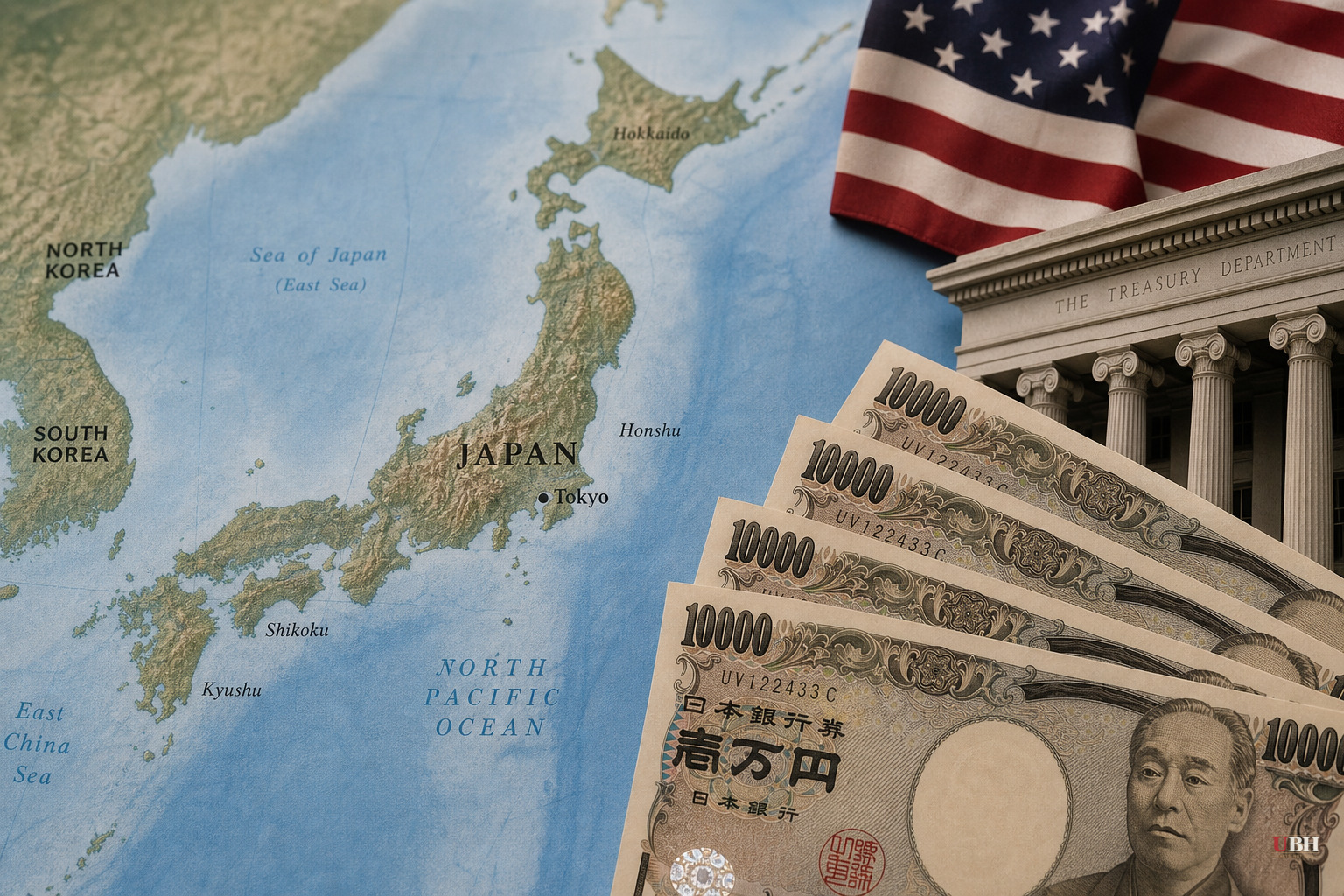
A warning shot through the New York Fed
On Friday, July 31, the U.S. Treasury notified a number of banks, through the Federal Reserve Bank of New York, that it may intervene directly in the yen market and that they should "stand ready for future action," according to a source familiar with the matter cited by Reuters. That notice landed a day after Japanese authorities carried out what FXStreet described as a record-scale defense of their currency, the kind of move that set the yen up for its biggest weekly gain since February and pulled it off four-decade lows against the dollar.
The dollar kept falling Friday. It traded as low as roughly 158.00 yen during the New York afternoon, according to FXStreet, down from levels above 163 just a day earlier per Reuters. That is a swing of more than five yen in about 24 hours, in a currency pair that normally moves in fractions.
Nobody's claiming the moves, and that's reportedly the point
FXStreet's reporting is the more interesting read here, because it doesn't just note that the dollar fell. It tracks three separate "lurches" lower during the session: one in the London morning that took the dollar toward 158.50 before it was bought back, a second around 13:15 GMT timed to the Treasury headline crossing the wires, and a third that produced the session low near 158.00 in New York hours later.
According to FXStreet, trading desks could not tell whether they were watching an actual intervention or ordinary market liquidation, and that ambiguity is being described as deliberate. Having already spent a record sum on Thursday, Tokyo can reportedly hold the yen's level now with far less money, or none at all, because every gap lower is deniable. Traders have to price in the possibility of intervention rather than wait for confirmation of the fact.
This is FXStreet's analysis of market behavior, not a confirmed admission from Tokyo or Washington that they orchestrated the pattern.
The IMF math and Japan's remaining room
FXStreet also lays out the mechanical constraint Japan is operating under. IMF guidelines treat up to three intervention episodes in a six-month window as consistent with a freely floating currency, and three consecutive days of activity count as a single episode. Japanese finance ministry officials reportedly said in May that two such windows remained before November, once the April campaign was counted.
By that count, Thursday and Friday's actions fold into the same episode, meaning Tokyo has used up one of its two remaining windows rather than both. Money isn't the limiting factor either. Japan holds roughly $1.4 trillion in reserves, with just under $1.2 trillion of that in foreign currency assets, according to FXStreet, and the April-to-May intervention campaign spent about $74 billion over a month without denting that pile.
What Bessent has and hasn't said
Treasury Secretary Scott Bessent has not confirmed that the U.S. actually intervened. In an X post cited by Reuters, he said the Treasury maintains "a strong relationship and close coordination" with Japanese authorities, and said he's looking forward to meeting Bank of Japan Governor Kazuo Ueda at the G20 finance ministers meeting in Asheville, North Carolina, at the end of August. He also credited Japanese Prime Minister Sanae Takaichi and the BOJ board with "a strong commitment to monetary and financial stability."
On Thursday, Bessent told Fox Business Network the yen "seems very undervalued" and has "substantially overshot what would be called an equilibrium price," and that Takaichi's policies would help Japan's fundamentals.
FXStreet draws a distinction that matters here: the rate checks preceding Thursday's move came from the New York Fed acting as the Treasury's fiscal agent, not from the Federal Reserve acting on its own account. Actual Fed participation would require separate authorization from the FOMC, and none has been granted. The coordination is fiscal policy, run through Treasury, not monetary policy from the central bank.
Scale check
The last time the U.S. intervened directly in this pair was March 2011, a coordinated G7 action after the Fukushima earthquake and tsunami, and that operation ran about $1 billion split between the Exchange Stabilization Fund and the Fed's own portfolio, aimed at weakening the yen rather than supporting it. This week's Japanese campaign dwarfs that in scale. FXStreet notes the ESF's entire net position at the end of 2025 was $43.6 billion, less than Tokyo is reported to have spent in a single hour on Thursday.
MUFG currency strategist Lee Hardman told Reuters the Treasury notice "fits in with the view in the market that the New York Fed has been carrying rate checks," adding it's "adding to the nervousness of market participants that there could be further intervention." Whether Washington actually deploys money, or simply keeps traders guessing through the G20 meeting in Asheville next month, remains an open question neither government has answered on the record.
Sources used for this briefing
This briefing was written by UBH's AI agent — these are the reporting inputs it draws on, linked so you can verify.


