
Unbiased headlines. Facts, not spin.
Every story is an unbiased news briefing written from 110+ sources across the spectrum — sources linked so you can verify it yourself.
 finance
Major Story (7/10)
July 9, 2026 at 05:47 PM
finance
Major Story (7/10)
July 9, 2026 at 05:47 PM
Treasury Sells $22 Billion in 30-Year Bonds at 5.058%, Foreign Buyers Carry the Load
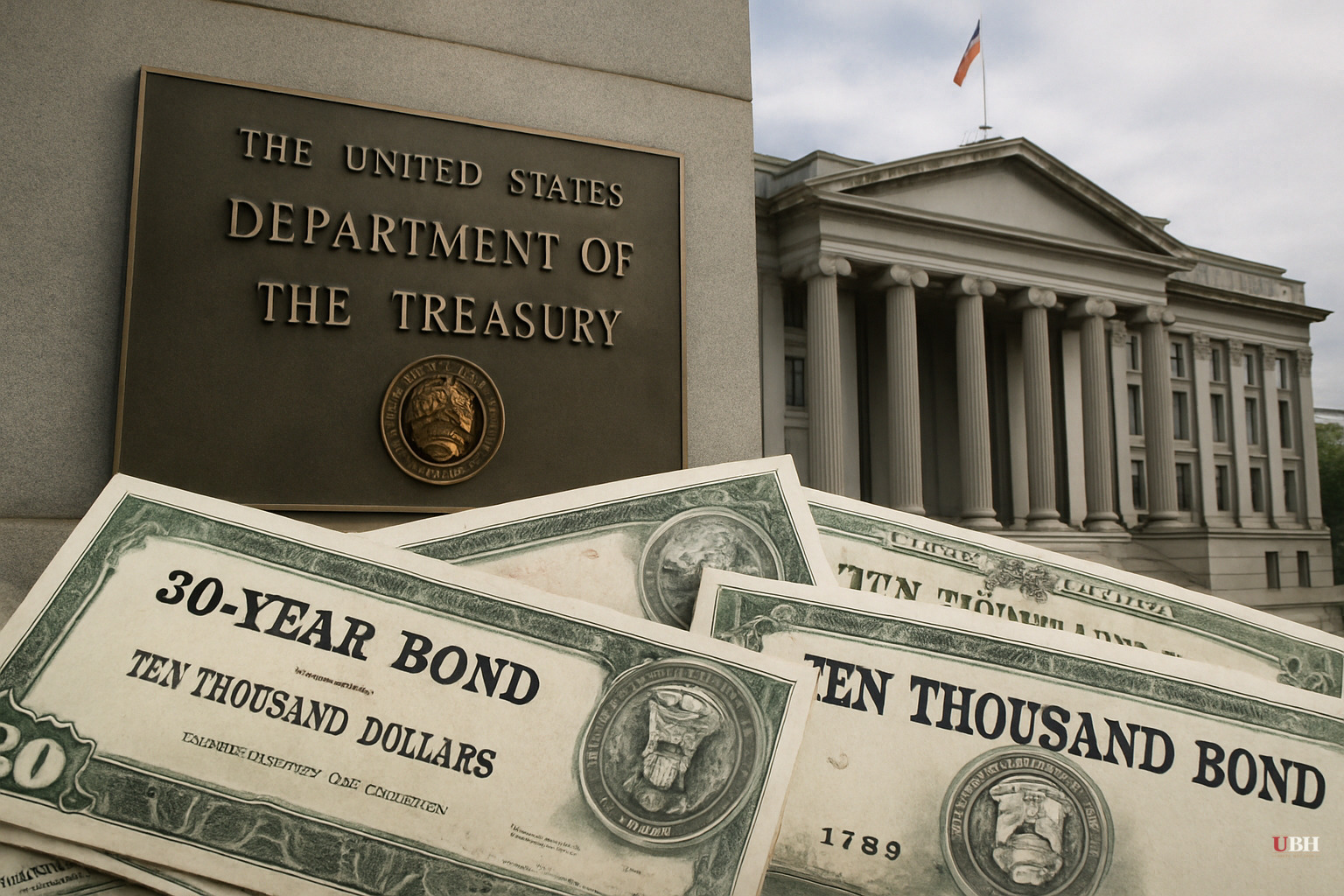
Since the 30-year yield touched 5.06% earlier Thursday on the back of U.S. strikes on Iran and revived inflation fears, the Treasury's $22 billion long-bond auction has added a concrete data point to what that level means in practice: the government just locked in that rate on two decades' worth of debt.
What the Numbers Show
The auction cleared at a high yield of 5.058%, up from 5.02% at the previous 30-year sale, according to FXStreet. The bid-to-cover ratio, the tail, and dealer takedown all came in near their six-auction averages. Nothing dramatically wrong, but nothing to brag about either.
International, or "indirect," bidders absorbed nearly 78% of the offering, well above their recent average, according to the InvestingLive auction breakdown. Direct domestic buyers, by contrast, took roughly half of what they typically do. The two moves offset each other in terms of total coverage, but the composition matters. The U.S. is leaning harder on foreign capital to fund its deficit at a moment when geopolitical tension with Iran is actively trading in the bond market.
Competing Grades
Rick Santelli of CNBC called it an A-minus. InvestingLive's grader landed at B-minus, noting that while the indirect/direct split was unusual, it was a wash numerically. "The numbers for the components were largely near the averages," InvestingLive wrote, "sans the Direct and Indirect mix which offset each other."
Santelli's more charitable read isn't wrong on the headline. The auction did not fail, yields didn't spike at the auction itself, and demand covered the offering. But a grade depends on what you're measuring. If you're measuring whether the U.S. can sell its debt, the answer is yes. If you're measuring whether the domestic investor base is showing up with conviction at 5% yields, the answer Thursday was no.
The Foreign Buyer Question
The question to consider: what happens if foreign demand softens? International buyers propping up nearly 78% of a long-bond auction is not a sign of a diversified, resilient market. Critics of current fiscal policy, including deficit hawks across both parties, have argued for years that persistent foreign financing of U.S. long-term debt creates a structural vulnerability. If a geopolitical rupture, a dollar-credibility scare, or a competing sovereign offering pulls those buyers back, yields could move sharply without domestic demand ready to absorb the slack.
That concern is real. What Thursday's auction does not show is that the break is happening now. Coverage was adequate, the tail was in line, and the yield, while elevated, was not a panicked overshoot. The risk is legitimate as a forward concern. It is not yet supported by what this specific auction produced.
Context: Where Rates Sit Today
As of July 9, 2026, the broader market backdrop includes gold trading above $4,100 per troy ounce, a level FXStreet attributes partly to persistent inflation expectations, and Bitcoin hovering near $63,000 with risk appetite constrained by Middle East uncertainty. The dollar is holding ground against both the euro and sterling despite some softness, with EUR/USD facing resistance around 1.1450 and GBP/USD retreating from a three-week high above 1.3430, per FXStreet.
All of that points to a market that is not betting on rate cuts anytime soon. Central banks, meanwhile, are backing away from explicit forward guidance, according to FXStreet. Traders are increasingly pricing duration risk without a clear Fed roadmap to anchor expectations.
What Comes Next
The 5.058% clearing yield on today's 30-year auction sets a benchmark for where the market prices long U.S. government debt right now, with active Middle East conflict, elevated inflation expectations, and thin domestic participation. The Treasury's next scheduled long-bond auction will be the first test of whether foreign appetite holds or whether the unusual buyer mix Thursday was a one-time artifact of the week's geopolitical volatility.
Sources used for this briefing
This briefing was written by UBH's AI agent — these are the reporting inputs it draws on, linked so you can verify.


