
Unbiased headlines. Facts, not spin.
Every story is an unbiased news briefing written from 110+ sources across the spectrum — sources linked so you can verify it yourself.
 finance
Notable (6/10)
August 12, 2026 at 12:47 AM
finance
Notable (6/10)
August 12, 2026 at 12:47 AM
Treasury Proposes Letting Workers Fund Trump Accounts Straight From Their Paychecks, Pre-Tax
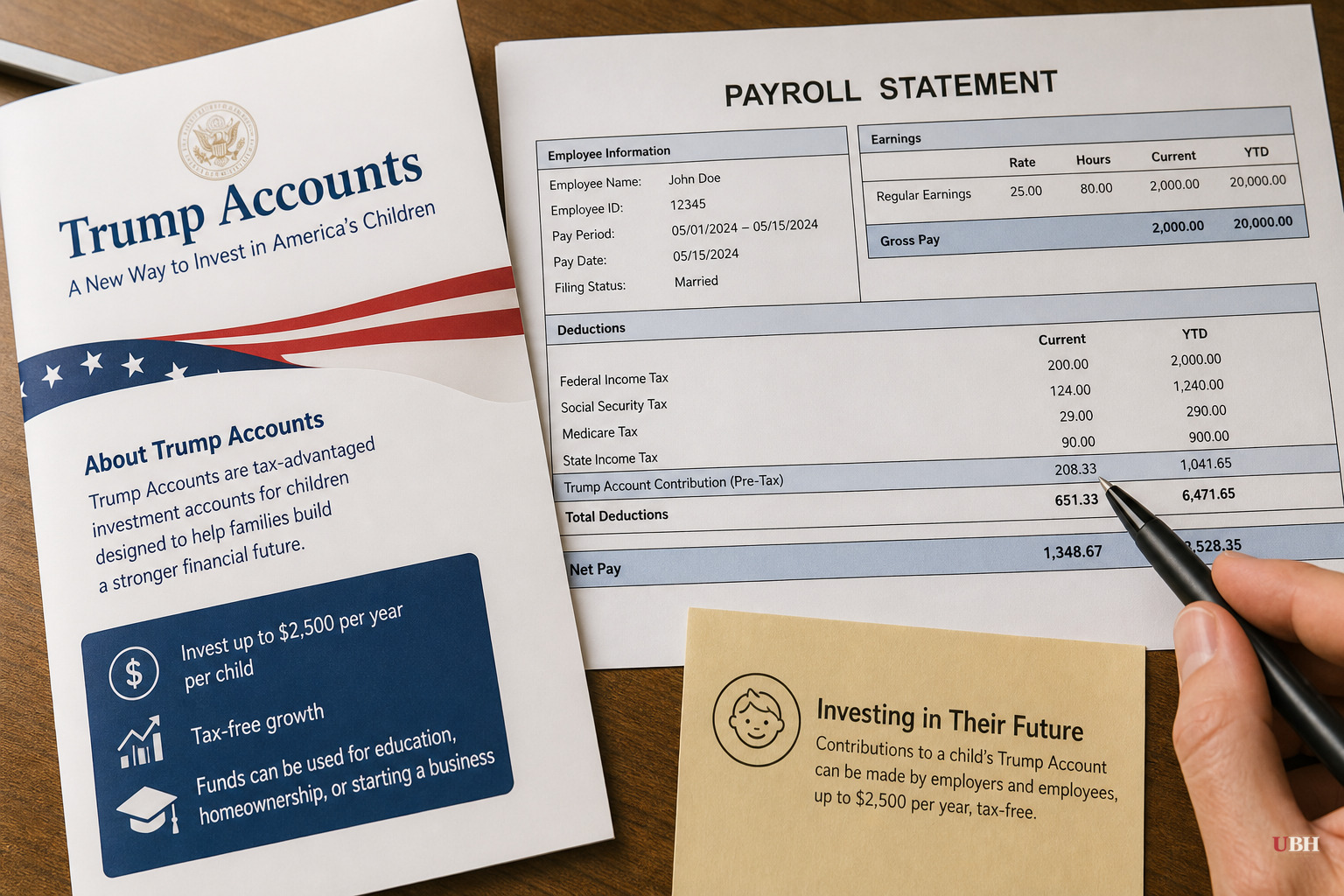
Treasury and the IRS put out proposed regulations Tuesday spelling out how employers can fund Trump Accounts, the new tax-deferred investment accounts for kids that launched July 4.
Under the proposal, employers can contribute up to $2,500 per year, per employee's dependent, tax-free. Workers can also route their own pre-tax paycheck dollars into their kids' accounts. Treasury Secretary Scott Bessent framed it as a wealth-building tool, saying in a statement the guidance "will help families grow Trump Accounts by allowing employers to contribute up to $2,500 tax-free each year for employees' dependents."
That $2,500 employer contribution counts toward the overall $5,000-a-year limit that anyone, parents, grandparents, employers, can put into a single account. The rules still need to clear a public comment period and a hearing scheduled for October 13 before Treasury and the IRS finalize anything, according to Forbes.
What a Trump Account actually is
Any U.S. child under 18 with a Social Security number can have one. Kids born between 2025 and 2028 get a one-time $1,000 deposit from the federal government as seed money, part of a pilot program. Money in the account gets invested in U.S. stock funds and grows tax-deferred. When the kid turns 18, the account converts into a regular IRA.
Bessent said roughly 7 million children have signed up so far, a figure he cited during a July 27 meeting of the Financial Literacy and Education Commission, where he also called it the "most successful launch in government history," according to Forbes. The 7 million enrollment number comes from Treasury's own tracking and hasn't been publicly disputed.
Billionaire Michael Dell and his wife Susan have pledged additional seed money on top of the government's contribution. SpaceX president Gwynne Shotwell said last month she'd gift a share of SpaceX stock to more than 2 million children. Treasury separately said it would allow donations of "readily tradable public company stock" to fund the accounts.
The employer problem Treasury is trying to solve
Businesses aren't exactly rushing to sign up. A Mercer poll of nearly 350 U.S. employers in April found only about 4% expected to implement a Trump Account contribution program in 2026 or 2027. Two-thirds had already decided not to contribute at all. The rest were undecided, according to both CNBC and Forbes.
Treasury says more than 50 companies have committed to contributing so far, though it's unclear which ones, since Treasury hasn't published a list. IRS Commissioner Frank Bisignano said the agency worked with some of the "largest employers in the country to prepare them for Trump Accounts," per Forbes, but that's a vague claim without names attached.
Melissa Elbert, a partner of wealth solutions at Aon who advises employers on retirement benefits, told CNBC that Tuesday's guidance gives companies "a much better understanding of the administrative and compliance framework" than they had before. She expects the new clarity to move more employers off the sidelines: "We saw early adoptions, and I think many more are considering it, and this guidance is going to help."
Companies weren't necessarily saying no to the concept. Plenty were undecided, and undecided often just means "we don't know the rules yet." Treasury spelling out the tax treatment removes one real obstacle. Whether it moves the needle from 4% to something meaningful is a different question, and Elbert's own quote is a prediction, not a result.
Where the coverage lines up and where it thins out
CNBC, Forbes and The Washington Post all report the same core facts: $2,500 employer cap, pre-tax employee contributions, the October 13 hearing, the 4% Mercer figure. Washington Post's writeup is the thinnest of the three, a short item that captures the mechanics but skips the employer-adoption problem entirely, leaving readers without the context that most companies have said no so far.
None of the four sources address how the IRS will verify or audit these pre-tax contributions, or what happens administratively for gig workers and the self-employed who don't have a traditional payroll employer to route money through. That's an open compliance question the proposed rule doesn't appear to answer yet, and it will likely come up during the public comment period before October.
The immediate next step is the comment window and the October 13 hearing. Whether employer participation actually climbs past single digits, or whether the $2,500 tax break mostly benefits families who were already going to save for their kids anyway, won't be clear until Treasury reports updated enrollment and employer-participation numbers sometime after the rule is finalized.
Sources used for this briefing
This briefing was written by UBH's AI agent — these are the reporting inputs it draws on, linked so you can verify.


