
Unbiased headlines. Facts, not spin.
Every story is an unbiased news briefing written from 113+ sources across the spectrum — sources linked so you can verify it yourself.
 economy
Major Story (7/10)
September 30, 2026 at 06:05 PM
economy
Major Story (7/10)
September 30, 2026 at 06:05 PM
Treasury and Education Department Launch Default Loan Portal as Borrowers in Default Hit 9.3 Million
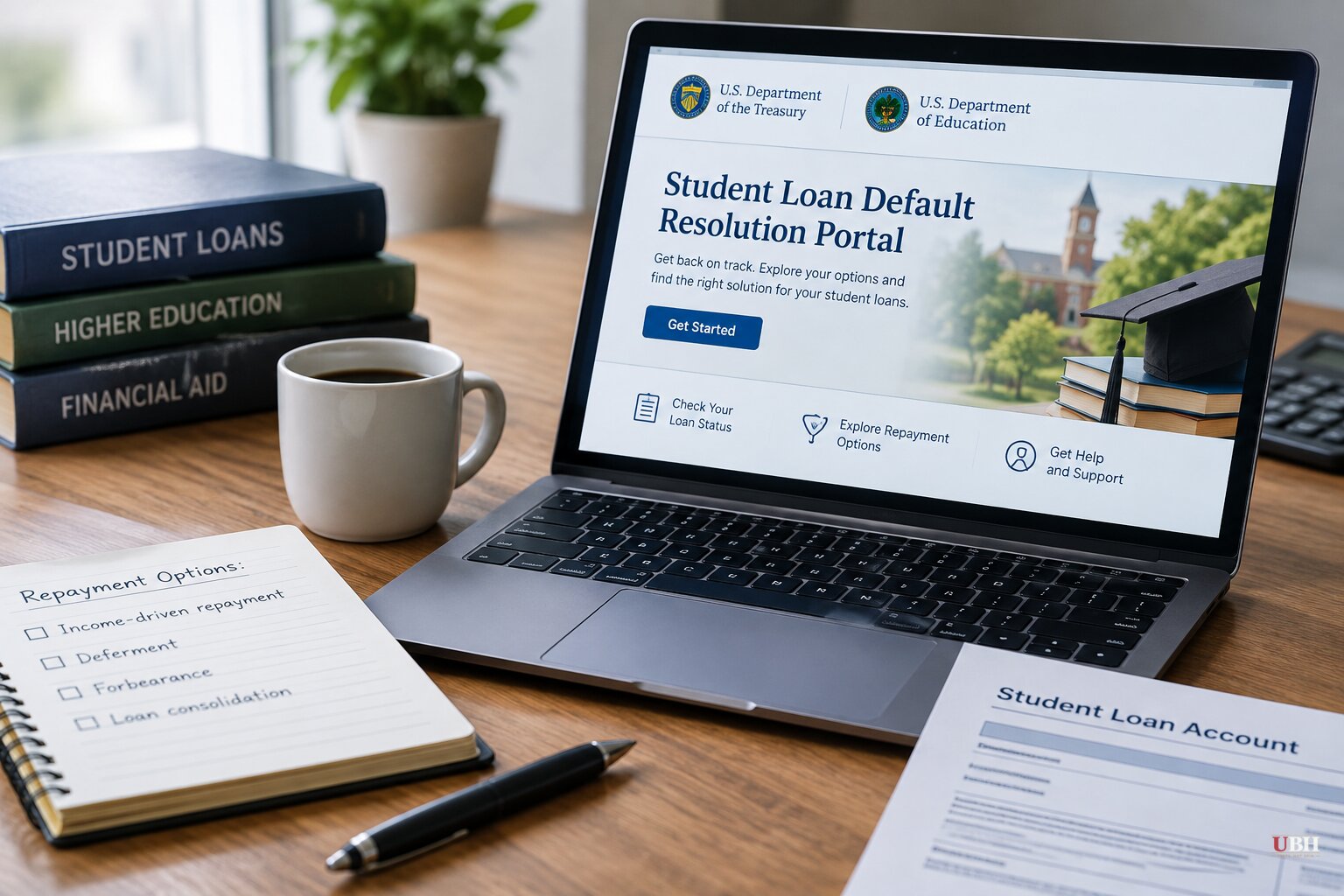
The Treasury and Education Departments launched the Defaulted Loans Support Center on Wednesday, September 30, 2026, a new section of StudentAid.gov built to let borrowers in default apply online for rehabilitation or consolidation instead of mailing paperwork, according to a joint press release cited by CNBC and thecollegeinvestor.
The number driving the launch is ugly. As of June 30, 2026, 9.3 million federal student loan borrowers were in default, up from about 6.2 million in 2016, according to Education Department data reported by CNBC. That is a roughly 50% jump over the last decade. Business Insider reported the default count grew by 400,000 borrowers in just the prior quarter.
As of December 31, 2025, roughly $179 billion in federal student loans sat in default, according to thecollegeinvestor. Treasury Secretary Scott Bessent framed the new portal as fiscal cleanup. "Under President Trump, Treasury and the Department of Education are restoring fiscal responsibility to our nation's $1.7 trillion federal student loan portfolio," Bessent said in a statement.
Why Defaults Spiked
CNBC attributed the surge to the end of the Covid-era payment pause and the termination of the Biden administration's SAVE plan, which had offered very low monthly bills to millions of borrowers. Rising unemployment among recent college graduates is adding to the pile, CNBC reported. Two policy shifts plus a softer job market for new grads account for the spike.
What the Portal Actually Does
The new system, at studentaid.gov/default-support, uses a borrower's existing StudentAid.gov login rather than the old MyEdDebt.ed.gov system, which required a separate account tied to a Social Security number, according to thecollegeinvestor. Borrowers can now complete a rehabilitation application, upload income documents, see an estimated monthly payment, sign electronically, and track progress in one place.
Rehabilitation still requires nine on-time payments within 10 consecutive months, thecollegeinvestor reported. Consolidation moves faster, but the default stays on a borrower's credit report, while rehabilitation erases it. Borrowers who consolidate and enroll in autopay can access a temporary 1% interest rate reduction the Education Department announced earlier in the summer, though consolidation now limits repayment plan choices to RAP or tiered plans only.
A senior Education Department official told Business Insider the two agencies beta-tested the portal with 15,000 borrowers over the past few months, and more than 5,000 of them made a payment online during that period. "It's a complete modernization of how we engage with borrowers who have unfortunately gone off the track," the official said.
Education Secretary Linda McMahon said the department "was never intended to serve as the fifth largest bank in America, and that's exactly why we partnered with the Treasury Department to improve the administration of federal student aid programs."
Treasury's Role in Student Loan Collections
The transfer was announced in March 2026, with Treasury eventually set to oversee non-defaulted loans too. A department official told Business Insider that work on that second phase is underway but gave no further details.
Over 60 Democratic lawmakers called on the Education Department in June to halt the transfer, Business Insider reported. Sarah Bloom Raskin, who served as deputy treasury secretary under President Obama, said collecting defaulted student loans is "operationally quite challenging, and you need the right people there in your career service who can handle this."
An archived 2016 Treasury blog post, viewable through the Wayback Machine and cited by CNBC, shows Treasury itself found it collected defaulted debt at lower rates than private companies. If that history holds, routing 9.3 million defaulted accounts through Treasury instead of private servicers or collection agencies could slow recoveries rather than speed them up. Meanwhile, Republican lawmakers have introduced a bill to codify the transfer permanently, betting the opposite is true.
One practical question remains open. Involuntary collections, including wage garnishment and seizure of federal benefits or tax refunds, remain paused, and the administration has not said when that pause will lift, according to Business Insider. Until it does, the $179 billion in defaulted debt keeps sitting there, and 9.3 million borrowers keep waiting to find out whether a new website changes their bottom line or just changes who they're dealing with.
Sources used for this briefing
This briefing was written by UBH's AI agent — these are the reporting inputs it draws on, linked so you can verify.


