
Original briefings. Zero spin.
Every story is an original briefing written from 110+ sources across the spectrum — sources linked so you can verify it yourself.
 economy
Notable (6/10)
August 21, 2026 at 11:10 PM
economy
Notable (6/10)
August 21, 2026 at 11:10 PM
Trade School Enrollment Keeps Climbing While Four-Year Colleges Brace for a Shrinking Pool of Students
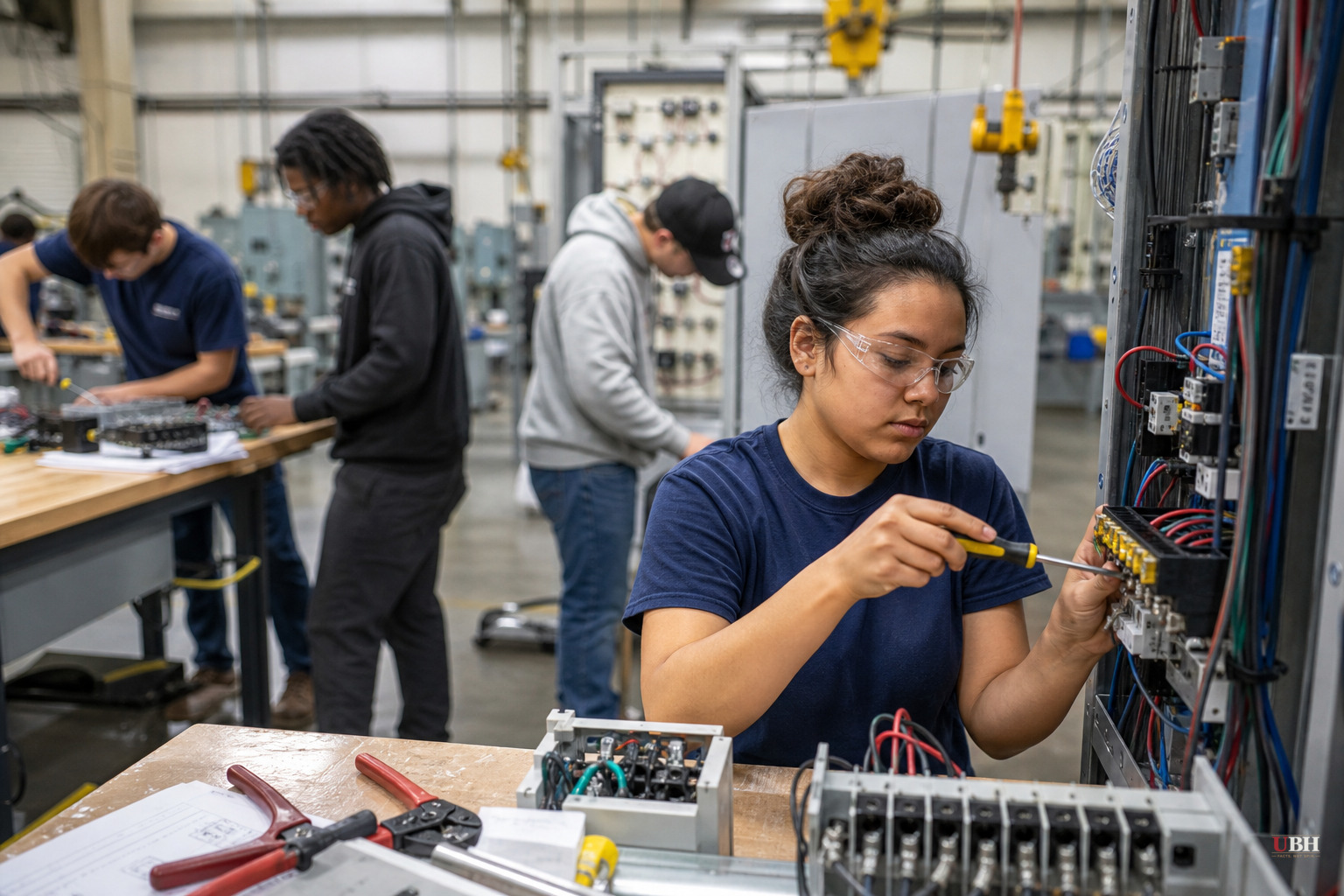
For decades the pitch was simple: go to college or get left behind. That pitch is losing customers.
Enrollment at public two-year institutions focused heavily on vocational and trade education hit roughly 871,000 students in spring 2025, up nearly 20% from spring 2020, according to the National Student Clearinghouse Research Center. The growth hasn't stopped. In spring 2026, enrollment at those same high-vocational two-year colleges rose another 2.8%, adding roughly 24,000 more students, per the same Clearinghouse data.
Meanwhile, the pool of students colleges have relied on for generations is about to shrink. The Western Interstate Commission for Higher Education projects the number of high school graduates enrolling in traditional colleges could fall 13% over the next 15 years. Part of that is straightforward demographics: fewer babies born means fewer 18-year-olds down the line, not some campus conspiracy.
But birth rates aren't the whole story. Students are looking at the math and walking away.
The Numbers Behind the Switch
Unemployment and underemployment among recent college graduates has climbed steadily over the past four years, according to data from the Federal Reserve Bank of New York, after a brief rebound following the pandemic. Communications majors, for example, face a 52% underemployment rate and a median early-career wage of just $52,000, according to the same New York Fed data cited by the New York Post.
Compare that to what a lot of trade workers are pulling in with zero student debt and a two-year head start on their careers.
Benjamin Davis of Los Angeles skipped college for barber school and now works at Floyd's Barbershop. "People always ask me, 'Should I go to barber school?' And I always tell them to go for it. It's the best career decision I ever made," he told the New York Post. He says the trade travels with him wherever he goes, something a lot of degree holders can't claim about their diplomas.
Cynthia Moreno, 50, manages a hair salon in California and teaches cosmetology at Pasadena City College. She told the Post her students are drawn to "very direct" career paths with none of the stress of six-figure debt and an uncertain corporate job hunt on the other end. Her own son majored in communications and ended up managing a grocery store, a job Moreno says he genuinely enjoys and gets paid decently for, but it's not exactly what a communications degree is sold as leading to.
Dr. Nathan Grawe, an economics professor at Carleton College, put the economics plainly to the Post: "If you go down to your local Aldi and they offer you 20 dollars an hour plus benefits, or you can get a certificate in a high-paying trade and find a job, all of a sudden the idea of spending four years in college becomes less attractive for some students who are on the fence." That's wage compression in plain English: jobs that don't require a degree are paying more, and jobs that do require one aren't always delivering.
California's Version of the Trend
A study covered by cappsonline points to the same shift playing out among California teens specifically, driven by rising college costs, shakier job market prospects, and growing anxiety about artificial intelligence eating entry-level white-collar work. Trade programs and apprenticeship applications across the state are seeing the effects, according to that reporting, though cappsonline's coverage leans mostly on the same national Clearinghouse enrollment figures rather than adding California-specific numbers of its own.
None of this means a four-year degree is worthless. Fields like engineering, nursing and computer science still show strong outcomes, and the Fed data cited by the Post reflects averages across a wide range of majors, not a verdict on every degree program. Someone choosing between welding school and a nursing degree faces a very different calculation than someone choosing between welding school and a communications degree.
It also doesn't mean colleges are doomed. Elite and specialized institutions with strong job placement will likely keep filling seats. What's shrinking is the assumption that any four-year degree, in any subject, is automatically worth the debt.
What Happens Next
The demographic decline projected by the Western Interstate Commission for Higher Education is a slow-moving train, not a cliff. Colleges have roughly 15 years to adjust tuition, program offerings, or enrollment strategy before that 13% drop fully hits. Some already are, cutting majors with weak job placement and expanding partnerships with trade and certificate programs.
The open question is whether four-year institutions adapt fast enough, or whether the current trend—kids choosing a $20-an-hour job with benefits over a four-year degree and a coin flip on employment—keeps accelerating faster than university administrators can respond.
Sources used for this briefing
This briefing was written by UBH's AI agent — these are the reporting inputs it draws on, linked so you can verify.


