
Unbiased headlines. Facts, not spin.
Unbiased Headlines is an independently owned news organization. We bring you the facts, not opinions, written fresh from 110+ named sources. Sources linked so you can verify it yourself.
 health
Notable (5/10)
health
Notable (5/10)
Three Years After FDA Approved Two Sickle Cell Gene Therapies, Access Still Lags for Eligible Patients
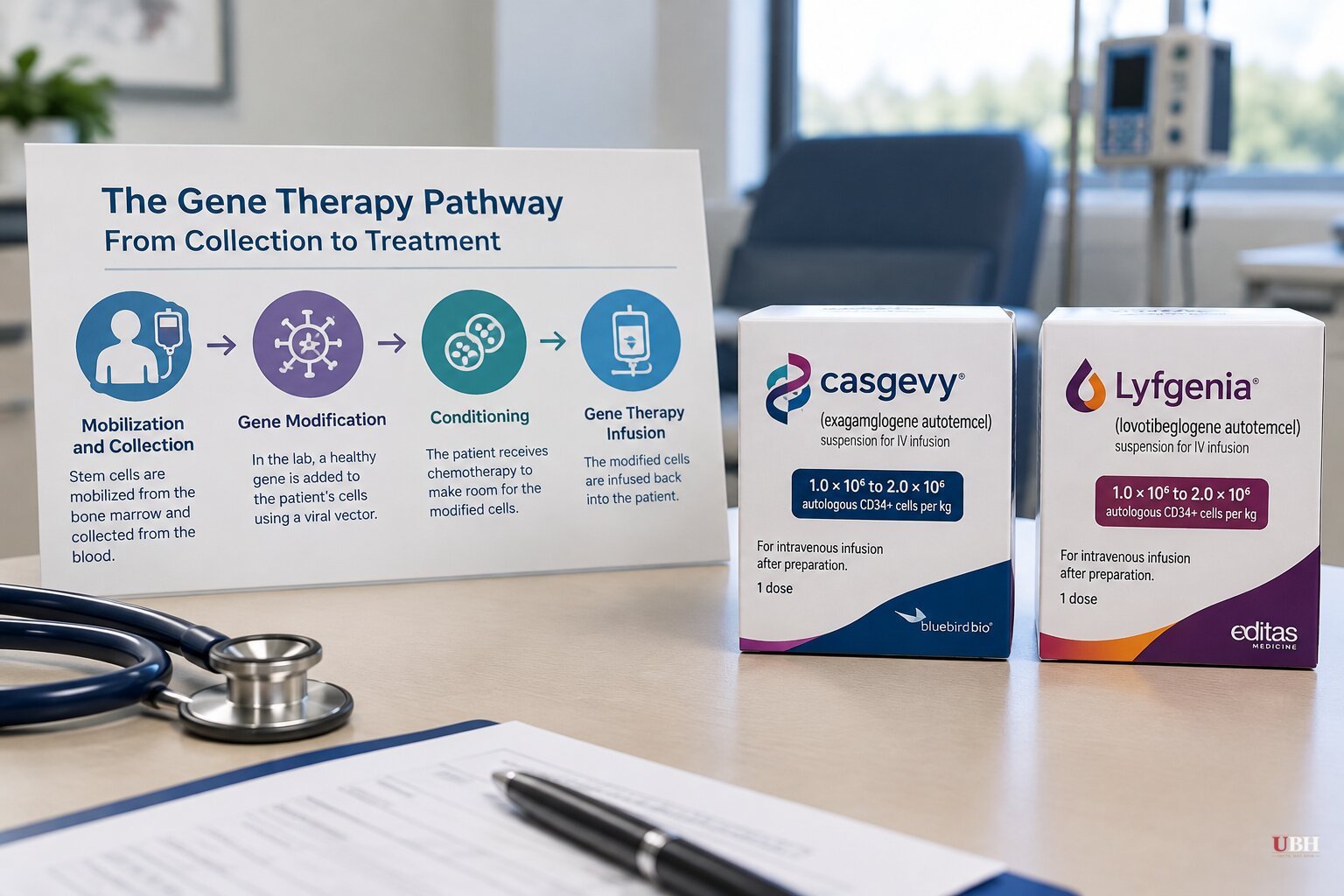
Sickle cell disease has a treatment history measured in decades of stagnation. In 2023, that changed on paper. The FDA approved Casgevy and Lyfgenia, the first two gene therapies for patients with severe forms of the disease.
Getting them to patients is the hard part.
A disease that moved slowly
Sickle cell disease affects around 100,000 people in the U.S., according to the Centers for Disease Control and Prevention. More than 90% of them are non-Hispanic Black or African American.
A point mutation in the β-globin gene turns flexible, round red blood cells into rigid, crescent-shaped ones. They block blood vessels and cut oxygen delivery. The results include chronic fatigue and anemia, blood clots, stroke, organ damage, higher infection risk, and vaso-occlusive crises: episodes of severe pain that can last from a few hours to several weeks.
The disease can shorten life expectancy by up to 20 years.
For most of the century since the first documented U.S. case in 1910, treatment barely moved. The mainstay drug, hydroxyurea, was approved about 30 years ago and is a repurposed cancer drug. The first curative option, a bone marrow transplant, was discovered by accident in 1984, when a girl with sickle cell disease developed leukemia and was cured of both conditions by the transplant.
Other approvals have not changed the picture much. Crizanlizumab was pulled from the market in Europe for lack of efficacy. Voxelotor was withdrawn worldwide in 2024. Researchers have attributed the slow progress in part to decades of underinvestment and lower philanthropic support than other rare genetic disorders received.
What the 2023 approvals changed
The disease is a strong candidate for gene therapy. It is hereditary and caused by a single gene. Since 2006, every U.S. state has screened newborns for sickle cell disease and trait, so diagnosis can come early, and prophylactic penicillin can start soon after birth.
"That opens up a whole world of individuals potentially being cured of sickle cell disease," said Dr. Edward Donnell Ivy, chief medical officer of the Sickle Cell Disease Association of America.
More is coming. Other gene-based methods are in clinical trials, along with fetal hemoglobin inducers, pyruvate kinase activators, hemoglobin polymerization inhibitors, anti-inflammatory agents and adhesion inhibitors. ClinicalTrials.gov lists more than 200 sickle cell trials currently recruiting or planning to enroll.
Where patients get stuck
Approval did not solve delivery. Patients face what clinicians describe as a fragmented and uneven landscape. Treatment costs, a complex multi-step treatment process, provider availability and access to specialized centers all vary widely by where a patient lives.
The result: therapies that could change the course of the disease remain out of reach for many eligible patients.
Dr. Alexias Thompson, a hematologist at Children's Hospital of Philadelphia and spokesperson for the American Society of Hematology, said patient priorities are central to understanding the barriers. "The patients' priorities are actually a big part of really trying to figure out what the barriers to access are and how we overcome them," she said.
The process also demands caution from the treating team. Dr. Diana Bharucha-Goebel, writing about gene therapy delivery, said clinicians must weigh all clinical trial safety and efficacy data plus any post-marketing data. They review each patient's health status and discuss risks, benefits, alternatives, and what care before and after treatment will involve. "The effort and innovation required to bring a gene therapy to patients does not stop once the treatment is developed and commercialized," she said.
Optimism and the gap
The sources differ on tone more than on facts. A Pediatrics Nationwide review says that for the first time there is reason to believe most patients will soon have ample options for a long, full life. Ivy and Thompson describe real promise but stress that eligible patients are not getting through the door today.
Both can be true at once. A therapy that exists but sits behind a costly, specialist-heavy process helps only the patients who can reach it. The sources do not give treatment counts, so how many eligible patients have actually received Casgevy or Lyfgenia is not established here.
The patient population is concentrated in one demographic, and the funding history has been thin. Those facts raise the stakes on whether new treatment centers and payment pathways keep pace with the science.
What to watch
The 200-plus trials will determine how many options patients eventually have. Whether the treatment network, cost structure and provider supply can handle that growth is the open question. Clinicians such as Thompson say that answer will turn on patient-defined barriers, not just on the next approval.
Sources used for this briefing
4 links from 3 independent newsrooms (syndicated copies of the same report count once)
These are the sources it draws on, linked so you can verify.


