
Unbiased headlines. Facts, not spin.
Unbiased Headlines is an independently owned news organization. We bring you the facts, not opinions, written fresh from 110+ named sources. Sources linked so you can verify it yourself.
 health
Major Story (7/10)
health
Major Story (7/10)
Gaza Health Ministry Reports 466 Hunger Deaths Since 2024 as UNICEF, MedGlobal Say Child Malnutrition Is Down but Fragile
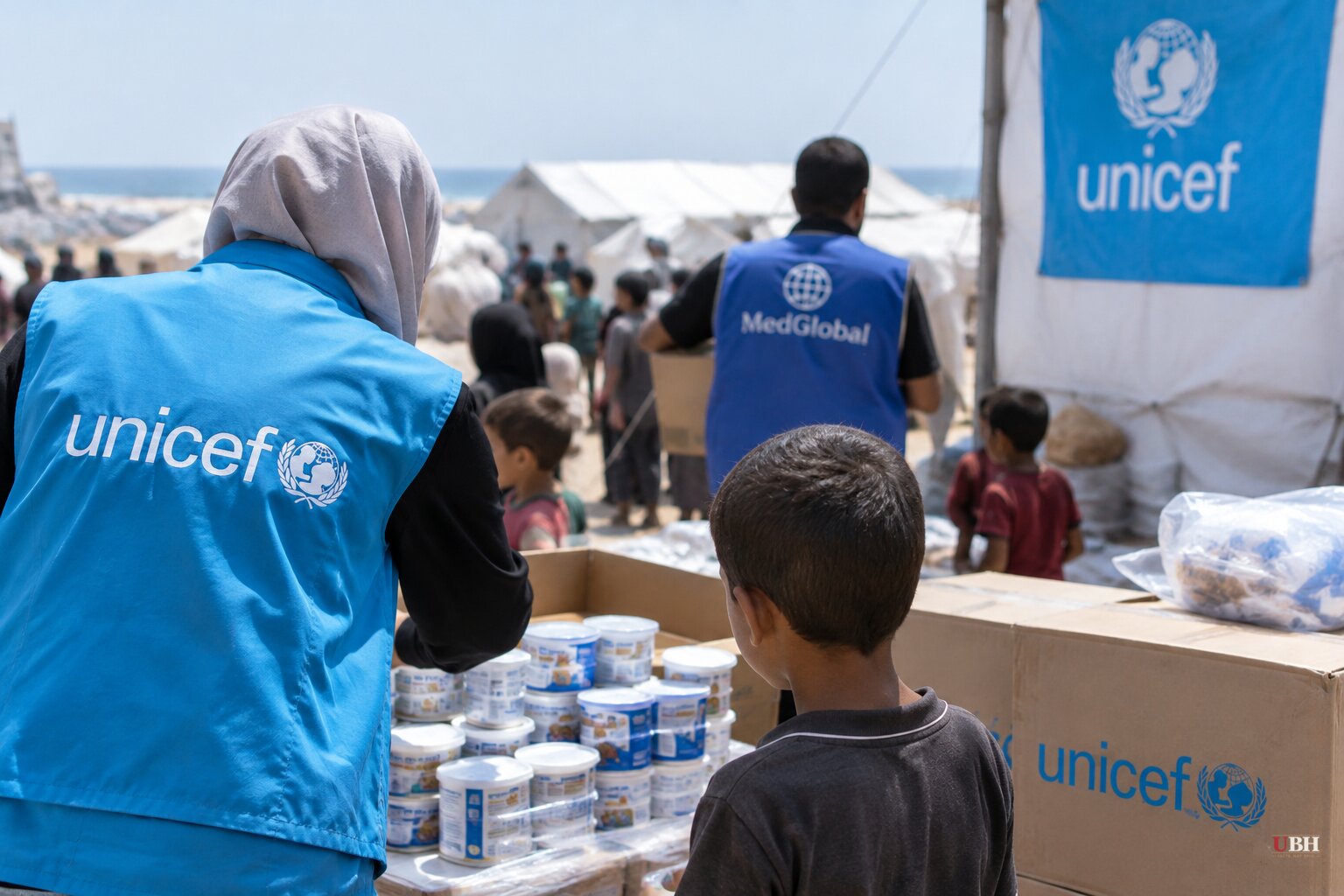
Since Israel said on Wednesday, Oct. 14, that commercial goods had stopped entering Gaza, three new sets of numbers have landed this week, two of them on Friday, Oct. 16. They point in different directions. Together they describe a hunger crisis that has eased since the October 2025 ceasefire but has not ended.
The ministry's count
In a statement for World Food Day, the Palestinian Health Ministry in Gaza said malnutrition and starvation have reached "catastrophic" levels. It reported 466 deaths linked to malnutrition and starvation since 2024, including 157 children.
Elderly Palestinians accounted for 189 of those deaths, or 40.5 percent. The ministry said 11 percent of older people went a full day without eating, and 68 percent had stopped or cut back medication because supplies ran out.
The ministry also reported 158,001 cases of acute malnutrition among children under five between 2024 and August 2026, including 28,716 severe cases. It said anemia among pregnant women reached 61 percent in 2026, up from 41 percent before the war. It recorded nearly 4,000 pregnancy losses in the first half of 2026, more than three times the prior six months.
Looking ahead, the ministry projects 1.4 million people, 67 percent of the population, will face crisis-level food insecurity or worse through the end of 2026. It estimates 74,200 children will need treatment for acute malnutrition through April 2027. These are the ministry's own figures, and the statement does not detail how each death was verified.
What UNICEF and MedGlobal found
A UNICEF report published the same day found the ceasefire let more humanitarian and commercial supplies in. UNICEF said that, along with a scaled-up food and nutrition response and eased restrictions on nutrition supplies, helped push back the famine that the global food security monitor confirmed in August 2025.
The agency called those gains fragile. "Acute malnutrition rates have fallen, but only one in three children under the age of two is currently achieving minimum dietary diversity," the report stated. A June UNICEF survey found chronic malnutrition affecting one in eight children under five. About 800,000 children remain displaced, most in tents or unsafe buildings as winter approaches.
MedGlobal, a U.S.-based medical aid group, put a number on the improvement in a report released Oct. 13. Its assessment of 1,304 households across North Gaza, Gaza City, Deir al-Balah and Khan Younis found acute malnutrition among children under five fell from 16.8 percent in July 2025 to 8.4 percent in July 2026. The group says the IPC, UNICEF and the World Food Programme corroborate the improvement.
"A year ago, Gaza stood on the brink of famine," MedGlobal president Dr. Zaher Sahloul said. "These gains are reversible. If the world looks away now, the numbers will reverse as quickly as they improved."
The report cites WFP's estimate that up to 90 percent of Gaza's population could return to severe food insecurity if assistance declines.
The supply question
The ministry's death toll is cumulative from 2024, a period that includes the famine declaration. The UNICEF and MedGlobal findings measure current malnutrition rates among children. The figures are not directly comparable, and neither source claims they are.
What both point to is supply. UNICEF spokesperson Ricardo Pires told reporters in Geneva that both commercial and humanitarian flows "must remain predictable and continuous."
"The impact on children obviously will be felt if this situation is not resolved," he said. "We can't go back to a situation where children and families are not getting all the supplies, goods, and services that they require."
Israel said on Oct. 14 that commercial goods were no longer entering Gaza because of a tax dispute between local merchants and Hamas. Hamas called the claim "baseless," and Gaza's Government Media Office denounced what it called a "blatant disinformation campaign."
The UN Office for the Coordination of Humanitarian Affairs had already flagged fragility in an Oct. 5 report. It said funding shortfalls would significantly cut daily hot-meal production and monthly household food-parcel distributions starting in October.
OCHA also counted 788 commercial truckloads entering between Sept. 21 and 27, 10 percent below the prior four-week average. It said Kerem Shalom is the only operating cargo crossing since Zikim closed in May, leaving supplies exposed to any single disruption.
A separate dispute over the casualty record
The broader casualty picture remains contested. The ministry's mortality data for 2025 registered 24,650 deaths, with 70.1 percent, or 17,286, attributed to direct targeting in the war. It also recorded 50,227 live births. Those totals are ministry figures, and the births-to-deaths comparison does not account for emigration.
Separately, Chris Sidoti, a member of the UN Commission of Inquiry that concluded in September 2025 that Israel committed genocide in Gaza, said in an interview reported by JNS that the commission had not independently established how many of those killed were civilians. "We literally do not know, nor does anybody else know, including the IDF, how many militants were there," he said. The commission's report had cited a Guardian article stating that 83 percent of those killed were civilians.
Whether commercial goods resume is the immediate concern. Israel has not said when it considers the merchant-Hamas tax dispute resolved, and UNICEF is asking that all crossings stay open as winter arrives.
Sources used for this briefing
7 links from 6 independent newsrooms (syndicated copies of the same report count once)
These are the sources it draws on, linked so you can verify.


