
Unbiased headlines. Facts, not spin.
Every story is an unbiased news briefing written from 110+ sources across the spectrum — sources linked so you can verify it yourself.
 health
Major Story (7/10)
July 1, 2026 at 06:02 AM
health
Major Story (7/10)
July 1, 2026 at 06:02 AM
Three-Year-Old Boy Pulled Alive from Venezuela Rubble on Day Six. Death Toll Climbs to 1,943.
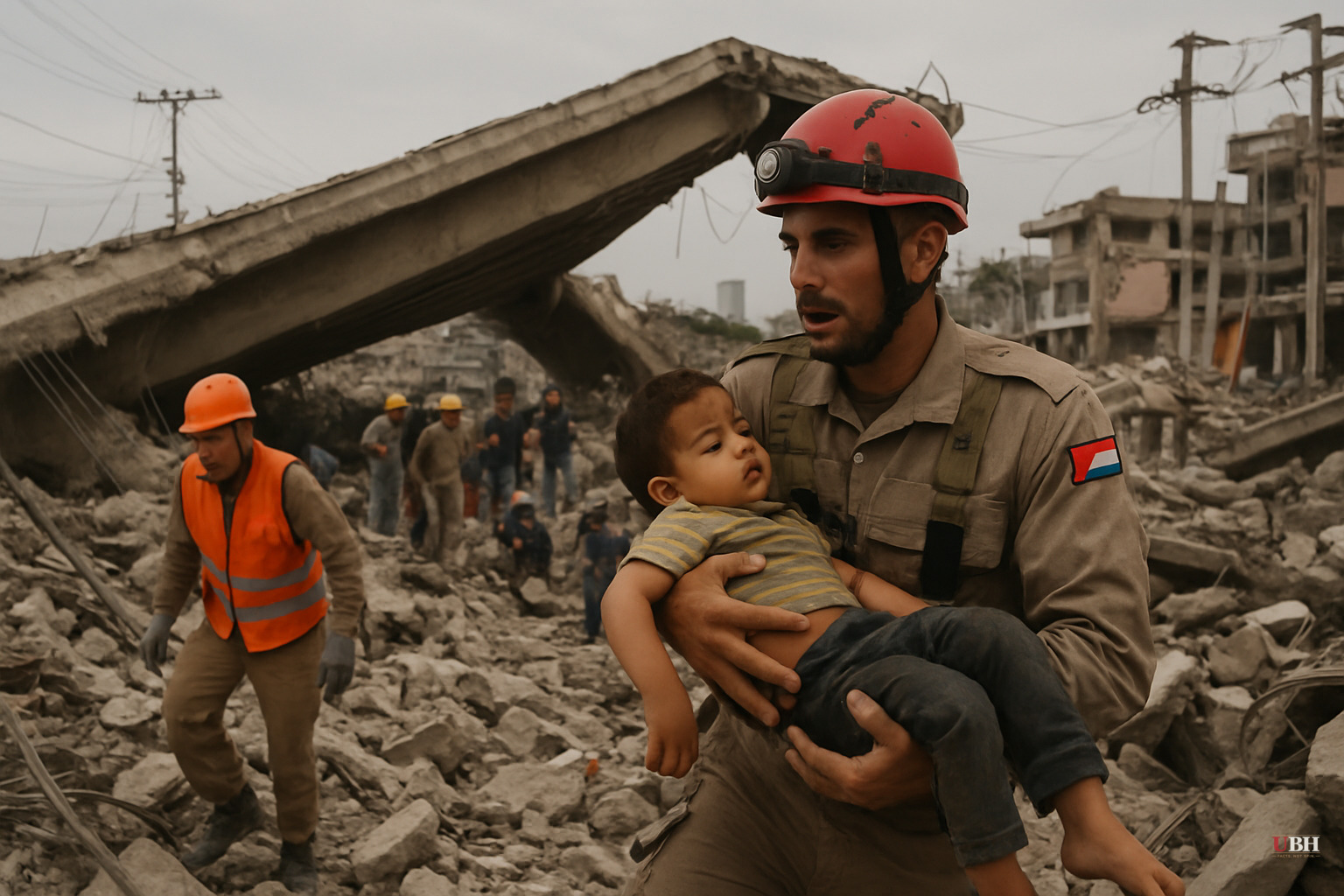
Since the twin magnitude 7.2 and 7.5 earthquakes struck Venezuela's northern coast on June 25, the confirmed death toll has risen to 1,943, according to Venezuelan officials cited by both BBC News and Fox News Digital. The figure had reached 1,719 by Monday. The UN has said the number will "unavoidably" rise further, and both the UN and the U.S. Geological Survey have projected the final toll could reach 10,000.
The Rescue That Matters Most Right Now
On Tuesday, a Jordanian civil defence team pulled a young boy, identified by Venezuelan authorities as Klieber Morán, alive from rubble in La Guaira state six days after the quakes struck. BBC News reported the child as three years old; Fox News Digital placed him at two. Venezuelan National Assembly President Jorge Rodríguez said in a televised address that Klieber was receiving care at a health center in Caracas and that his vital signs were stable.
Search-and-rescue experts generally put the best survival window at 72 hours. Klieber's extraction came twice that long after the collapse, which is why both Jorge Rodríguez and Executive Vice President Delcy Rodríguez described it publicly as a signal that recoveries are still possible.
Rodríguez said domestic and international teams continue searching. Fox News Digital noted that on Saturday, the U.S. State Department released video of American rescuers pulling a nine-month-old infant and her mother alive from the rubble, both with only minor injuries, according to the State Department.
La Guaira: Hardest Hit, Least Served
La Guaira state remains the epicenter of the crisis. According to BBC News, the UN refugee agency UNHCR reported Tuesday that food shortages are widespread, basic services have collapsed, and communications are largely severed across the region.
"Community tensions are rising as access to assistance remains constrained," UNHCR said in a statement.
Daniela Armas, an 18-year-old vendor in La Guaira who was injured during the quakes, told AFP that aid is trickling in but distribution has turned chaotic. "Sometimes people nearly kill each other for food," she said. "It's like a cockfight."
NASA satellite data cited by BBC News estimates the quakes probably damaged or destroyed 58,870 buildings. The UN's humanitarian coordinator in Venezuela put the number of affected structures at roughly 2,500, the majority completely collapsed, according to BBC News' earlier reporting.
Health System Under Pressure
The World Health Organization warned Tuesday that health services are under "extreme pressure." WHO spokesman Christian Lindmeier said there is now an elevated risk of outbreaks of vaccine-preventable diseases, specifically naming measles and diphtheria, due to low pre-earthquake vaccination coverage across the affected population.
The UNHCR said it needs an initial $15 million to scale up protection, relief items, and temporary shelter for 30,000 earthquake-affected people over six months, according to BBC News.
International Aid Scales Up
Rescue and humanitarian teams from the United States, Mexico, Jordan, and dozens of other countries are operating on the ground. The U.S. has committed aid and deployed personnel to the response, with the State Department confirming active rescue operations in La Guaira state.
In the UK, the Disasters Emergency Committee, a coalition of 15 aid agencies including the British Red Cross, Oxfam, and Save the Children, launched a public fundraising appeal Tuesday, according to BBC News. UK Foreign Secretary Yvette Cooper announced the government would match public donations up to £2 million. The appeal was set to broadcast on the BBC and other UK media Wednesday.
The Government Negligence Question
Survivor accounts and civil society voices have raised concerns that the Venezuelan government's response has been dangerously inadequate, leaving residents in La Guaira to conduct their own search operations with pickaxes and bare hands while official resources moved slowly. BBC News has reported on Venezuelans accusing the government of negligence. That criticism is documented and on the record.
The government's counter-position, stated by Jorge Rodríguez, is that shelters are open across La Guaira and other states, international teams have been welcomed and coordinated, and the Klieber Morán rescue demonstrates active ongoing operations. Both things can be simultaneously true: international teams are working, and local aid distribution has been badly managed.
With up to 50,000 people still unaccounted for, per earlier UN estimates, and UNHCR describing severed communications and constrained access as of Tuesday, the humanitarian machinery has not kept pace with the disaster's footprint.
What Comes Next
The WHO's disease-outbreak warning is the most concrete pending threat as of July 1, 2026. With vaccine coverage already low before the quakes and health infrastructure now under extreme pressure, measles and diphtheria risk in densely sheltered displaced populations remains an unresolved public health question that no government or aid agency has yet publicly said it has the resources to fully address.
Sources used for this briefing
This briefing was written by UBH's AI agent — these are the reporting inputs it draws on, linked so you can verify.


