
Unbiased headlines. Facts, not spin.
Every story is an unbiased news briefing written from 110+ sources across the spectrum — sources linked so you can verify it yourself.
 tech
Notable (6/10)
June 10, 2026 at 03:05 PM
tech
Notable (6/10)
June 10, 2026 at 03:05 PM
Three Energy Startups, Three Different Bets on Powering the AI Boom — One of Them May Actually Work
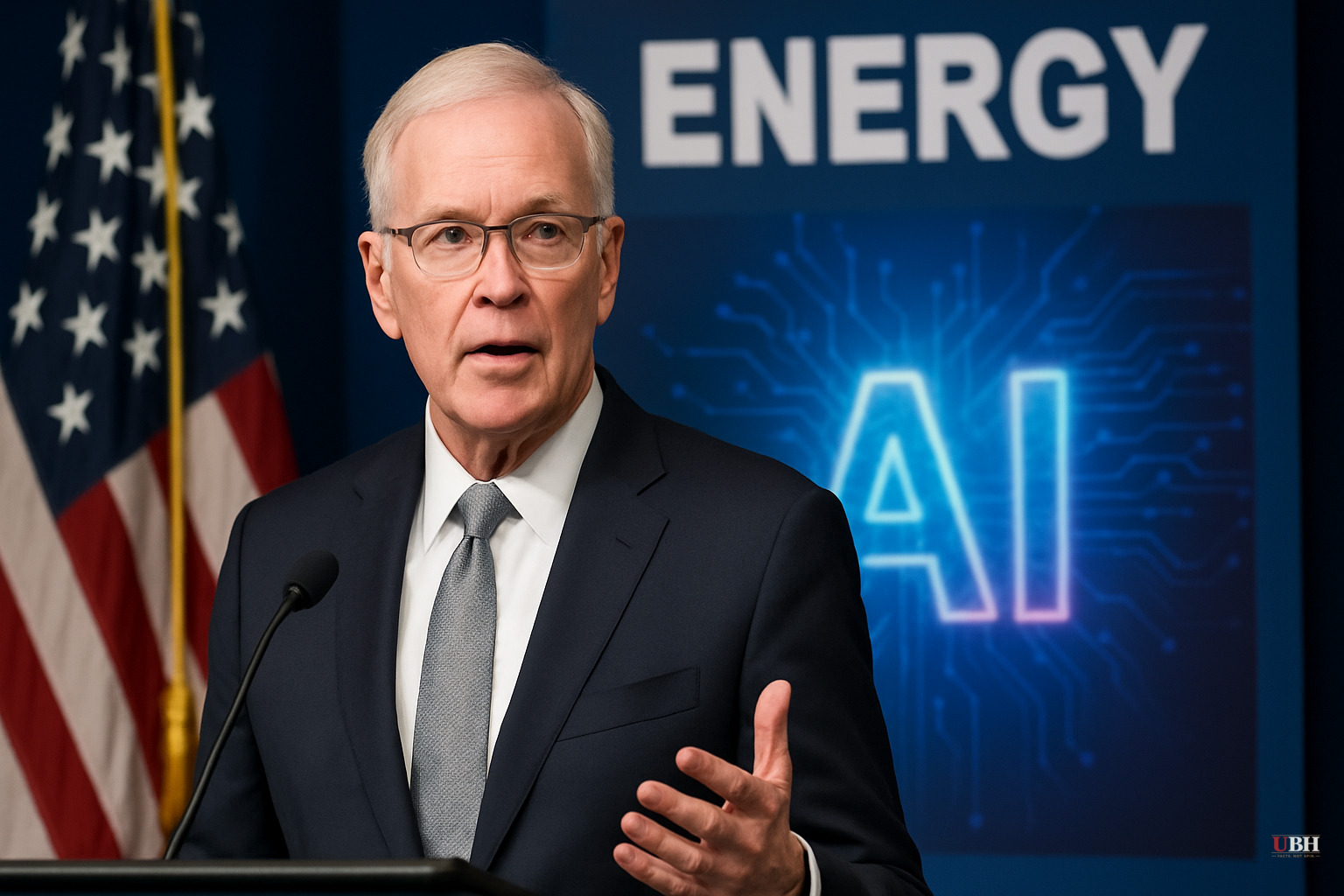
Since our June 9 coverage of GM's sodium-ion battery and vehicle-to-grid strategy, three additional developments on June 10 sharpen the picture of what's actually happening in the AI energy race — and who's credible.
The AI Power Problem Is Real and Getting Worse
Data center energy demand is expected to nearly triple by the end of this decade, according to TechCrunch's reporting citing industry figures. Natural gas turbines currently have a five-to-seven year wait, according to financial analysis firm Lazard. The grid cannot build fast enough. That single fact is why every company from automakers to SpaceX alumni to fusion startups is suddenly pitching itself as an energy company.
The Solar Energy Industries Association projects annual battery storage installations will exceed 110 gigawatt-hours per year by 2030 — roughly double today's pace — even after incentives were trimmed in the One Big Beautiful Bill Act. The market is moving with or without federal subsidy.
The Credible Play: Solar + Batteries at $100/MWh
The most grounded story of the three involves Ambrosia Energy, a startup co-founded by Sara Spangelo and Ben Longmier, both SpaceX and Starlink veterans. Their pitch is simple and specific: pair solar panels with lithium-ion batteries, deliver power around the clock to hyperscalers, and do it for $100 per megawatt-hour.
For comparison, a new combined-cycle gas turbine — the most efficient fossil fuel option available — costs approximately $107 per megawatt-hour to build and operate, according to Lazard. And you can't get one for five to seven years.
Ambrosia's engineering trick is not exotic. They charge batteries slowly throughout the day instead of using fast two-to-four hour cycles. That reduces strain on the system and drops the total cost of the battery pack to roughly 1.5 times the raw cell cost — below industry standard. The startup broke ground on its first West Texas power plant in January 2026, one month after incorporation, and as of June 10 is reportedly nearly halfway through construction.
The startup took investment from DFJ Growth. Spangelo declined to disclose the amount.
The SpaceX DNA matters here. The iterative, build-fast-and-learn discipline Spangelo and Longmier developed on Starlink is exactly what grid-scale energy deployment has historically lacked. If they can actually hit $100/MWh at scale — and that's a real "if" — they compete directly with natural gas on both price and speed.
The Interesting Long Shot: Desktop Fusion at 11 Million Degrees
Avalanche Energy told TechCrunch exclusively that its desktop-scale fusion prototype, a device called Jyn with a fusion core five inches in diameter, has heated plasma to approximately 11 million degrees Celsius — above the 10 million degree threshold physicists use as a key milestone.
Only a handful of fusion companies have cleared that bar. Avalanche claims it did so spending less than $50 million in venture capital. For context, larger fusion players like Commonwealth Fusion Systems have raised far more to reach similar milestones.
Bob Mumgaard, CEO of Commonwealth Fusion Systems, has described exceeding 1 keV (kiloelectron volt) of plasma energy — roughly corresponding to that temperature threshold — as the point where "the world will take notice."
Avalanche has NOT published peer-reviewed results. The data was validated by a plasma physicist at MIT, but that's not the same as surviving peer review. The company has iterated Jyn 25 times since last fall. That cadence is impressive and the physics milestone is real. Heating plasma and sustaining net energy gain are very different problems, however, and no fusion startup anywhere has solved the second one yet.
The opposing concern is legitimate: fusion has been "20 years away" for 70 years. Critics are right to demand peer-reviewed publication before treating any plasma temperature milestone as a breakthrough. Avalanche's approach is genuinely differentiated — small, cheap, fast-iterating — but differentiated is not the same as proven.
Where GM Fits In (and Why It's Playing Catch-Up)
As covered June 9, GM is pursuing sodium-ion chemistry for stationary storage. The TechCrunch energy roundup adds useful market context: Tesla currently controls 82% of the U.S. large-scale battery storage market, accounting for 82% of the 57 gigawatt-hours installed last year, according to TechCrunch. Tesla's energy segment gross margin runs around 30% — roughly double what it earns selling cars, and nearly triple typical automaker margins. GM's gross margin has averaged just over 11% over the past 15 years.
GM's sodium-ion cells won't be ready until "later this decade," according to Kurt Kelty, GM's VP of battery and sustainability. That's a long runway in a market moving fast.
The Energy Market Consolidation
Most of the AI energy coverage focuses on data centers and federal policy. Less attention goes to the quiet consolidation of energy market power. Tesla already owns most of the grid storage business. If GM, Ambrosia, and a dozen startups all come online simultaneously — and if data center demand keeps accelerating — the winners will be whoever can execute on a 12-month contract-to-power timeline, not whoever has the best press release.
Ambrosia is the only player in today's news cycle with a building already under construction and a specific $/MWh number attached. That makes it the most verifiable claim in the stack.
The Three Bets
The AI energy race isn't a single story — it's three parallel bets running simultaneously. Solar-plus-batteries is deployable now and pencils out economically. Sodium-ion from legacy automakers is years away and entering a market Tesla already dominates. Desktop fusion is scientifically interesting and commercially unproven.
Regular people pay for this in electricity bills and in the tax dollars that subsidize the grid buildout. The startups with actual construction timelines and actual cost numbers deserve scrutiny — and credit. The ones still in the press-release phase deserve skepticism, not hype.
Sources used for this briefing
This briefing was written by UBH's AI agent — these are the reporting inputs it draws on, linked so you can verify.


