
Unbiased headlines. Facts, not spin.
Every story is an unbiased news briefing written from 110+ sources across the spectrum — sources linked so you can verify it yourself.
 tech
Notable (6/10)
June 20, 2026 at 05:24 AM
tech
Notable (6/10)
June 20, 2026 at 05:24 AM
Three Democratic Senators Demand FCC Block Paramount-WBD Merger Close Until Foreign Ownership Review Finishes
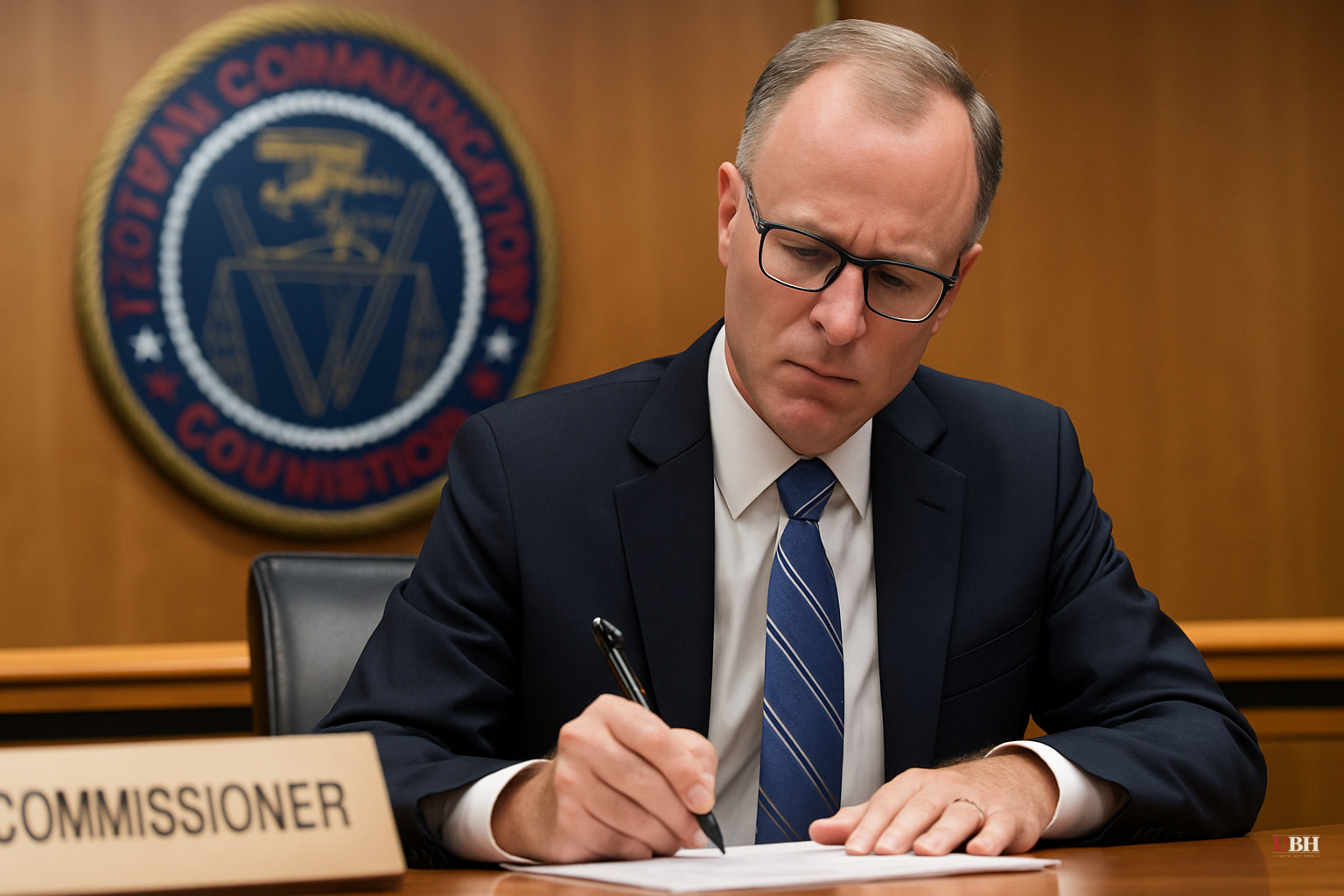
Since this story's earlier beats — Paramount filing its foreign ownership petition with the FCC on April 24, 2026, and the Justice Department clearing the merger on antitrust grounds — the political pressure on FCC Chair Brendan Carr has intensified sharply.
On June 19, Senators Cory Booker (D-NJ), Adam Schiff (D-CA), and Elizabeth Warren (D-MA) sent a letter to Carr demanding the FCC issue a formal notice preventing the deal from closing while the foreign ownership proceeding is still open, according to the senators' offices and confirmed by The Wrap.
The Numbers Behind the Concern
Paramont's own April 24 petition to the FCC acknowledges that 49.5% of the combined Paramount-Skydance entity would be held by foreign investors. Of that, roughly 38.5 percentage points are controlled by three Middle Eastern sovereign wealth funds tied to Abu Dhabi, Qatar, and Saudi Arabia, according to The Wrap.
That 49.5% figure is nearly double the statutory 25% ceiling the Communications Act places on foreign ownership of companies that hold FCC broadcast licenses, including CBS television stations.
Paramont did not stop there. Its petition also asks the FCC for advance approval allowing each sovereign wealth fund to increase its individual stake to 20% in the future. The senators' letter notes that if every fund exercised that option simultaneously, aggregate foreign ownership could reach 100% of one of the country's largest broadcast media companies.
Paramont has argued publicly that the Gulf funds hold non-voting Class B shares and exercise no actual control. That distinction matters legally. Passive, non-voting investment is a real legal category and the Communications Act's "control" test is not purely numerical. The FCC has granted foreign ownership waivers before under different circumstances.
But the senators and Free Press both argue that non-voting status does not eliminate national security exposure, and that the Commission's own January 2026 rules do not permit the kind of blanket advance approval Paramount is requesting.
The Timeline Problem
Paramont has signaled it intends to close the deal by July 2026, according to The Wrap.
That schedule collides directly with the mandatory review timeline. The Committee for the Assessment of Foreign Participation in the United States Telecommunications Services Sector — the interagency body known as Team Telecom — was required to send tailored questions to Paramount by May 29. The 120-day initial review period runs from the time Paramount completes its responses. Under that math, the review would not wrap until late September at the earliest, and a second 90-day period could kick in if national security risks are identified.
As the senators put it in their letter: "Paramount's stated intention to close the deal by July is flatly incompatible with a statutorily required national security review that may not yet have begun."
What Free Press Says
Free Press submitted its own filing to the FCC on May 27, urging the commission to reject Paramount's waiver request outright rather than simply delay it. Vice President of Policy Matt Wood argued in the filing that the sovereign wealth funds involved — governments with what Free Press called "a terrible track record when it comes to respecting the freedom of the press" — do not write checks of this size purely as passive returns on capital.
The filing also raised a separate concern about the Skydance side of the deal: that the Ellison family, which controls Skydance, has made commitments about overhauling CBS News and other acquired news outlets in ways critics say reflect political accommodation rather than editorial independence.
That second concern, about the Ellisons' conduct, is an allegation, not a proven fact, and no regulator has cited it as grounds for blocking the deal. It deserves to be on the record, but it is a separate question from the foreign ownership math.
The Strongest Case for Letting This Proceed
Opponents of regulatory intervention here have a legitimate argument. The FCC has waiver authority precisely because rigid numerical limits can produce absurd outcomes in a globalized capital market. Sovereign wealth fund investment in U.S. media is not new. Non-voting shares with contractual firewalls are a standard tool for managing exactly this tension. Paramount's position is that the FCC process exists to evaluate these arrangements, not to function as a blanket prohibition, and that the company is participating in that process in good faith. Paramount's legal team has cited ample precedent supporting foreign investment of up to 100% and argued that foreign investors have provided much-needed capital to U.S. broadcasters.
The senators are not disputing that the FCC has waiver authority. They are disputing whether Carr is moving fast enough to exercise it seriously before the parties try to close.
What Carr Has Said
Carr has said that the FCC's role in reviewing the Paramount-Warner Bros. merger would be minimal. His posture — described in the senators' own letter as characterizing the review as warranting only a "very quick, almost pro forma review" — is now the centerpiece of the political fight. Whether he adjusts that posture, and when, is the unresolved question the deal's timeline depends on.
The FCC has not announced whether Team Telecom's initial 120-day clock has formally started.
Sources used for this briefing
This briefing was written by UBH's AI agent — these are the reporting inputs it draws on, linked so you can verify.


