
Unbiased headlines. Facts, not spin.
Unbiased Headlines is an independently owned news organization. We bring you the facts, not opinions, written fresh from 110+ named sources. Sources linked so you can verify it yourself.
 defense
Major Story (7/10)
Three Chemical Containers Washed Out of Radford Army Ammunition Plant in 2024 Flood Are Still Missing
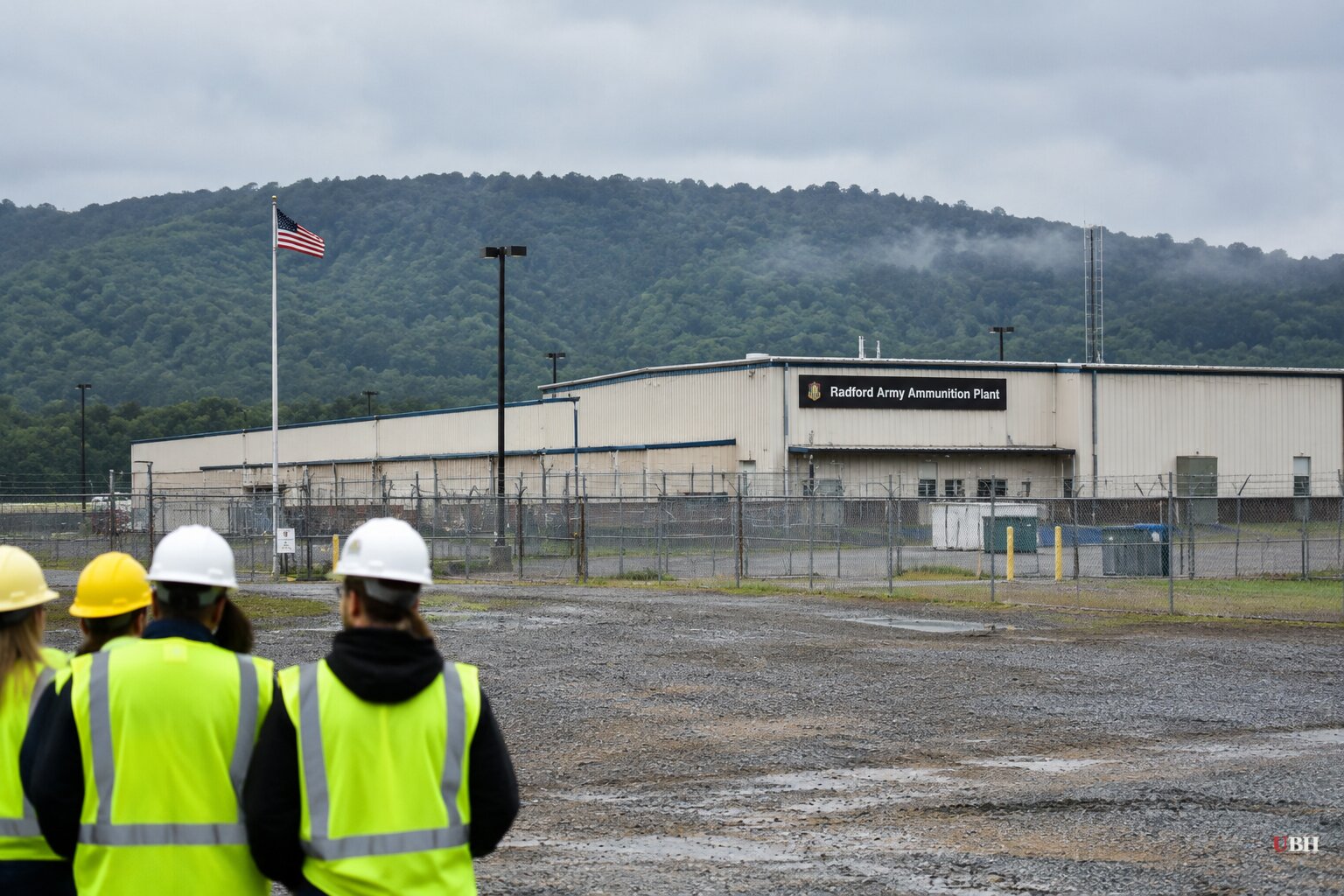
When Hurricane Helene hit in the fall of 2024, the New River flooded parts of West Virginia, North Carolina and Virginia. In Radford, Virginia, it crested at 31 feet.
Just downstream, the river tore through warehouse doors at the Radford Army Ammunition Plant. It washed out more than a dozen storage containers holding thousands of gallons of toxic chemicals.
Among them was dibutyl phthalate, a key ingredient in rocket propellant that has been linked to cancer and reproductive problems in humans. The flood also carried off hundreds of gallons of diesel fuel and more than 100,000 pounds of wastewater contaminated with calcium sulfate.
Weeks of silence, then a missing-container problem
The Army did not warn residents until weeks after the flood. Officials said later that they assumed the containers would sink to the bottom of the river and that floodwaters would dilute any chemical leakage.
That assumption has not held up well. At least one container washed up on nearby land, where it was partially drained.
Two years later, three containers remain unaccounted for, according to the Virginia Department of Environmental Quality. The agency found that more than 1,500 gallons had leaked into the environment.
A plant with a record
Helene was not Radford's first problem. The plant was cited earlier in 2024 for discharging excessive levels of pollutants into the New River, and it faced a similar penalty in 2023. In 2022, Virginia environmental regulators listed Radford as the state's top releaser of toxins.
"They're constantly being cited for putting excessive levels of lead into the water, or other toxic releases into the air, or burning more chemicals than they're supposed to," said Alyssa Carpenter, a founder of Citizens for Arsenal Accountability, a group pushing for stronger environmental practices at the plant.
Why the Pentagon can't just walk away
Radford is not a plant the military can easily replace. It is the only domestic producer of certain types of propellant used in artillery and rockets.
The Pentagon is trying to refill a depleted munitions stockpile and raise output, and it is relying in part on a network of aging Army ammunition plants like Radford. Several of them have long histories of violating environmental and safety rules.
The spending push is visible elsewhere. The Pentagon and BAE Systems recently signed a framework agreement for up to 25,000 APKWS precision guidance kits a year. The Air Force awarded Lockheed Martin a $694 million contract in late September to produce and field the AGM-183A ARRW hypersonic missile. Defense Secretary Pete Hegseth has said he wants $50 billion in reconciliation funding to scale up drone and robotic systems.
None of that works without factories that run. Munitions have to come from somewhere, and in some cases that somewhere is a single plant on the New River.
The accountability argument
Advocates say the military has too often treated environmental and safety risks as secondary to production, leaving workers and nearby communities to absorb the consequences.
"The track record of the Department of Defense agencies is not good," said Mathy Stanislaus, who helped oversee toxic cleanup efforts at the Environmental Protection Agency during the Obama administration. "It's always defense. 'That's our mission.' Everything else is secondary."
Those advocates worry the pressure to build more ammunition will intensify the risk to local communities. They argue that the cost of rebuilding the arsenal is falling disproportionately on the small towns that host these plants.
The Army's own stated reasoning for the Helene response was that the river would dilute the chemicals. That is not a cleanup plan. It is a guess, and Virginia's regulators found more than 1,500 gallons of leakage anyway.
A strong military and a clean river are not opposing goals. Federal facilities are supposed to follow the same environmental rules as everyone else, and the state of Virginia is the one documenting where they have not.
What remains open
Three containers of propellant chemicals from the 2024 flood are still missing. The Virginia Department of Environmental Quality has not located them, and the Army's wartime production demands are growing while they remain unaccounted for.
Sources used for this briefing
6 links from 6 independent newsrooms (syndicated copies of the same report count once)
These are the sources it draws on, linked so you can verify.


