
Unbiased headlines. Facts, not spin.
Unbiased Headlines is an independently owned news organization. We bring you the facts, not opinions, written fresh from 110+ named sources. Sources linked so you can verify it yourself.
 defense
Major Story (8/10)
Event date: November 3, 2026 ·
Israel Has About $10 Billion in U.S. Weapons Orders Beyond Aid Pledges, Complicating Trump's Year-End Aid Cutoff
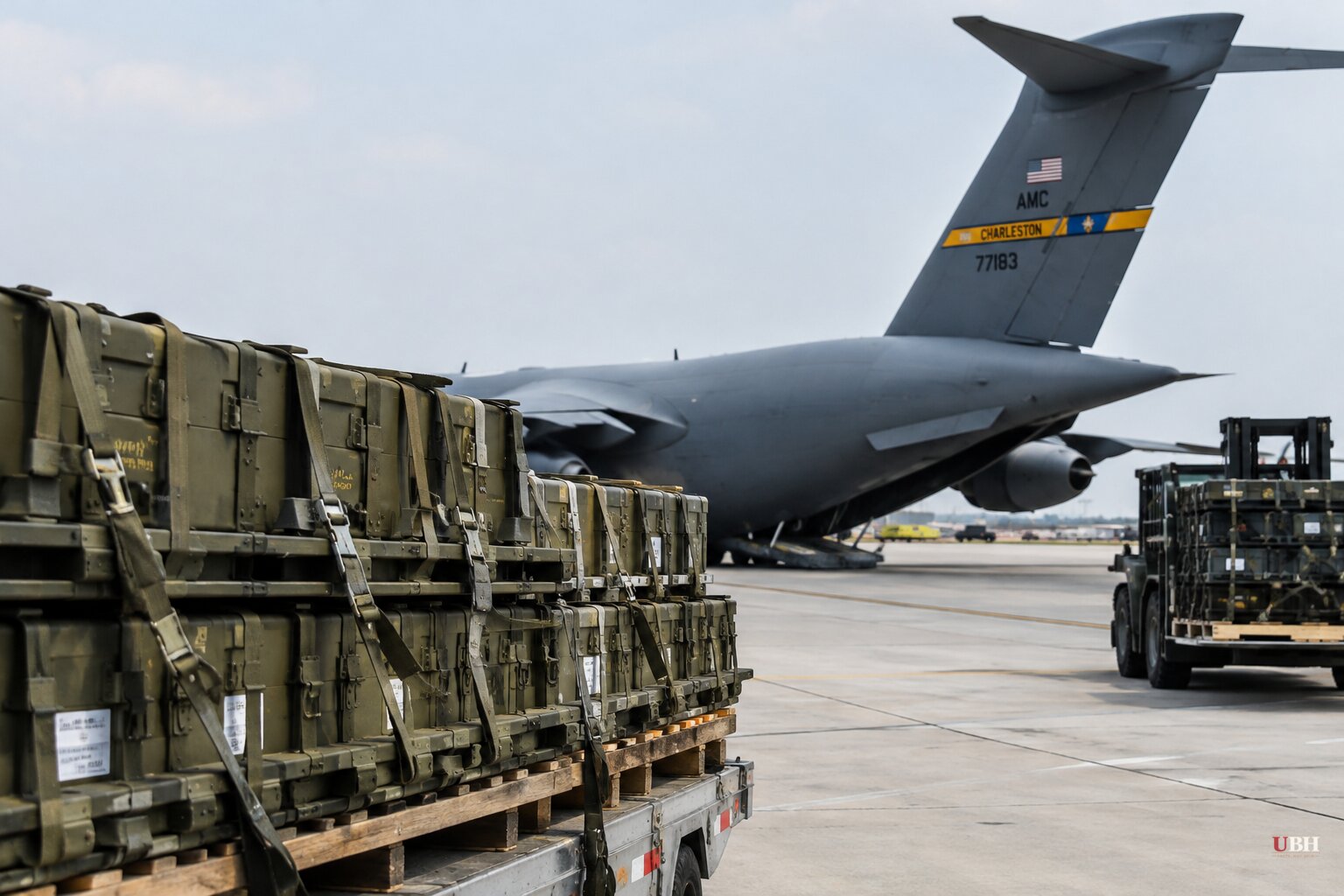
Since President Trump said on Election Day morning, Nov. 3, that U.S. aid to Israel "gets cut off at the end of the year," the practical obstacles have come into focus. The biggest one is a stack of American weapons orders that Israel has placed but nobody has finished paying for.
A State Department letter to the office of Rep. Joaquin Castro (D-Texas), reviewed by The Wall Street Journal, says that beyond 2028 Israel would need about $10 billion to cover outstanding orders as of April 1. The letter says those costs "could be covered either by FMF, national funds, or both." Either Washington or Jerusalem could end up with the bill.
It is unclear how much that figure has moved since April.
How the money works
The aid is Foreign Military Financing. It is not a cash transfer. Israel spends it on U.S.-made bombs, vehicles, jet fighters and other equipment, so the money flows to American manufacturers.
The current 10-year memorandum of understanding runs through fiscal 2028. It provides $3.3 billion a year in FMF plus $500 million a year for missile defense, which adds up to the $3.8 billion figure cited by CNN and others. Trump's "$4 billion" is a round number on top of that.
The structure lets Israel buy equipment against pledged future funding before the money arrives. That gives both governments flexibility on shipments. It also means Israel has committed to purchases that outrun what has been appropriated. The Journal reports the U.S. has pledged nearly $7 billion in military aid over the next two years.
Separately, Congress approved about $26 billion in additional Israel support in 2024 during the Gaza war. Even after those funds run out, the $10 billion in orders remains.
What Trump said, and what he didn't
Trump told Fox News that Israel "doesn't need" the money and can "buy whatever they want. So can Europe." He said Prime Minister Benjamin Netanyahu "brought it up" and that the two "made a deal months ago." He also said the U.S. would "help Israel if they need it."
Netanyahu has long said he wants to reduce reliance on American aid. In May he told CBS News it was "time that we weaned ourselves from the remaining military support." He said he wanted to "draw down to zero" the financial component of military cooperation and proposed doing it over a decade. In June, Rep. Marlin Stutzman (R-Ind.) introduced a resolution shifting the relationship toward joint development and production of weapons. Netanyahu shared a letter endorsing it.
A decade-long phase-out is not a cutoff in eight weeks. Neither the White House nor Netanyahu's office has publicly explained how an end-of-2026 date squares with an agreement that runs two more years. The White House did not respond to the Epoch Times' request for comment.
Israel was surprised
The Journal reported that Trump's remarks caught Israeli officials, including some in the security establishment, off guard.
Gadi Eisenkot, Netanyahu's main rival in Israel's recent election, wrote on X that "the fact that the security establishment, along with Israeli citizens, is learning about a change in the strategic relationship framework through the media highlights just how much Benjamin Netanyahu's conduct poses a genuine danger." Netanyahu remains in office as he tries to build a coalition after the vote.
Aaron David Miller, a former Middle East negotiator for several U.S. administrations, called the timing "awkward" given the coalition talks. He said the Israel issue has become "hugely polarizing" inside the Republican Party, pointing to Tucker Carlson, Marjorie Taylor Greene and Vice President JD Vance as figures who "probably" represent a constituency skeptical of the close relationship.
Former U.S. officials quoted by CNN questioned whether the administration will follow through, particularly if the U.S. resumes military operations against Iran. They also noted that Congress appropriates the money.
The politics
Trump tied the announcement to the Michigan Senate race, asking why he should "suffer the slings from lunatics like an El-Sayed." Democrat Abdul El-Sayed has backed an arms-sale embargo on Israel. Trump called aid "a bad talking point."
Vance, in a post on X, listed the war in Iran and the U.S. relationship with Israel among the top reasons voters turned against Republicans in the midterms.
Supporters of ending the arrangement have their own argument. Analysts Jacob Siegel and Liel Leibovitz wrote in Tablet that the package consists largely of earmarked Pentagon credits that must be spent with American defense contractors like Lockheed Martin. They argue this undercuts Israel's domestic arms industry and gives Washington leverage over Israeli military policy. Netanyahu has voiced concern that dependence leaves Israel exposed to shifts in American politics. In an October Israeli TV interview he told Israelis to "get used to the fact that it won't happen because America has changed."
The MOU is a signed commitment, and the money behind it is appropriated by Congress. Republicans suffered major losses in Congress in Tuesday's results, and the letter shows a $10 billion obligation that either side could end up covering. The open question is whether the White House has a plan, and a legal basis, for ending payments under an agreement that has two years left, and who pays for the orders already on the books.
Sources used for this briefing
6 links from 6 independent newsrooms (syndicated copies of the same report count once)
These are the sources it draws on, linked so you can verify.


