
Unbiased headlines. Facts, not spin.
Unbiased Headlines is an independently owned news organization. We bring you the facts, not opinions, written fresh from 110+ named sources. Sources linked so you can verify it yourself.
 defense
Major Story (7/10)
Event date: October 30, 2026 ·
Houthi Forces Advance to Within 80 Km of Aden, Four Military Sources Say, as Taiz Siege Deepens
Houthi forces have advanced to within 80 kilometers of Aden, the provisional capital of Yemen's internationally recognized government. That is according to four military sources cited by Reuters on Monday, Nov. 2. If accurate, it is the closest the group has come to the city since the opening months of the 2015 war, when Houthi fighters briefly entered Aden before being driven out.
The sources said the Houthis seized the mountainous district of al-Maqatirah, which overlooks the main road between Aden and Taiz. Government forces pulled back to Tour al-Baha, 80 kilometers from Aden, where fighting continued Monday around a military camp. The sources said the advance could let the Houthis outflank government positions in the mountains above the Bab al-Mandeb Strait.
An offensive that began on the coast
The push follows an offensive launched in September along Yemen's Red Sea coast. Houthi fighters took territory near Bab al-Mandeb, a major shipping lane and a key route for Saudi oil bound for Asia. According to the same military sources, government troops had driven the Houthis out of part of that area only weeks earlier.
UNHCR says the current fighting ended a four-year ceasefire.
The Houthis have also hit Aden directly. They struck the city's airport last Wednesday after calling on the population to evacuate. Earlier in October they fired five ballistic missiles at Al-Maashiq Palace, the government's headquarters in Aden.
The palace strike
Then-Information Minister Moammar al-Eryani said five people were killed and 16 injured. Health Minister Qasim Buhaibeh said the dead were guards and civilian employees. The government said two were bodyguards of the prime minister. Prime Minister al-Zindani was at the palace and was unharmed, a government minister told AFP.
Zindani called it a "brutal ballistic missile attack" on civilians and state institutions and said the government would "restore state authority, end the Houthi coup, and extend state control across all of Yemen."
The Houthis tell a different story. Their state media said the target was a nearby "military operations base" staffed by Saudi officers. Military spokesman Yahya Saree said the strike fit the group's policy to "target Saudi reinforcements wherever they are located."
The government's own account partly overlaps with that claim. A Yemeni minister told AFP the compound includes command centers for both Yemeni and Saudi coalition forces, and that both were hit, with Yemeni and Saudi casualties.
The Houthis have also stepped up attacks on Saudi Arabia. The Saudi-led coalition has answered with more airstrikes on Houthi positions.
Cabinet shake-up
The government reshuffled its cabinet this week. Salem Al Awlaki replaced Eryani as information minister. Eryani had held the post since 2016 and said on X he will become an ambassador at the Foreign Ministry under a decree from Presidential Leadership Council head Rashad Al Alimi.
Judge Akram Naseeb Ahmed Al Amiri became minister of civil service and insurance. Ahmed Al Awlaki became minister of local administration, according to the state news agency Saba.
Taiz under siege
The roads into Taiz, a city of about one million people, have been cut. UN humanitarian chief Tom Fletcher said Monday that nearly 300,000 people have been displaced since August. Water production has halved, food prices have risen at least 50 percent, and hospitals are short of fuel and medicine.
"Open the roads and let them through," Fletcher said. "Civilians cannot be held hostage by the fighting."
The International Organization for Migration said Nov. 1 that more than 319,000 people are displaced across western Yemen. About 134,000 of them are in Taiz governorate, nearly half the total.
Niku Jafarnia, Yemen researcher at Human Rights Watch, said the Houthis have blocked "fuel, water and medical supplies, basically all things required for hospitals to function properly." Yemeni authorities have warned residents of sniper fire from the surrounding hillsides.
Alison Bottomley of the Norwegian Refugee Council said insecurity is stopping her group from reaching 7,000 people it supports with tents, blankets and educational activities for displaced children.
A photographer in Taiz identified only as Ammar told DW people are in a "state of panic" but that "the determination not to submit to the Houthis is very strong." Residents asked that their full names be withheld for fear of reprisals.
Aid under strain
UNHCR spokesperson Matthew Saltmarsh said more than 280,000 people in Yemen have been displaced by the fighting. The agency is worried about Kharaz refugee camp in Lahj governorate, close to the front line, which shelters about 9,500 Somali and Ethiopian refugees. Shelling nearby has disrupted services and restricted movement. Schools there are suspended.
UNHCR's Yemen appeal is 19 percent funded. The agency links supply-chain shocks in the Strait of Hormuz and Bab al-Mandeb to the U.S.-Iran war.
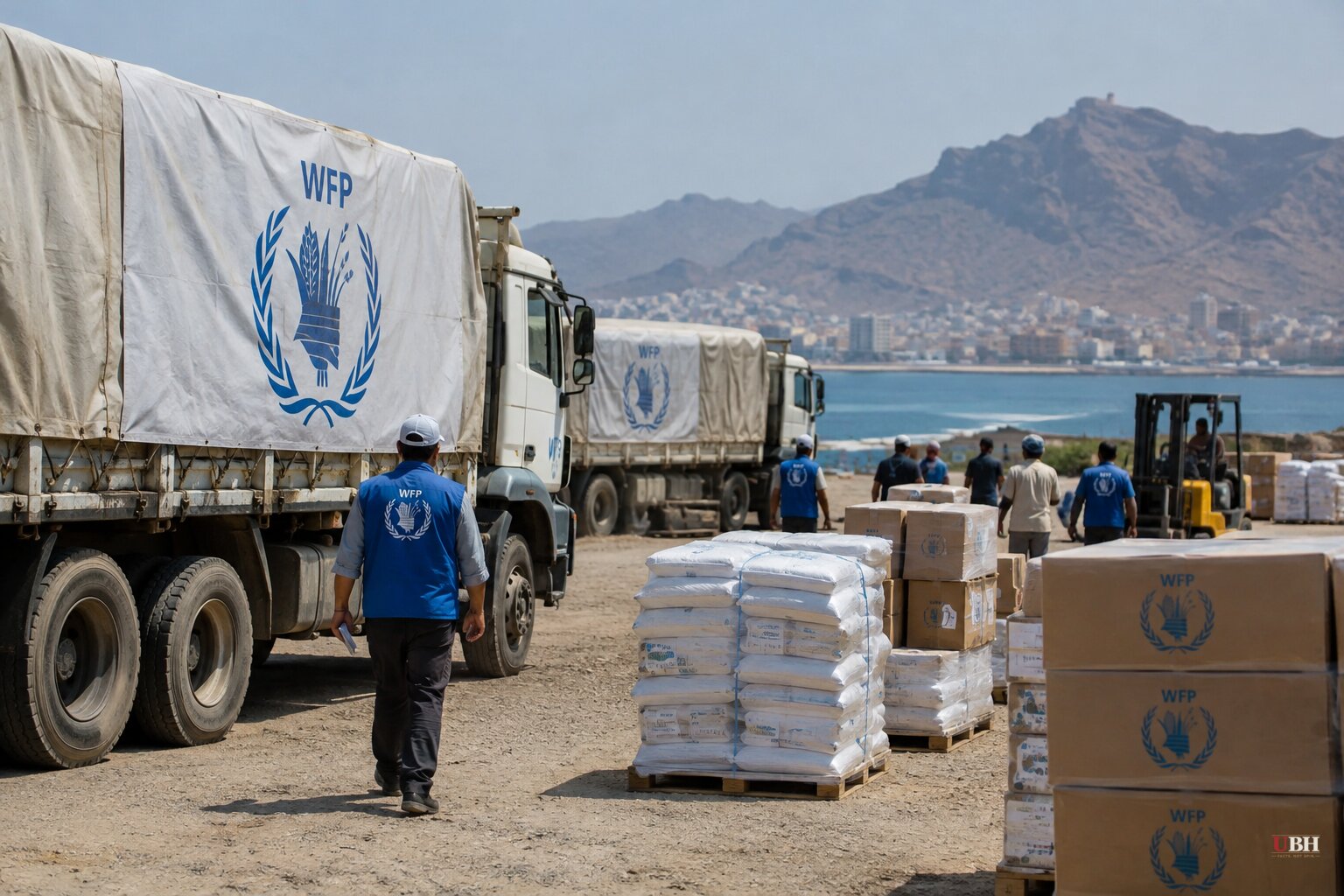
Separately, WFP Executive Director Luke Lindberg told Fox News Digital the Houthis hold 37 WFP staff, some for nearly two years. All are Yemeni nationals employed locally, and none is American. Lindberg said he raised the detentions with U.S. Ambassador to the UN Mike Waltz just three days into his tenure.
Taiz Governor Nabil Shamsan told DW that negotiations are underway to restore food, fuel and water to the city. DW reported that it remains to be seen when and under what conditions this might happen.
Sources used for this briefing
6 links from 6 independent newsrooms (syndicated copies of the same report count once)
These are the sources it draws on, linked so you can verify.


