
Unbiased headlines. Facts, not spin.
Unbiased Headlines is an independently owned news organization. We bring you the facts, not opinions, written fresh from 110+ named sources. Sources linked so you can verify it yourself.
 defense
Major Story (7/10)
Event date: October 24, 2026 ·
Houthis Asked Saudi Arabia for $51 Billion to Stop Fighting, People Briefed on the Talks Say
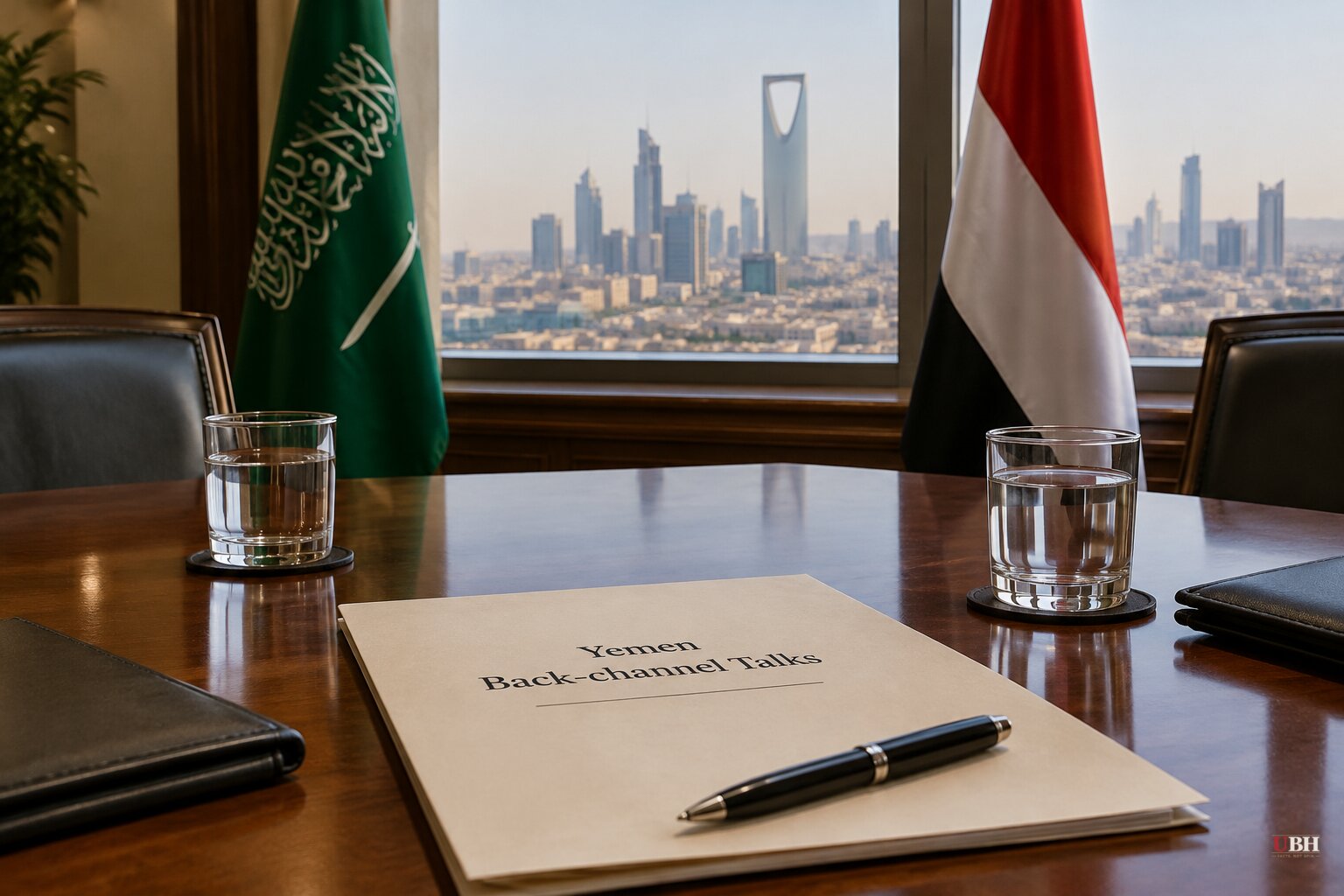
Since the Houthis moved to within some 50 miles of Aden, Riyadh's options have narrowed further. New details have emerged on what the Houthis want, who is helping Saudi Arabia defend itself, and what Washington is preparing for Iran.
The Houthi price tag
After Houthi attacks on Saudi oil tankers in the Red Sea and the group's seizure of territory commanding the Bab al-Mandeb chokepoint, the kingdom reached out to ask what it would take to negotiate a halt to the fighting. People briefed on the discussions say the answer was $51 billion.
The Houthis described that figure as the cost of years of Saudi strikes and a long blockade, those people said. Other numbers have surfaced since, but the message was the same: an exit would cost tens of billions of dollars.
The group also wants Riyadh to formally recognize it as the ruler of Yemen. That would mean accepting an Iranian-armed government on the kingdom's southern border.
Neither the Saudi government nor Houthi leadership responded to requests for comment on the talks.
Kristian Coates Ulrichsen of Rice University's Baker Institute said the Houthis "present the Saudi leadership with few viable military options against an adversary that is well-entrenched, dug in, and has far less to lose from a grinding war of attrition." He said the imbalance of risk is greater than during the 2015-2022 war because strikes on civilian and energy sites undermine investor confidence.
Airports and oil under fire
The Houthis have hit Saudi targets almost daily in October, with a surge late in the month. Targets have included civilian airports and repeated strikes on Saudi Aramco facilities, where fires or damage were reported.
The Armed Conflict Location & Event Data Project found that Houthi strikes and attempted strikes on the kingdom more than doubled in a single week this month. Airports in Riyadh, Jizan, Najran, Dammam and Abha have been targeted since Oct. 5.
The worst single attack hit King Khalid International Airport in Riyadh on Oct. 10. Casualty counts vary by report: at least 13 to 14 people were killed and more than 300 wounded.
The U.S. Mission in Saudi Arabia issued a security warning Monday, cautioning Americans of possible airport attacks, airspace closures and flight cancellations. It urged "extreme caution" for anyone using Saudi airports.
The Saudi-led coalition said Monday it destroyed two drones over the Riyadh region. Houthi military spokesman Yahya Saree claimed two drone attacks on Dammam airport over the previous 48 hours. Saudi authorities have not confirmed that every target the Houthis claim was hit.
The damage is also economic. The Future Investment Initiative, the Saudi sovereign-fund conference scheduled for Oct. 26-29, was postponed to an unspecified 2027 date. Organizers said new dates would come "very soon."
Reinforcements that don't reach the launchers
Saudi Arabia spent an estimated $83.2 billion on defense last year, according to the Stockholm International Peace Research Institute, eighth-highest in the world. Its inventory includes F-15s, Patriot batteries and advanced radar.
It is now asking for help anyway. Britain has announced it will send Typhoon fighters to defend Saudi cities and critical infrastructure. Egypt is already assisting, and Israel has offered to step in. Riyadh has also asked Washington for more interceptors.
Jason Campbell, a senior fellow at the Middle East Institute, said the current posture is "defensive or defensive-minded." The open question, he said, is whether it turns "more offensive or kinetic." He said U.S. and partner defenses were better prepared for Iran's higher-end ballistic missiles than for the cheaper drones and missiles now coming from Yemen.
Interceptors and jets protect cities. They do not eliminate the Houthi launchers and stockpiles. Trump is weighing whether to strike the Houthis directly.
Washington's Iran planning
Two U.S. officials told CNN that American forces in the region could launch new, potentially major operations against Iran "within 96 hours of receiving" an order from Trump. They said enough forces are already deployed. The scope would likely exceed the radar-and-launcher strikes that have continued since Trump halted full combat operations earlier this year.
The target list developed by Central Command and the Pentagon includes Iranian energy infrastructure, military sites and nuclear facilities, the officials said. Some current and former officials believe the order could come before the end of the year, most likely after the U.S. midterm elections.
Those officials also say Trump has not decided and has leaned toward action before, only to back off at the last moment. The White House declined to comment. A senior Pentagon official said the department "is a planning organization" whose job is to develop options ordered by the president.
Trump said at a Fort Myers, Florida, rally: "We may do another little Epic Fury," a reference to the earlier U.S. campaign against Iran.
A separate intelligence warning raises the stakes for Americans abroad. In an unclassified Oct. 23 memo to Secretary of State Marco Rubio, Director of National Intelligence Jay Clayton wrote that Iran has "substantially increased efforts to target U.S. personnel" and that lethal plotting has "reached advanced stages in both the Middle East and certain other countries." The memo named no targets and did not say whether an attack is imminent.
The State Department has ordered non-emergency employees and their families out of Saudi Arabia. It cut staffing at embassies in Jordan, Lebanon, Qatar and the UAE, which remain open under restricted operations.
U.S. intelligence assessments cited by CNN's sources say Iran and the Houthis are unlikely to escalate against Americans or Israel first. They are expected to retaliate immediately, against U.S. personnel and facilities in the region and possibly beyond, if the U.S. or Israel hits Iran.
Saudi Arabia therefore faces a Houthi demand it cannot easily meet, with a possible U.S. strike on Iran that could pull it into a wider war. Trump's decision, which officials say is still open, will determine which of those pressures arrives first.
Sources used for this briefing
6 links from 6 independent newsrooms (syndicated copies of the same report count once)
These are the sources it draws on, linked so you can verify.


