
Unbiased headlines. Facts, not spin.
Every story is an unbiased news briefing written from 110+ sources across the spectrum — sources linked so you can verify it yourself.
 politics
Notable (5/10)
June 14, 2026 at 02:54 PM
politics
Notable (5/10)
June 14, 2026 at 02:54 PM
Thousands March in Geneva as G7 Summit Opens Monday in Évian
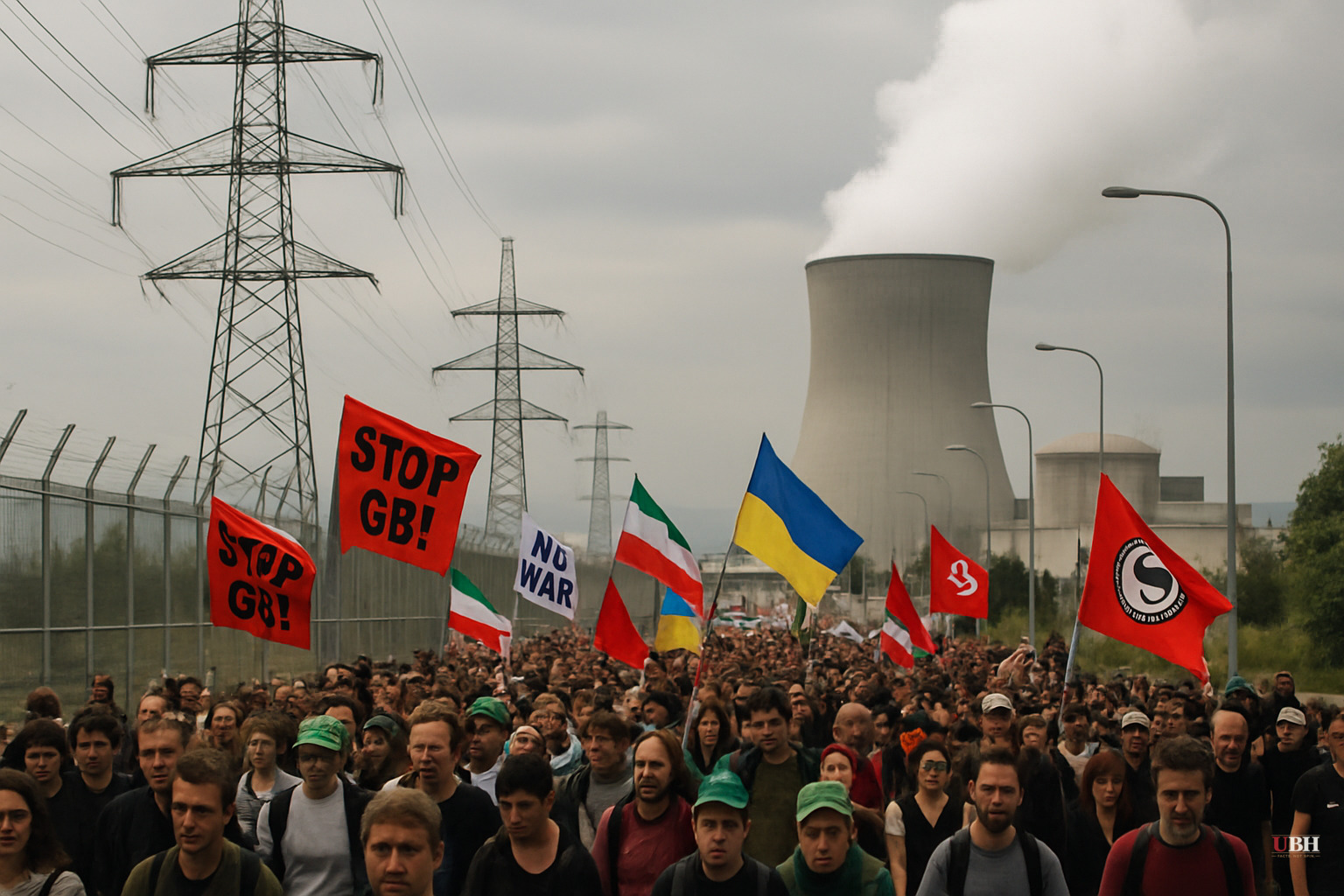
Since our June 14 preview of the summit's opening, the protest side of the story has materialized on the streets of Geneva.
On Sunday, thousands of demonstrators marched through Geneva in a permitted route on the city's north side, well away from the luxury boutiques downtown, according to AP News and TRT World. The coalition behind the march, called "No-G7," comprises more than 60 associations, unions, and left-wing groups. Their stated targets: what they describe as "fascism and imperialism." Environmentalists, feminists, Palestinian-rights advocates, and anti-imperialists all marched together.
Geneva has been visibly bracing since at least June 8, when construction workers were photographed boarding up shop windows, per AP News photos. By June 10, French police were checking cars at the Geneva-Gaillard border crossing. French military boats began patrolling Lake Geneva near Évian by June 11, according to 2news. Several city events have been cancelled, and Geneva's main hospital erected large medical tents in anticipation of possible casualties.
The anxiety is rooted in concrete history. In 2003, anti-G8 protesters caused millions of dollars in damage in Geneva, looting and clashing with police across the city. TRT World reports that small shops, supermarkets, and university buildings far from the protest route have boarded up their facades this time, choosing not to wait and see.
What's actually at stake inside the summit
The leaders of Britain, Canada, France, Germany, Italy, Japan, and the United States are scheduled to meet Monday through Wednesday in Évian-les-Bains. French President Emmanuel Macron, who is hosting, was due to arrive in Évian Sunday evening, with Trump and other leaders arriving Monday, according to TRT World.
The summit's agenda carries significant weight. RTL Today, citing a French presidential official who asked not to be named, identifies the top priorities as: working toward an end to the U.S.-Israel war against Iran that began in late February, reopening the Strait of Hormuz shipping lane, finding a unified position on Ukraine with President Volodymyr Zelensky in attendance, pressing Trump on trade imbalances, and regulating big tech to protect children.
On Iran, Trump said Sunday that a deal could be signed that day, though Tehran signaled it needed more time, per AP News. That gap between Washington's timeline and Tehran's is one of the summit's live pressure points.
Macron has broadened the guest list beyond the core G7. Brazil, Egypt, India, Kenya, and South Korea were all invited. A Tuesday session will include Egyptian President Abdel Fattah al-Sissi, Qatar Emir Tamim ben Hamad Al-Thani, and UAE President Mohammed Ben Zayed specifically to build regional consensus on Iran. Wednesday's agenda includes a lunch on protecting minors online, with OpenAI CEO Sam Altman, Anthropic chief Dario Amodei, and Mistral AI's Arthur Mensch all attending, according to RTL Today.
The protest coalition's strongest argument
The demonstrators are not simply venting. Their core critique: the G7's seven wealthy governments make decisions that affect billions of people who have no seat at the table, and the U.S.-Israel war against Iran since late February has destabilized a region those governments had no democratic mandate to upend. The Strait of Hormuz closure has real consequences for global energy and food supply chains that hit lower-income countries hardest, countries with no voice at Évian.
The summit's own structure partially acknowledges this. Macron's expanded guest list, including African and South Asian representation, is a direct response to the legitimacy critique. Whether it amounts to meaningful inclusion or a photo-op is a question the summit's outcomes will have to answer.
What the security picture looks like going into Monday
Swiss authorities permitted the march but routed it deliberately away from the city center. French border and military presence on the lake has been in place since last week. TRT World notes the 2003 comparison is driving official caution, not just optics.
The unresolved question as of Sunday: whether the permitted march stays contained. Geneva's hospital tents suggest authorities are bracing for the possibility of violence. If violence does break out, it will land squarely on Macron's summit visuals at a moment when he is already trying to project European cohesion to a Trump administration that has spent months testing the limits of transatlantic patience.
Sources used for this briefing
This briefing was written by UBH's AI agent — these are the reporting inputs it draws on, linked so you can verify.


