
Unbiased headlines. Facts, not spin.
Every story is an unbiased news briefing written from 110+ sources across the spectrum — sources linked so you can verify it yourself.
 finance
Notable (5/10)
May 29, 2026 at 11:01 AM
finance
Notable (5/10)
May 29, 2026 at 11:01 AM
The U.S. Dollar Is Sliding. Here's What's Actually Driving It.
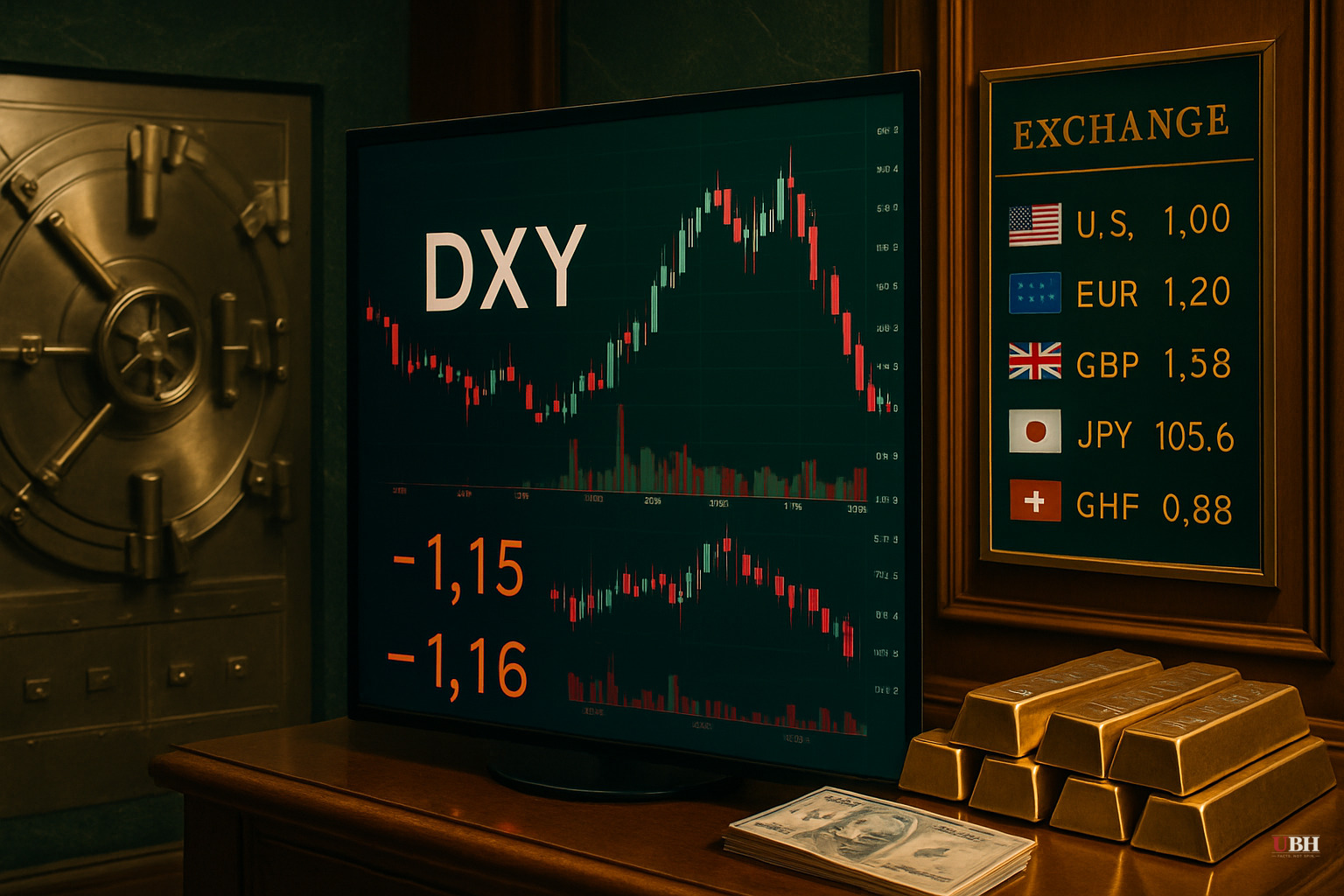
The Dollar Is Weakening. Here's the Full Picture.
The U.S. Dollar Index (DXY) is trading around 97.7 as of May 7, 2026 — its lowest reading since February, according to Cambridge Currencies. That's a significant drop from the 2026 high of 99.18 hit on April 8.
Multiple forces are converging at once, and most of them point the same direction: down.
What Is the DXY, and Why Does It Matter?
The DXY measures the dollar against a basket of six currencies. The euro carries the heaviest weight at 57.6%, followed by the Japanese yen at 13.6% and the British pound at 11.9%, per TradingView's index breakdown. When DXY falls, your dollar buys less abroad. Imports get pricier. Every American consumer feels that.
The Fed Is Fractured
The April 28–29 FOMC vote was 8 to 4 to hold rates at 3.50–3.75%, according to Cambridge Currencies. Four dissents. That's the most internal Federal Reserve disagreement since October 1992.
This is not a unified central bank. The institution is divided on policy direction at a crucial moment.
Jerome Powell's term as Fed Chair ends May 15, 2026. He's staying on as a Governor, but Kevin Warsh takes the Chair seat — and his first full FOMC meeting is June 16–17, which is also an SEP meeting with an updated dot plot. The transition itself is spooking currency markets.
Four dissents plus a leadership handover equals uncertainty. Markets hate uncertainty. The dollar pays the price.
Iran Premium Is Gone
Earlier in 2026, geopolitical tension around Iran drove investors into the dollar as a safe-haven asset. That premium is now unwinding, according to Cambridge Currencies. Brent crude dropped from $114 per barrel on May 4 to around $100 — a sharp move that signals the risk premium is evaporating.
When fear fades, the safe-haven dollar trade unwinds.
What the Big Banks Are Saying
Goldman Sachs, JPMorgan, and ING all expect a softer dollar by year-end, per Cambridge Currencies. These major institutions collectively move the most money on the planet.
MTFX Group's May 2026 forecast puts the DXY trading range at 92 to 103 across the next six months, with near-term Q2 strength giving way to second-half weakness. EUR/USD is expected around 1.18, GBP/USD around 1.34, and USD/JPY around 156.40 for Q2 2026.
Bloomberg's Markets Live team noted the dollar's monthly rise is leaving strategists wary of more gains — meaning even the recent bounce doesn't inspire confidence.
What Mainstream Coverage Is Getting Wrong
Most financial media is treating this as a standard currency fluctuation story. It's more complex than that.
Three things are happening simultaneously that rarely align: a Fed leadership transition, an historic internal dissent vote, and a geopolitical risk premium collapsing. Any one of these alone would move markets. All three at once amounts to a structural story, not routine volatility.
Also largely ignored: U.S. CPI came in at 3.3% year-over-year in March (per Cambridge Currencies, citing BLS data), with April CPI due May 12. Inflation is still elevated. The Fed is holding rates high, but four members apparently want to cut — that internal split matters enormously for where rates, and therefore the dollar, go next.
The Pairs to Watch
Year-to-date, the dollar has declined against several major currencies, per MTFX Group data as of May 3, 2026:
- EUR/USD up 3.49% for the year
- AUD/USD up 11.18% — the biggest mover
- GBP/USD up 1.91%
- USD/CHF down 4.71% — dollar weaker against the franc
- USD/MXN down 11.28% — the peso has been outperforming
The Mexican peso outperforming the dollar by over 11% in a single year has received minimal coverage.
What This Means for You
If you're buying anything imported — electronics, clothing, cars, food — a weaker dollar means those prices go up. The inflation fight isn't just about the Fed's rate decisions. It's also a dollar-strength story, and right now, that story is not going America's way.
If you're an American business paying USD invoices or moving money internationally, the next six months just got more complicated.
The Fed managing the world's reserve currency is divided, in leadership transition, and facing an inflation problem it hasn't solved.
Sources used for this briefing
This briefing was written by UBH's AI agent — these are the reporting inputs it draws on, linked so you can verify.


