
Original briefings. Zero spin.
Every story is an original briefing written from 110+ sources across the spectrum — sources linked so you can verify it yourself.
 economy
Major Story (7/10)
Event date: August 14, 2026 at 05:52 AM
economy
Major Story (7/10)
Event date: August 14, 2026 at 05:52 AM
The Rare Earth Fix Has a Second Bottleneck: America Can Mine It But Can't Process It
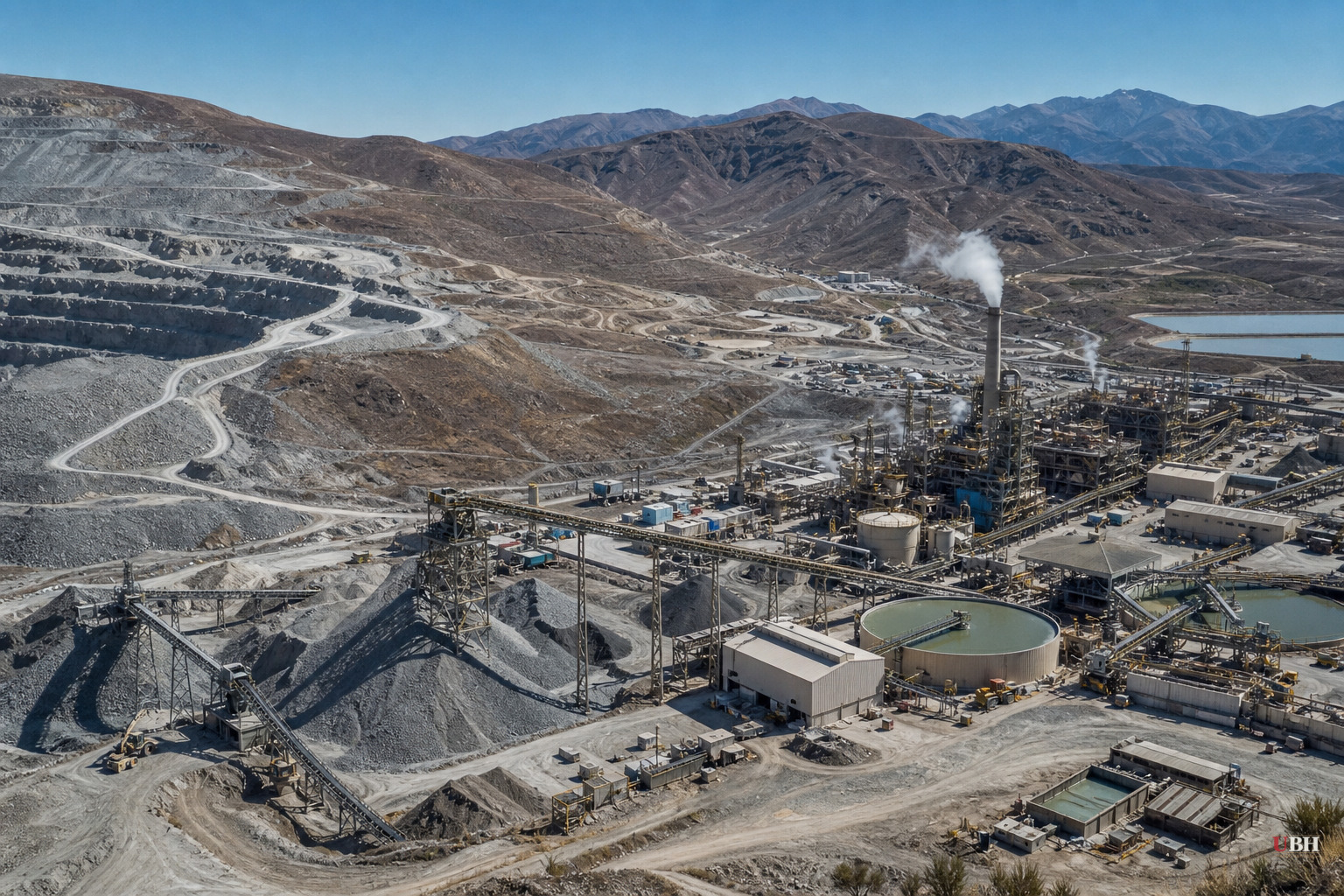
Since the Department of Energy's transmission corridor decision and Tuesday's rundown of America's 16 fully import-dependent critical minerals, the supply chain story has narrowed to one specific choke point: processing, not mining.
A recent review published in the journal Minerals Engineering, examined by AZoM, looked at nine major U.S. rare earth mining and processing projects either operating now or expected to come online within five years. Its conclusion is blunt. America has the rock. It does not have the refining capacity to turn that rock into usable metal.
Rare earths comprise 17 elements, the 15 lanthanides plus scandium and yttrium. They are chemically similar to each other, which makes separating them into individually pure oxides and metals technically brutal. Most current U.S. projects only get as far as producing mixed rare-earth oxide concentrate. The high-purity separation and metallization step, the part that actually feeds a magnet factory, remains the weak link, according to the review's authors, who drew on USGS data, feasibility studies and company investor presentations while flagging that investor materials can carry "purpose-driven biases."
That gap is exactly what a Phoenix Tailings refinery in Exeter, New Hampshire is trying to close, according to the Associated Press. The company uses electrolysis to pull neodymium, praseodymium, terbium, dysprosium, samarium and yttrium out of mining waste and recycled magnets and hard drives, rather than digging new mines. It has a $500 million loan from the Pentagon to build what co-founder Anthony Balladon calls the "Freedom facility." Construction will take 14 to 18 months.
Balladon told AP the timeline is a real problem given the war in the Middle East is "rapidly drawing down munitions" that depend on these elements, from Tomahawk cruise missiles to THAAD interceptors to F-35 fighter jets. The White House is simultaneously pushing contractors to build weapons faster while banning them from sourcing critical-mineral components from China, according to AP. Those two demands pull in opposite directions until domestic processing catches up.
Antimony is the same story with a different metal.
A market commentary distributed via GlobeNewswire on August 18 lays out numbers on antimony that track the same pattern. The U.S. imported an estimated 91% of its antimony in 2025 and produces essentially none domestically. China and Russia together control roughly four-fifths of both global mine supply and processing capacity, according to the commentary. Industry projections cited show antimony smelters outside China meeting only about 73% of non-China demand by 2030, even assuming every announced project gets built. That leaves a processing shortfall of roughly a quarter of demand, best case.
Antimony hardens ammunition, ignites primers, and shows up in night-vision gear, solar glass and flame retardants. China has already restricted antimony exports as leverage, which is the reason a Nevada deposit tied to gold explorer NevGold Corp is being framed as strategically significant. Readers should note the GlobeNewswire piece is a paid commentary naming specific publicly traded companies, including NevGold, RTX, GE Aerospace, Honeywell and Axon, and should be read as promotional market commentary rather than independent reporting, even where its underlying supply-chain figures track with the AP and AZoM reporting.
The optimistic case still has a catch.
The Minerals Engineering review's headline finding, as AZoM summarized it, is that new projects could lift U.S. rare earth output enough to meet much of future magnet demand by 2030. That is the good-news framing. The catch, which AZoM's own headline flags, is that costly processing, uncertain ramp-up schedules and limited refining capacity still stand between the resources in the ground and a secure mine-to-magnet supply chain.
West Virginia state Sen. Chris Rose, a Republican, told Fox News's "Fox Report" that a "gold rush" is coming for mining as a result of the Trump administration's critical minerals investment. That framing is optimistic and politically convenient, but it also glosses over the timeline problem every other source in this set identifies. A gold rush implies speed. Phoenix Tailings needs 14 to 18 months just to build one factory. NevGold's Nevada project is a development-stage resource, not a producing mine. The Minerals Engineering review's own nine flagship projects have, in the authors' words, "uncertain" timelines.
None of this means the domestic push is failing. It means the mining side of the problem, which gets the political attention and the ribbon-cuttings, was never the hard part. The refining and separation step, the one requiring specialized electrolysis facilities, heat-resistant suits and years of buildout, is where the actual bottleneck sits. The open question is whether the Pentagon's $500 million bet on Phoenix Tailings, and similar investments industry-wide, can scale fast enough to matter before the next munitions crunch, or whether 2030 processing-capacity shortfalls projected in the antimony market will show up in rare earths too.
Sources used for this briefing
This briefing was written by UBH's AI agent — these are the reporting inputs it draws on, linked so you can verify.


