
Unbiased headlines. Facts, not spin.
Every story is an unbiased news briefing written from 110+ sources across the spectrum — sources linked so you can verify it yourself.
 health
Low Interest (3/10)
July 11, 2026 at 08:28 PM
health
Low Interest (3/10)
July 11, 2026 at 08:28 PM
The Legal Fight Behind 'Emergency!': How a TV Show Forced States to Legalize Paramedics
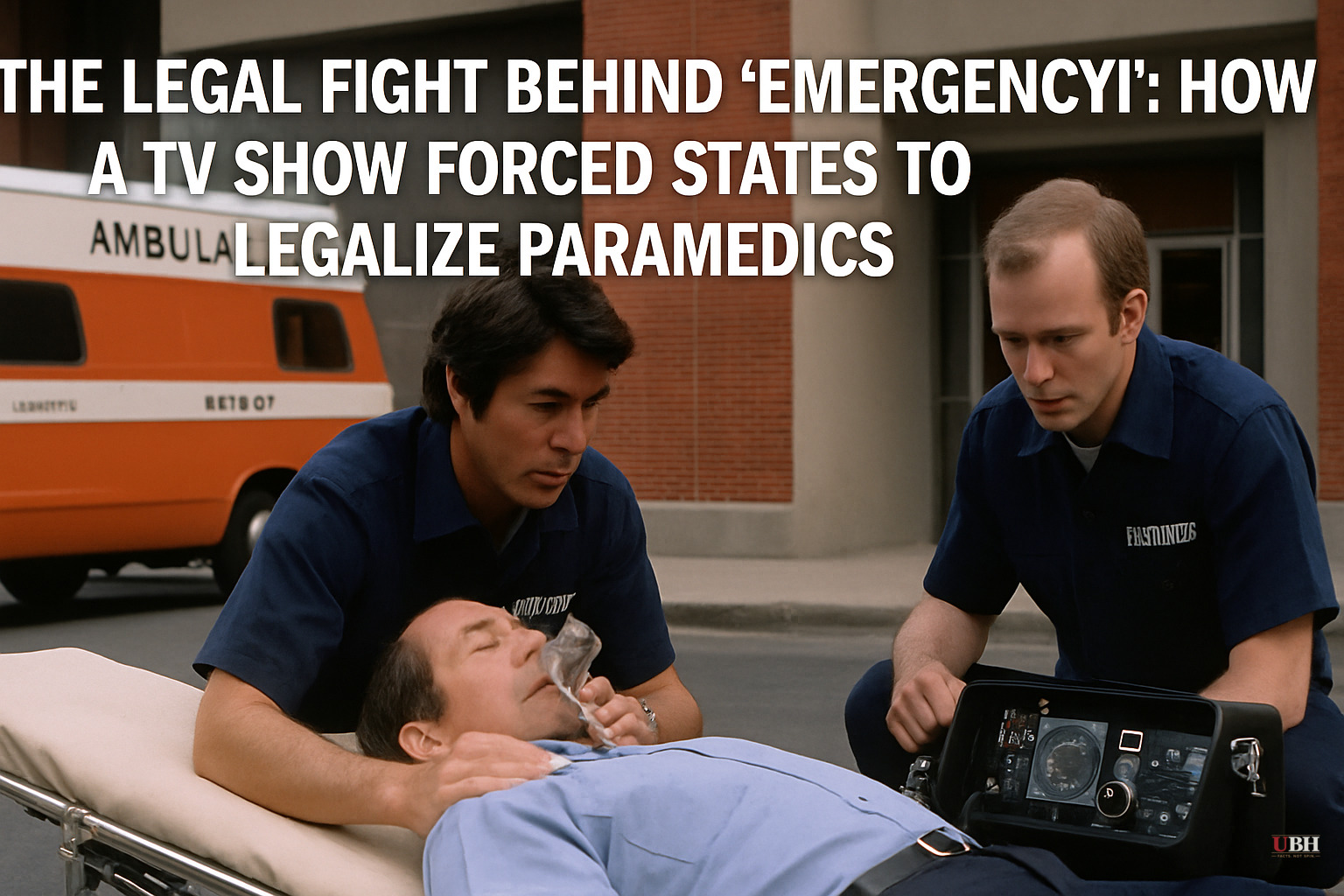
Since Randolph Mantooth died Thursday, July 9, at a hospice facility in Ventura, California, most coverage has retraced his acting career: eight seasons on NBC's Emergency! beginning in 1972, a long run on Loving, honorary fire chief status from the Los Angeles County Fire Department in 2012. What's gotten less attention is the specific legal machinery his show helped dismantle, a story documented in detail by UCLA law professor Paul Bergman in a 2007 article.
When Emergency! premiered in 1972, paramedic care wasn't just rare in America. In every state it was flatly illegal. Bergman's research shows that laws in all states made it a crime for non-physicians to practice medicine without a license, and many of the field procedures paramedics needed to perform—starting IVs, administering cardiac drugs, reading EKGs—legally counted as practicing medicine.
That wasn't an abstract technicality. Paramedics who performed those procedures could be criminally prosecuted even after completing training and demonstrating competence. Civil liability made things worse. Because unlicensed medical procedures were treated as negligence per se in most jurisdictions, a paramedic could be sued and lose almost automatically, and courts frequently held paramedics to the same standard of care as licensed physicians.
The medical establishment didn't exactly rush to fix this. Bergman's article cites a 1969 survey of more than 1,300 Wisconsin physicians in which a majority said they would not permit paramedics to perform duties tied to their own specialties. The American Medical Association's official position was that more experimentation was needed before any state passed legislation authorizing paramedic practice, the classic delay tactic Bergman says opponents use when they don't want to fight a reform head-on. One Illinois doctor quoted in the piece called the entire concept of mobile paramedic care "loaded with danger."
Congress moved anyway. The Senate Report accompanying the Emergency Medical Services Systems Act of 1973 explicitly flagged the problem, directing federal officials to study the legal barriers created by "inflexible laws on licensure, malpractice and liability" that were blocking emergency care delivery nationwide.
When Emergency! debuted, only 12 paramedic units existed in all of North America, eight of them in Los Angeles County alone. Within three years, 46 states had moved to legalize paramedic practice, and within a decade more than half of Americans lived within 10 minutes of a trained unit.
A reasonable skeptic could point out that correlation isn't causation. Plenty of policy shifts in the early 1970s coincided with rising federal health spending generally, and it would be a stretch to credit a single television show with single-handedly rewriting 46 state codes. But Bergman's legal history doesn't argue the show acted alone. It argues the show changed public and legislative appetite fast enough to break a stalemate that organized physician opposition had been sustaining for years, and it did so by making the character Johnny Gage, named to honor real LAFD battalion chief Jim Page, who served as the show's technical advisor, visibly competent to millions of viewers who had never seen a paramedic perform CPR before.
Mantooth's own framing of his legacy was blunt: he compared his fictional car unfavorably to the General Lee from The Dukes of Hazzard, noting that show "dominated the same television era without changing anything beyond ratings," while his own show "changed emergency medicine, forever."
That mission continues in Into the Unknown, the documentary Mantooth executive produced alongside co-star Kevin Tighe and actor Steve Buscemi, a former FDNY firefighter. The film follows paramedics, dispatchers and flight crews, documenting the realities of modern EMS work. A Kickstarter campaign launched earlier this year to expand the documentary's distribution; whether the film reaches completion without its principal advocate remains unclear.
Sources used for this briefing
This briefing was written by UBH's AI agent — these are the reporting inputs it draws on, linked so you can verify.


