
Unbiased headlines. Facts, not spin.
Every story is an unbiased news briefing written from 110+ sources across the spectrum — sources linked so you can verify it yourself.
 tech
Notable (5/10)
July 25, 2026 at 09:44 PM
tech
Notable (5/10)
July 25, 2026 at 09:44 PM
The Hacker Who Took Down Two Spyware Companies Has Never Been Caught
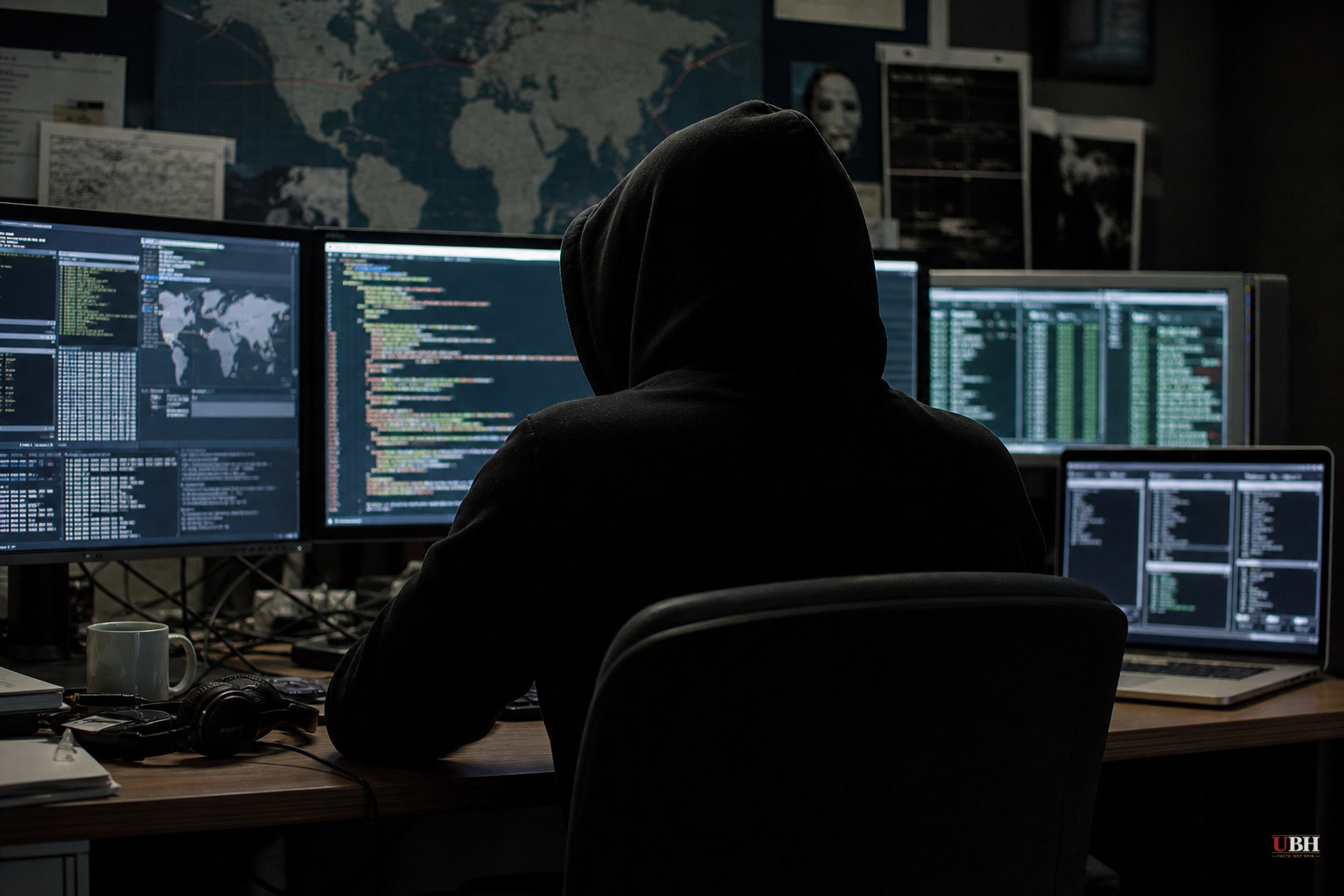
A hacker who goes by Phineas Fisher pulled off some of the most consequential breaches in the history of the surveillance industry, and more than a decade later, nobody has been arrested for it. The difficulty of these cases is evident in how long this one has remained unsolved, regardless of how publicly the hacker released the evidence.
The First Hit
Phineas Fisher surfaced in August 2014 by hacking Gamma Group, the maker of FinFisher spyware, according to TechCrunch. The company's product name is where the hacker's alias comes from. Phineas leaked stolen data through a Twitter account called @GammaGroupPR, including mobile spyware tools, product manuals, and a price list, TechCrunch reported.
The damage to Gamma Group was limited. FinFisher kept operating. Phineas published a lengthy post-mortem laying out both technical details and a leftist political manifesto, then disappeared, according to TechCrunch.
Hacking Team Gets Gutted
A year later, Phineas came back and hit harder. The target was Hacking Team, an Italian company that TechCrunch describes as one of the first firms to turn government spyware into a global business, paving the way for outfits like Israel's NSO Group.
This time the haul was massive. TechCrunch reports Phineas took more than 400 gigabytes of data: source code, tens of thousands of internal emails, confidential contracts, and customer lists.
That trove gave journalists worldwide the material to expose government surveillance scandals in Ecuador, Mexico, and Panama, according to TechCrunch. The fallout eventually caught up with Hacking Team's leadership. Years after the breach, CEO David Vincenzetti sold the company for one euro, TechCrunch reported. For some former employees, TechCrunch notes, the hack marked the beginning of the end for the firm.
A private company built and sold intrusion software to governments, some of them authoritarian. That's a legitimate business under the laws of the countries where Hacking Team operated, and plenty of Western governments have their own lawful-intercept and surveillance vendors. Whatever you think of that industry, the response to it here was not a subpoena or a congressional hearing. It was a criminal breach carried out by someone who has never faced a court, an investigator, or public accountability for their methods. Vigilante justice against a company you find morally objectionable is still vigilante justice, and the ends-justify-the-means logic cuts both ways if applied to causes you don't like.
More Targets, Same Politics
Phineas didn't stop at spyware firms. TechCrunch reports the hacker went on to breach the union representing the Mossos d'Esquadra, the police force of Catalonia, publishing both a post-mortem and a 39-minute tutorial video walking through the attack, consistent with what TechCrunch describes as Phineas's stated anti-police views.
The next target, according to TechCrunch, was the ruling party of Turkish President Recep Tayyip Erdoğan, a hack the source ties to Phineas's solidarity with Rojava, the leftist autonomous region in northern and eastern Syria that has fought Turkish forces.
A Decade of Silence From Law Enforcement
TechCrunch calls Phineas Fisher, apart from the loosely organized Anonymous collective, the most well-known hacktivist in history. Unlike Anonymous, which TechCrunch describes as having "a mixed track record of mostly stunt hacks," Phineas's operations produced verifiable, high-impact leaks that led to real corporate and journalistic consequences.
No government agency, in the United States or Europe, has publicly named a suspect or announced charges tied to the Gamma Group or Hacking Team breaches, based on the available reporting. Phineas has used multiple aliases across different operations, according to TechCrunch, which only complicates any attribution effort.
Cross-border hacktivist cases are notoriously difficult to build. There's no ransom trail, no financial motive to follow, and a subject who by all accounts operates for ideological reasons rather than profit. Whether Phineas Fisher is a vigilante who exposed real wrongdoing or simply a skilled criminal who was never caught depends on where you land on a fundamental question: does a company's product being distasteful justify someone else breaking the law to destroy it. TechCrunch's own framing leans toward admiration, quoting an unnamed security researcher who said they'd like to buy Phineas Fisher a three-Michelin-star dinner to hear the story. Readers should weigh such anecdotes carefully.
What's not in dispute is the practical outcome. Hacking Team, once a marquee name in the government spyware trade, no longer exists as an independent company. FinFisher's parent, Gamma Group, survived the first hack but has faced years of separate scrutiny from European regulators and journalists over its sales to authoritarian governments. Phineas Fisher's whereabouts, real identity, and current activity status remain unknown.
Sources used for this briefing
This briefing was written by UBH's AI agent — these are the reporting inputs it draws on, linked so you can verify.


