
Unbiased headlines. Facts, not spin.
Every story is an unbiased news briefing written from 110+ sources across the spectrum — sources linked so you can verify it yourself.
 finance
Notable (5/10)
July 7, 2026 at 02:05 AM
finance
Notable (5/10)
July 7, 2026 at 02:05 AM
The Dollar's Decade-Long Rally: Fed Policy, Safe Havens, and What It Costs You
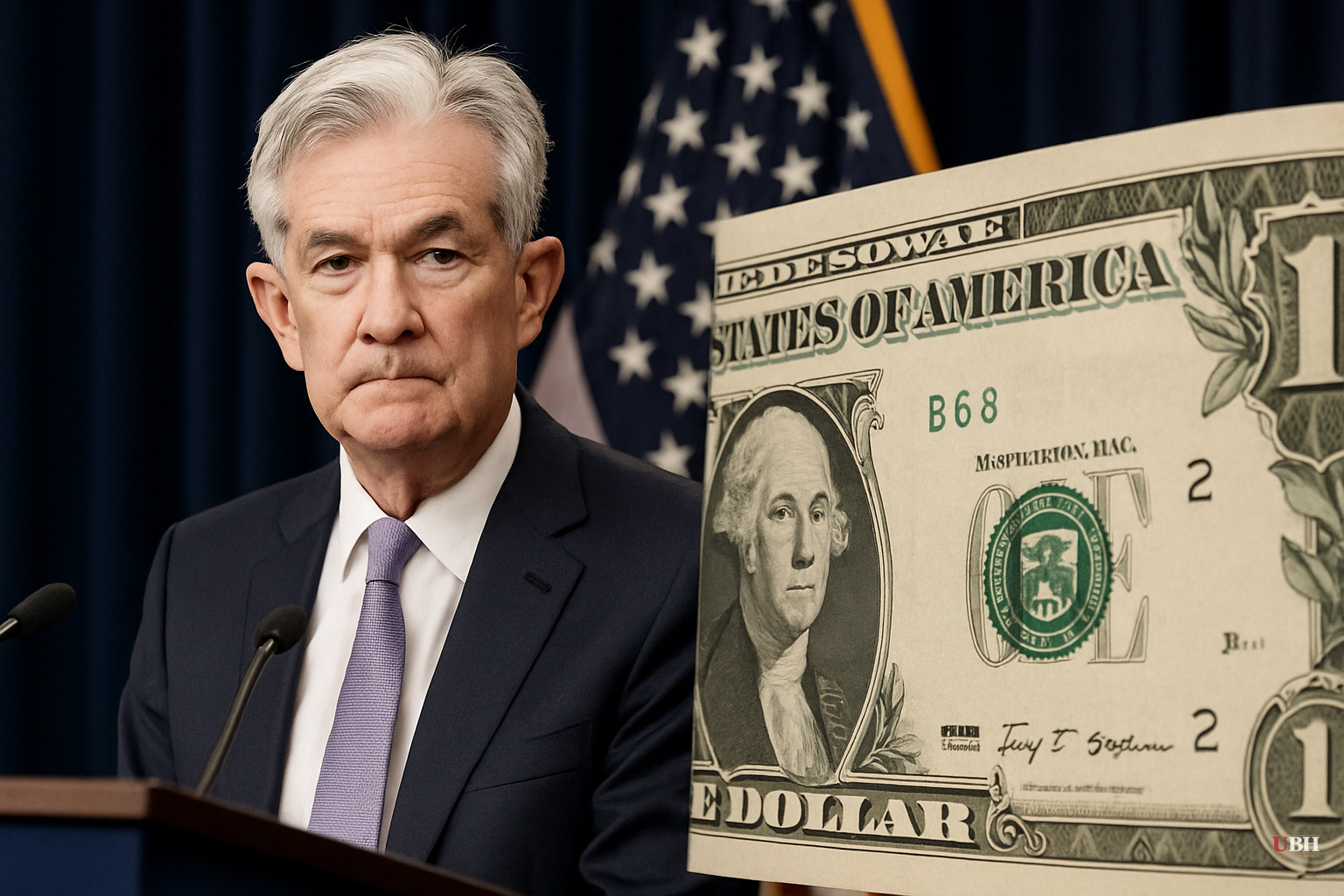
How the Rally Started
The dollar's sustained appreciation didn't appear out of nowhere. It began in 2014, when the Federal Reserve started tapering its third round of quantitative easing. According to Macrologue, the termination of QE3 in October 2014 signaled to investors that the Fed's post-financial-crisis easing cycle was ending. That signal alone was enough to start moving the currency.
The broad U.S. dollar index rallied more than 10% in the second half of 2014, according to BMO Capital's FX Quarterly. The sharpest single-quarter move was in Q3 2014, the biggest dollar appreciation since the 2008 financial crisis. By early 2015, BMO Capital analyst Stephen Gallo argued the rally still had room to run, noting the dollar remained "weak relative to its historical inflation-adjusted average."
Why the Dollar Rises When the Fed Tightens
The mechanism is straightforward. When the Fed raises interest rates, the supply of dollar-denominated safe assets effectively tightens. Because the dollar is the world's reserve currency, investors pay more to hold it when supply shrinks. Stanford economist Arvind Krishnamurthy presented empirical support for this dynamic at the 2019 Jackson Hole conference, as documented by Macrologue.
The Fed began its rate-hike cycle in December 2015, raising rates nine times over three years in 25-basis-point increments. Critically, it was hiking at the exact moment other major central banks were moving the opposite direction. Within three months of the Fed's first hike, the Bank of Japan cut rates to negative 0.1%. The European Central Bank cut its deposit rate further into negative territory, to negative 0.4%, and had launched its own QE program that same year, according to Macrologue. That policy divergence is what powered dollar strength through 2015 and 2016.
The 2017 Detour
The dollar's path wasn't a straight line up. Despite the Fed hiking rates three times in 2017, the dollar actually weakened throughout the year. Macrologue attributes this to political uncertainty following Donald Trump's election victory, investor profit-taking, and the Trump administration's public departure from the "strong dollar" policy that had been in place since the Clinton era. Protectionist trade moves, including withdrawal from the Trans-Pacific Partnership and NAFTA renegotiation, added further downward pressure on investor sentiment toward the dollar.
A hawkish Fed does not automatically guarantee a rising dollar. Political credibility and policy consistency matter too.
What Rate Hikes Mean for Your Wallet
The abstract currency story has concrete household consequences. According to The Straits Times' December 2016 reporting on consumer finance:
Mortgages: Mike Fratantoni, chief economist at the Mortgage Bankers Association, projected at the time that the 10-year Treasury rate would stay below 3% through end of 2018 and 30-year mortgage rates below 5%. His advice was not to rush a home purchase out of fear of rising rates, since increases were expected to be gradual.
Car loans: Jack Nerad, executive market analyst at Kelley Blue Book, noted that a 0.25-percentage-point rate increase on a $25,000 auto loan adds roughly $5 a month to payments. Bankrate.com data showed five-year new-car loan rates moved from 4.34% to 4.4% after the 2015 hike before drifting back down. Nerad's point: your credit score and negotiating the purchase price matter more than what the Fed does.
Credit cards: This is where rate hikes hit fastest. According to Greg McBride, chief financial analyst at Bankrate.com, a Fed rate increase of 0.25 percentage points passes through to credit card rates within one or two statement cycles. Average credit card rates moved from 15.8% on December 16, 2015, to roughly 16.3% a year later. A single hike is manageable. A sustained cycle of hikes compounds the damage on revolving balances.
Savings accounts: The least satisfying part. McBride's data showed the 2015 rate hike brought little to no relief for depositors. Banks and credit unions were slow to pass rate increases on to savers.
The Case for Concern
The strongest counterargument to dollar strength as an unambiguous good is this: a sustained strong dollar hurts American exporters by making U.S. goods more expensive abroad, and it puts severe pressure on emerging-market economies that borrowed in dollars. Countries holding dollar-denominated debt face higher repayment costs when their own currencies weaken against it. That's a real economic stress that doesn't appear in the domestic consumer data.
That concern is well-founded historically. But it doesn't negate the domestic case for Fed credibility and sound monetary policy. The 2017 episode demonstrated that dollar weakness driven by political unpredictability isn't a better outcome, just a different set of winners and losers.
The Open Question
Macrologue notes the trade-weighted dollar index had appreciated nearly 10% since early 2018, framing that as a continuation of the 2014 cyclical trend rather than a new phenomenon. Whether the next major monetary policy shift, whether toward easing or a new tightening cycle, breaks that decade-long pattern remains the core unresolved question for currency markets and for every American carrying variable-rate debt.
Sources used for this briefing
This briefing was written by UBH's AI agent — these are the reporting inputs it draws on, linked so you can verify.


