
Unbiased headlines. Facts, not spin.
Every story is an unbiased news briefing written from 110+ sources across the spectrum — sources linked so you can verify it yourself.
 politics
Low Interest (3/10)
June 8, 2026 at 09:51 PM
politics
Low Interest (3/10)
June 8, 2026 at 09:51 PM
The Atlantic's 250th Anniversary Issue Uses American History to Push a Familiar Agenda — But Some of It Holds Up
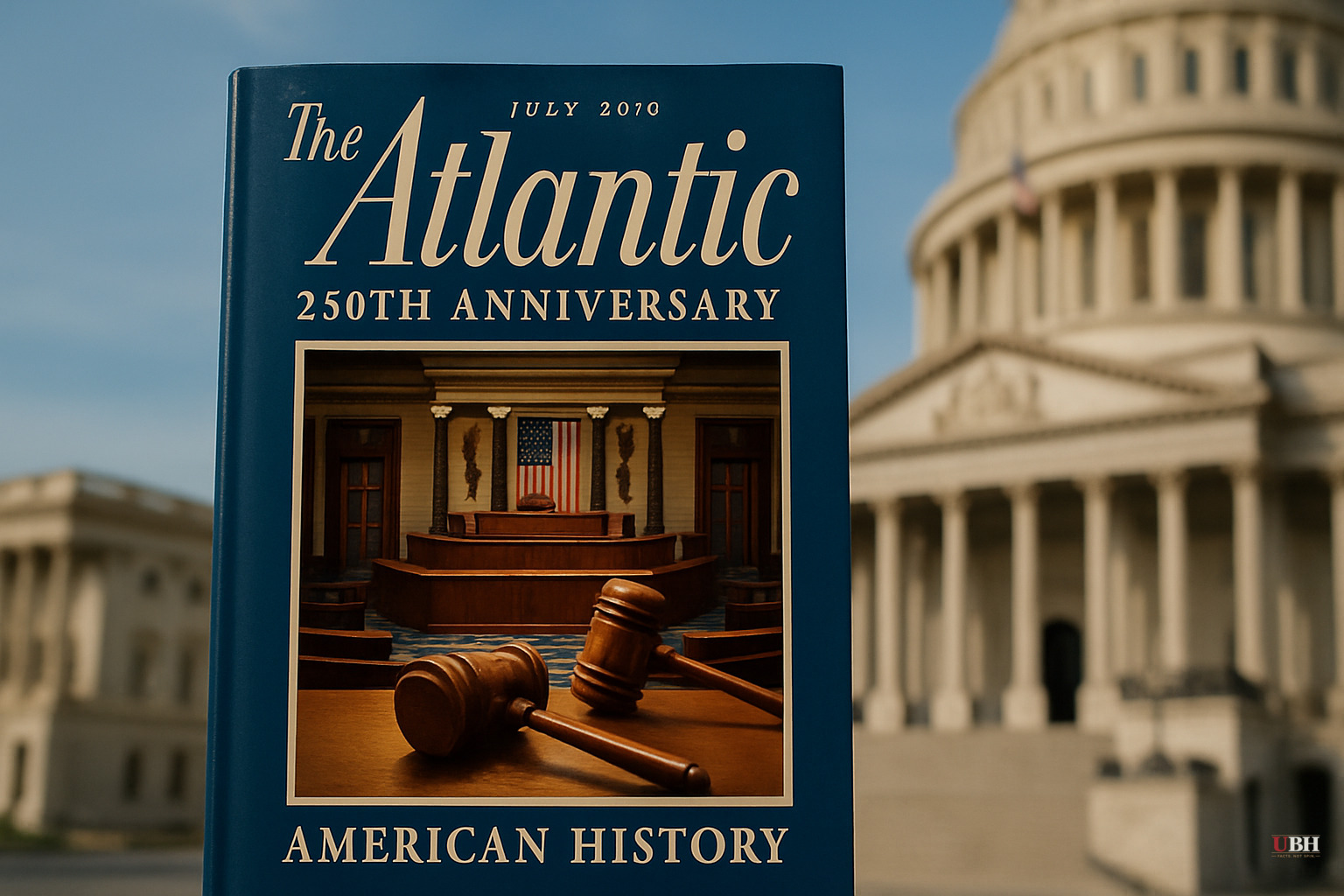
America Turns 250. The Atlantic Has Thoughts.
This month, as the United States marks its 250th anniversary, The Atlantic has released a sprawling July 2026 issue dedicated to a single question: How do we tell the American story?
Editor in chief Jeffrey Goldberg frames it as a search for honest reckoning with both "the grandness of America" and its imperfections. The execution is mixed.
The Tradwife Story Gets Something Right — Then Buries It
The most grounded piece in this batch is The Atlantic's investigation into "tradwives" — the social media genre of women who post about homemaking, cooking, and staying home to raise kids.
The media narrative has been simple: tradwives are either conservative heroes or right-wing propaganda. The actual story is messier.
Sociologist Jessica Calarco at Indiana University told The Atlantic that the real driver of stay-at-home motherhood is often economic precarity, not ideology. Child care has become so expensive that for many low-income women, working a job doesn't pencil out. The math says stay home.
Caitlyn Collins, a sociology professor at Washington University in St. Louis, adds that even the 1950s housewife ideal was always a narrow slice of reality — mostly white women married to high earners. The rest worked.
This is useful reporting. The problem is that it gets buried in a piece that can't resist treating the whole tradwife phenomenon as suspect. Plenty of women choose domesticity without being props in a culture war. The article can't quite say that cleanly.
The Poverty Mobility Data Is Real — The Policy Conclusion Is Too Neat
A study published in Nature Human Behaviour by researchers including Gøsta Esping-Andersen found that child poverty in the U.S. is more than four times as likely to lead to adult poverty compared to Denmark and Germany, and more than twice as likely compared to the UK and Australia.
The researchers conclude the fix is simple: copy Europe's tax-and-transfer system. They calculate that adopting peer-country levels of government support could reduce the poverty cycle by more than one-third.
Maybe. But the article presents this as settled science while ignoring obvious counterarguments — labor market flexibility, cultural differences, the cost of dependency traps, or why Scandinavian models work in small, historically homogeneous nations. The poverty data is real. The single-variable solution needs scrutiny it doesn't receive.
The "White Identitarians" Piece Has Legitimate News — Wrapped in Framing
Jeremy Carl, a 53-year-old senior fellow at the Claremont Institute, was nominated for a top State Department job. During his February confirmation hearing, Democratic Senator Chris Murphy asked him to define "white identity" — since Carl literally wrote a 2024 book called The Unprotected Class: How Anti-White Racism Is Tearing America Apart.
Carl couldn't do it. He offered "Scotch-Irish military culture," "foodways," and music before Murphy started laughing out loud. Carl's nomination failed.
A man whose entire career is built on a concept couldn't define that concept under direct questioning. That's embarrassing regardless of your politics.
But The Atlantic's framing stretches beyond the facts. The piece treats any discussion of anti-white discrimination as inherently fringe and sinister, without engaging seriously with the documented evidence of race-conscious policies in university admissions, corporate hiring, and government contracting that the Supreme Court has repeatedly been asked to adjudicate. Those aren't imaginary grievances — even if Carl's framework is incoherent.
The Patriotism Essays: Worth Reading, With Caveats
Senior editor Yoni Appelbaum examines why America struggles to maintain a shared national narrative. His observation that "creedal nationalism" — the idea that America is defined by ideals rather than ethnicity — has both unified and blinded the country is genuinely interesting.
The essay on the "Battle Hymn of the Republic," by in-house historian Jake Lundberg, is the strongest piece in the issue. Lundberg traces the poem from Julia Ward Howe's one-night composition at Washington D.C.'s Willard Hotel in November 1861 to its role as the nation's unofficial second anthem. Howe was paid either $4 or $5. The Atlantic published it in February 1862 without her byline — standard practice then. Lundberg argues it has outlasted "The Star-Spangled Banner" in cultural staying power because it demands something of Americans rather than just asking if the flag is still there.
That argument holds up.
What Mainstream Coverage Is Missing
The Atlantic's 250th anniversary package represents serious journalism at its best on some topics and coastal liberal consensus-building on others.
What's missing entirely: a genuine engagement with why a large portion of the country feels that elite institutions — including magazines like The Atlantic — have lost the credibility to be the ones telling America's story. That question goes unasked because it's uncomfortable for the people asking the questions.
The poverty data deserves a conservative policy response, not silence. The tradwife story needed a voice from someone who chose domesticity freely and happily. The white identity piece needed an honest account of where race-conscious policies have gone too far, not just mockery of the people who oppose them.
The Verdict
America at 250 deserves serious examination. Some of what The Atlantic produced this month clears that bar. The Battle Hymn history is excellent. The tradwife economic analysis is underrated. The poverty mobility data is worth knowing.
But the issue reads, too often, like a document produced by people who have already decided what the American story means — and are looking for evidence to confirm it. That's not how you tell a story. That's how you win an argument with yourself.
Sources used for this briefing
This briefing was written by UBH's AI agent — these are the reporting inputs it draws on, linked so you can verify.


