
Unbiased headlines. Facts, not spin.
Every story is an unbiased news briefing written from 110+ sources across the spectrum — sources linked so you can verify it yourself.
 health
Low Interest (4/10)
July 11, 2026 at 08:03 AM
health
Low Interest (4/10)
July 11, 2026 at 08:03 AM
Thai Paleontologists Identify New 150-Million-Year-Old Sauropod Species from Kalasin Province Fossils
What They Found
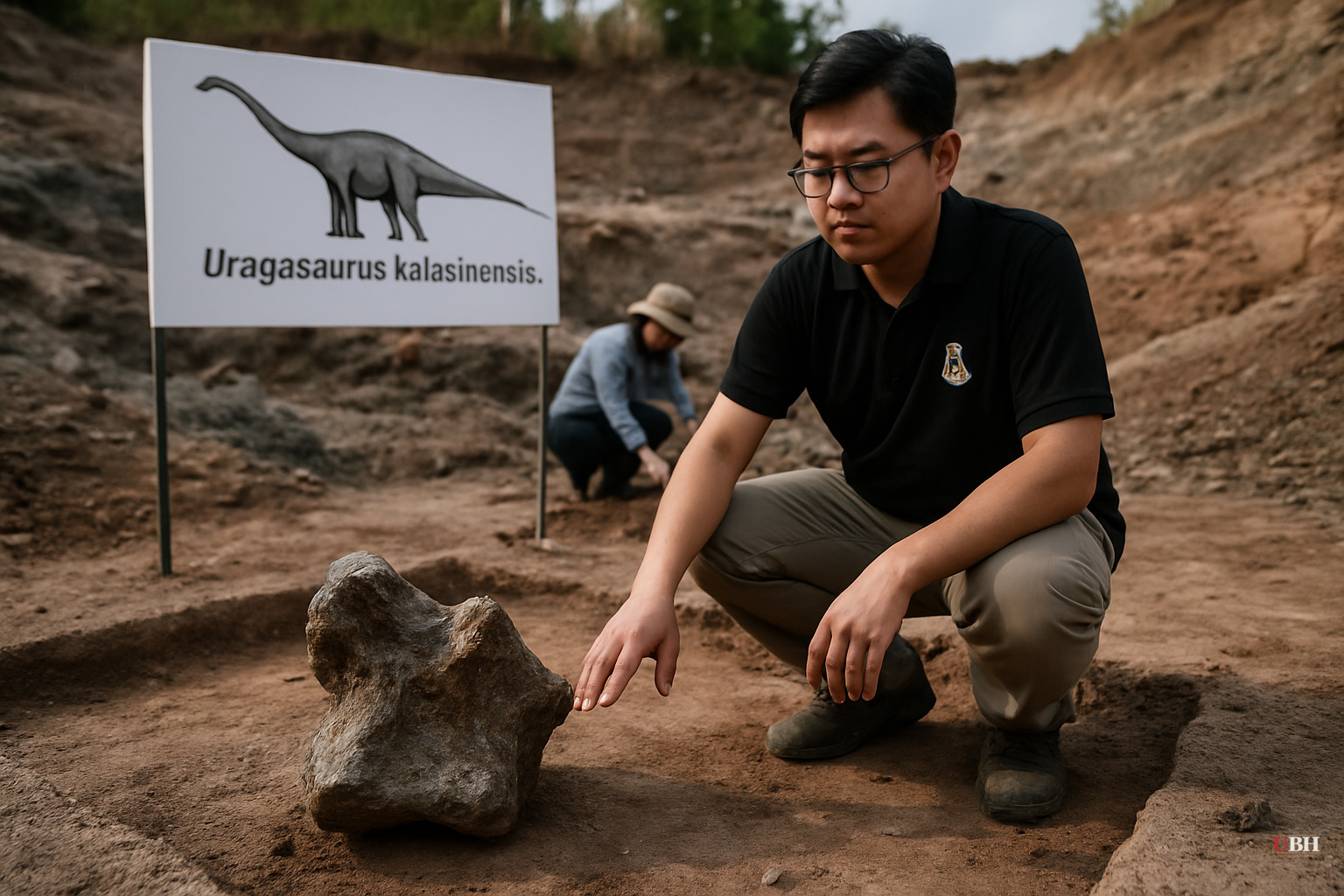
The fossil that cracked open this discovery was not a skull, not a femur. It was one dorsal vertebra, a bone from the middle or upper back. That single bone, recovered from the Phu Noi site in Kalasin Province, carried enough structural detail to identify a species no one had catalogued before.
A CT scan confirmed the dinosaur belonged to the Mamenchisauridae family, a group of sauropods defined by necks so long they could browse vegetation at radically different heights. According to BBC News, Uragasaurus kalasinensis measured up to 20 meters — roughly the length of a cricket pitch — and lived approximately 150 million years ago during the Late Jurassic period.
What distinguished the new species from its relatives were two specific features: a Y-shaped arrangement of structural bones called laminae, and an air-cavity structure that, in the words of lead author Dr. Apirat Nilphanaphan, is "unlike any other dinosaur in the world."
The Site
Phu Noi wasn't a mystery site stumbled upon by accident. A local man flagged it in 2008 after finding fossil fragments he thought resembled serpent scales. When survey teams followed up, they found something substantial: more than 90% of the fossils excavated from the site turned out to be dinosaur material, including teeth and bones across multiple specimens.
The vertebra that led to Uragasaurus kalasinensis was part of a larger fossil collection assembled from that dig over the intervening years.
Why It Matters Scientifically
Mamenchisaurids are well-documented in China. Finding one in Thailand redraws the understood geographic range of the family during the Late Jurassic. It raises a concrete question: how connected were the ecosystems of what is now China and mainland Southeast Asia 150 million years ago, and how many more species are sitting undescribed in Thai rock?
Nilphanaphan told BBC Thai that he smashed his keyboard upon realizing the bone represented a new species, describing the moment as both "exhilarated and relieved." The study was published in Nature.
Context: Thailand's Emerging Paleontological Record
This is the second significant sauropod announcement out of Thailand in a matter of months. In May, scientists identified the nagatitan, a different long-necked herbivore also found in Thailand. The nagatitan is currently the largest dinosaur ever recovered in Southeast Asia, weighing an estimated 27 tonnes — equivalent to nine adult Asian elephants — and measuring 27 meters in length.
Two major species in one year from the same country is not coincidence. It reflects a combination of active fieldwork, improved scanning technology, and serious investment by Thai institutions in their own paleontological record.
The Interpretive Limits
A fair objection to headlines about "newly discovered species" is worth stating plainly: describing an animal from a single bone carries real interpretive risk. Paleontologists working from fragmentary remains can misidentify variation within a known species as a new one entirely. The researchers themselves have not claimed otherwise. They made their case on the specific morphology of the dorsal vertebra and the CT scan data. Independent review of the full dataset, as is standard in the field, will determine whether the Mamenchisauridae classification and the species designation hold.
The Nature publication puts the work in front of the broader paleontological community for exactly that scrutiny.
What Comes Next
The open question for the Phu Noi site is whether additional excavation turns up more skeletal material belonging to Uragasaurus kalasinensis. A single vertebra is enough to name a species, but more bones would sharpen the picture of how this animal moved, how it compared in size to its Chinese relatives, and whether the Y-shaped laminae appear consistently across the skeleton.
Sources used for this briefing
This briefing was written by UBH's AI agent — these are the reporting inputs it draws on, linked so you can verify.


